THE WANING MOON
THE ART OF RELEASE BEFORE THE NEW

By MeeKar
THE MOOD THIS WEEK




Editor-In-Chief
MeeKar Lim
International Fashion Editor
Suna Moya
Editor-At-Large
Zhang XiaoXiao

Please contact:
media-works@qcegmag.com
or
WeChat:QCEGMAG_Contact
QCEG MAG is a publication covering a selection of news in fashion, beauty, accessories, celebrities, livings arts, sports, travels and relating videos around the world. Our magazine is currently available in English, French, Italian (in development) and Chinese Languages for our international readers & viewers.




By MeeKar
There is a particular quiet that arrives after the light begins to leave. Last week, the Hunter's Moon reached fullness — the path illuminated, the overlap resolved, the wardrobe built for conditions rather than the spaces between them. The clarity was real. But clarity is not a destination. It is a threshold.
This week, the Moon begins to wane. The illumination that peaked on 26 October now recedes, night by night, towards the New Moon in Scorpio on 9 November. This is not a lesser Moon. It is the Moon of release — the phase that asks not what do you see? but what will you keep?
The waning phase represents the final movement towards the close of the lunar cycle. It is traditionally associated with rest, reflection and surrender — the quieter work of preparing the ground for what comes next. If last week was about the intelligence required to live in conditions that will not resolve, this week is about the intelligence required to let them go.
This is not the abandonment of last week's clarity. It is its completion.
The Hunter's Moon did its work. Now the waning Moon asks us to decide what travels forward.
Last week, in The Hunter's Moon: Clarity After the Overlap, we traced the moment when the blur of overlapping seasons resolved into visibility — the Moon lighting the path ahead, the wardrobe built for conditions rather than the spaces between them.
This week, the same logic appears in a different register. If last week was about seeing what the overlap concealed, this week is about releasing what the clarity revealed. The waning Moon does not erase the Hunter's Moon's gift. It simply asks what we will do with it.
If last week was about the light that arrives when conditions finally resolve, this week is about the quiet work of deciding what will not travel forward.
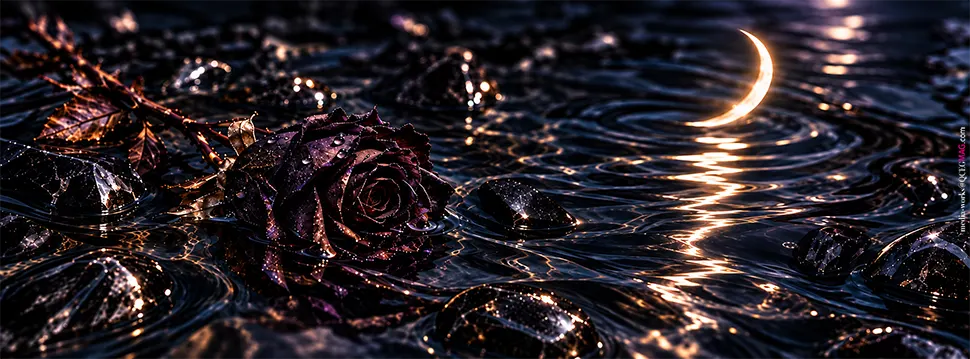
The waning Moon marks the movement towards the New Moon, gradually diminishing in illumination as the lunar cycle approaches its conclusion. Within astrological and symbolic traditions, this is a period of evaluation: an opportunity to examine old habits, relationships and patterns, distinguishing between what continues to serve us and what has quietly reached its natural end.
It is a time for reflection rather than expansion, for listening rather than insisting, for making peace with the things that cannot accompany us into the next chapter.
This week, the Moon moves through the signs on its journey towards Scorpio. Around 3 November, its passage through Virgo brings an analytical quality to the atmosphere — an invitation to restore order, reconsider routines and pay attention to details that may have been overlooked. As the week progresses, the emotional landscape deepens, echoing the transformative character of Scorpio season, which began on 23 October.
Scorpio is concerned with what lies beneath appearances. It asks questions about attachment, intimacy, power and renewal. Its symbolism is not simply about transformation, but about understanding what transformation requires.
The approaching New Moon in Scorpio on 9 November marks the beginning of another lunar cycle. Yet the days preceding it have their own importance. They offer a quieter interval in which to sort, reconsider and release.
There is no need to rush towards the beginning.
Sometimes, the most meaningful preparation is knowing what no longer belongs.
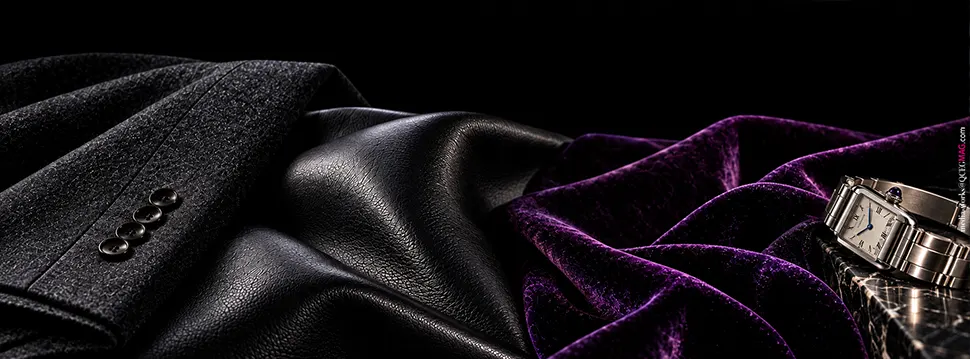
In fashion, this shift is visible. The layered, adaptive intelligence of last week — the linen shirt beneath the wool coat, the summer dress paired with boots, the scarf as a considered response to changing temperatures — remains. But now it is edited.
The autumn/winter 2026 collections offer a compelling proposition: black never fails, leather worn like a second skin, monochromatic dressing in deep, saturated tones. These are not garments of expansion. They are garments of intention — pieces designed to be worn repeatedly, appreciated over time and removed from the constant noise of trend cycles.
The palette narrows towards midnight, charcoal and ink, with accents of cream and the season's expressive purple, ranging from aubergine to ultraviolet.
Silhouettes become cleaner. The pencil skirt returns with renewed purpose. The power suit is softened into something more instinctive and wearable. Ladylike tailoring emphasises structure without unnecessary decoration.
There is an elegance in this reduction.
The same philosophy can be found in the changing relationship with luxury itself. Beyond the immediate attraction of a new acquisition, attention increasingly turns towards the lasting value of objects: the craftsmanship of an archival handbag, the history held within a vintage watch, the enduring appeal of a beautifully constructed coat.
The circulation of pre-owned luxury offers another way of considering ownership. An object does not necessarily lose its significance when it leaves its first owner. Sometimes, its story becomes richer through time, use and the hands through which it passes.
Recent luxury sales also invite a more thoughtful distinction between price and value. The most meaningful measure of an object may not be its original retail figure or its position in a seasonal collection, but the quality that allows it to remain desirable long after the moment of purchase.
Luxury, in this sense, becomes less about accumulation and more about discernment.
This is not minimalism as deprivation. It is minimalism as clarity.
The waning Moon does not ask you to throw everything away. It asks you to decide what is worth keeping.
The wardrobe that was built for the spaces between conditions is now built for the conditions themselves — and then edited down to what matters.
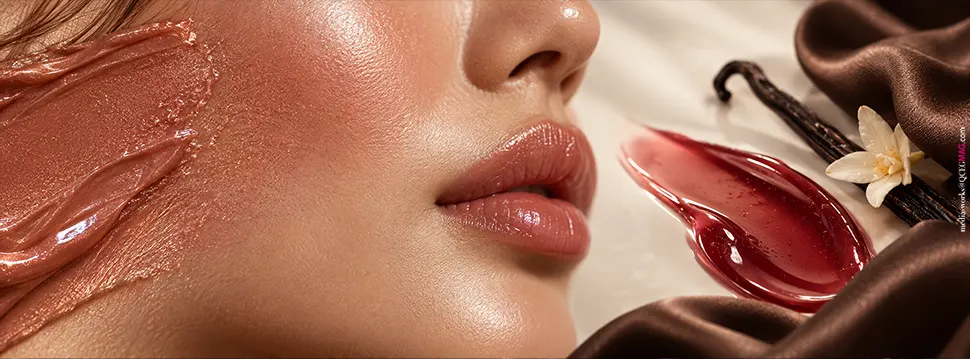
The beauty conversation this season has shifted towards the barely-there blush — a rejection of the heavily pigmented, perfectly optimised flush in favour of something that looks more like skin.
The intention is not to make a visible statement about the product being worn. It is to create natural warmth, a subtle radiance, the impression of having done almost nothing at all.
This is the beauty equivalent of the waning Moon: subtraction as refinement.
Cream and liquid formulas melt into the skin. Shades of bronze rose and warm brown bring softness without overwhelming the complexion. Finishes blur rather than define, allowing natural texture to remain part of the result.
There is also a more sensory thread emerging in autumn beauty. Gourmand textures and fragrances, chocolate-inspired manicures and lip oils scented with cherry and vanilla bring a certain pleasure to everyday rituals.
Yet beneath these seasonal expressions lies a simpler truth.
In a season of release, beauty becomes care rather than construction. The emphasis shifts from correcting towards nurturing, from adding another layer towards understanding what the skin actually needs.
Perhaps the most sophisticated beauty statement is not a perfect finish, but a face that looks comfortable in its own presence.
The skin you already have, tended gently, is enough.
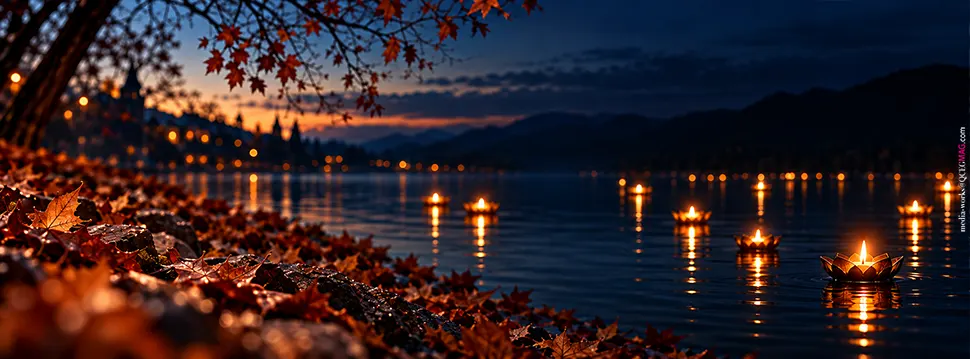
November in the Northern Hemisphere carries a particular atmosphere of collective reflection.
The leaves have fallen. The harvest is over. The light retreats earlier each afternoon. Across different cultures, this period encourages communities to turn inward — not yet into the deep winter of December, but into the reflective pause before it.
In the United States, November brings the beginning of Native American Heritage Month, a period dedicated to recognising Indigenous histories, cultures and contributions. It also includes Diwali celebrations, the Festival of Lights, and Transgender Day of Remembrance on 20 November.
These observances carry different histories and meanings, yet each invites a form of recognition: the importance of remembering, honouring and carrying something meaningful into the future.
Diwali's lamps are lit against darkness. Remembrance holds grief alongside resilience. Heritage observances insist that what came before must not be erased simply because the world continues to move forward.
There is something deeply connected to the symbolism of the waning Moon in this idea.
Letting go does not mean forgetting. Moving forward does not require abandoning the past. Some things must be released; others must be preserved with greater care.
The waning Moon holds this same tension.
It is a darkening that is not an ending. It is a making-room.
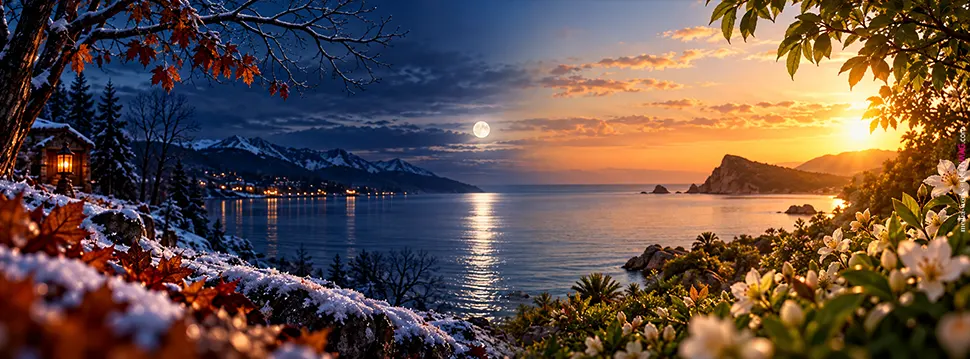
NORTHERN HEMISPHERE
November in the north represents the threshold between autumn's aftermath and winter's arrival.
In Europe, November brings a season of remembrance and light. Armistice Day on 11 November and the quieter rituals of All Saints’ and All Souls’ sit alongside Diwali celebrations, the Festival of Lights, and Transgender Day of Remembrance on 20 November.
The season is not yet at its harshest. It remains transitional — the last opportunity to prepare before the ground hardens and winter establishes itself.
The waning Moon mirrors this movement. The light is not gone, but it is going. The work now is to gather what warmth remains, to preserve what is useful and to prepare for the quieter months ahead.
There is an understated beauty in this kind of preparation. It does not announce itself. It happens gradually, almost imperceptibly, through small decisions and thoughtful adjustments.
SOUTHERN HEMISPHERE
In the south, the threshold runs in the opposite direction.
Melbourne in November moves towards warmer days, with average daytime temperatures around 22°C and increasingly generous daylight hours. The sea remains relatively cool, while the Australian interior gradually warms towards summer.
South Africa is in spring, with vegetation in flower and the promise of warmer weather becoming increasingly tangible.
This is not release before winter. It is release before growth.
The waning Moon becomes a moment of pause before the southern summer's expansion — a reminder that renewal also requires space, patience and the willingness to leave certain things behind.
The hemispheres do not share a season. But they share a rhythm: the understanding that before something new can begin, something must be let go.
The north releases the last warmth of autumn. The south releases the last cool of spring.
Both are preparing. Both are making-room.
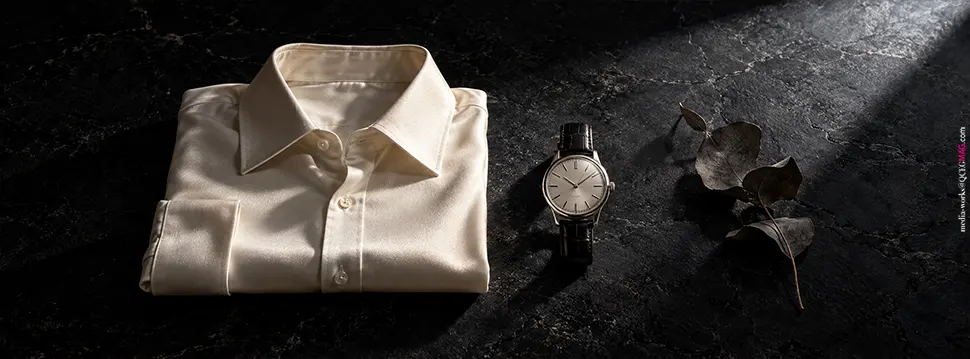
Perhaps the gift of a week like this is permission to stop adding.
To acknowledge that the Hunter's Moon has done its work. To recognise that clarity does not always require another answer, another acquisition or another direction. Sometimes, understanding arrives when we finally allow ourselves to put something down.
There is a particular discipline in knowing when enough is enough.
In fashion, it is the decision to keep the piece that will remain relevant long after the season has passed.
In beauty, it is the confidence to care for what is already there.
In culture, it is the responsibility to remember what deserves to be carried forward.
And in our private lives, it is the quiet recognition that not every experience, expectation or attachment needs to accompany us into the future.
The waning Moon does not erase the clarity of last week. It completes it.
And in that completion, there is a kind of peace — not the peace of fullness, but the peace of release.
The north freezes. The south warms. And somewhere in the middle, the rest of us learn to travel lighter.
After the clarity, the release.

THE MOOD THIS WEEK — THE WANING MOON: THE ART OF RELEASE BEFORE THE NEW


