



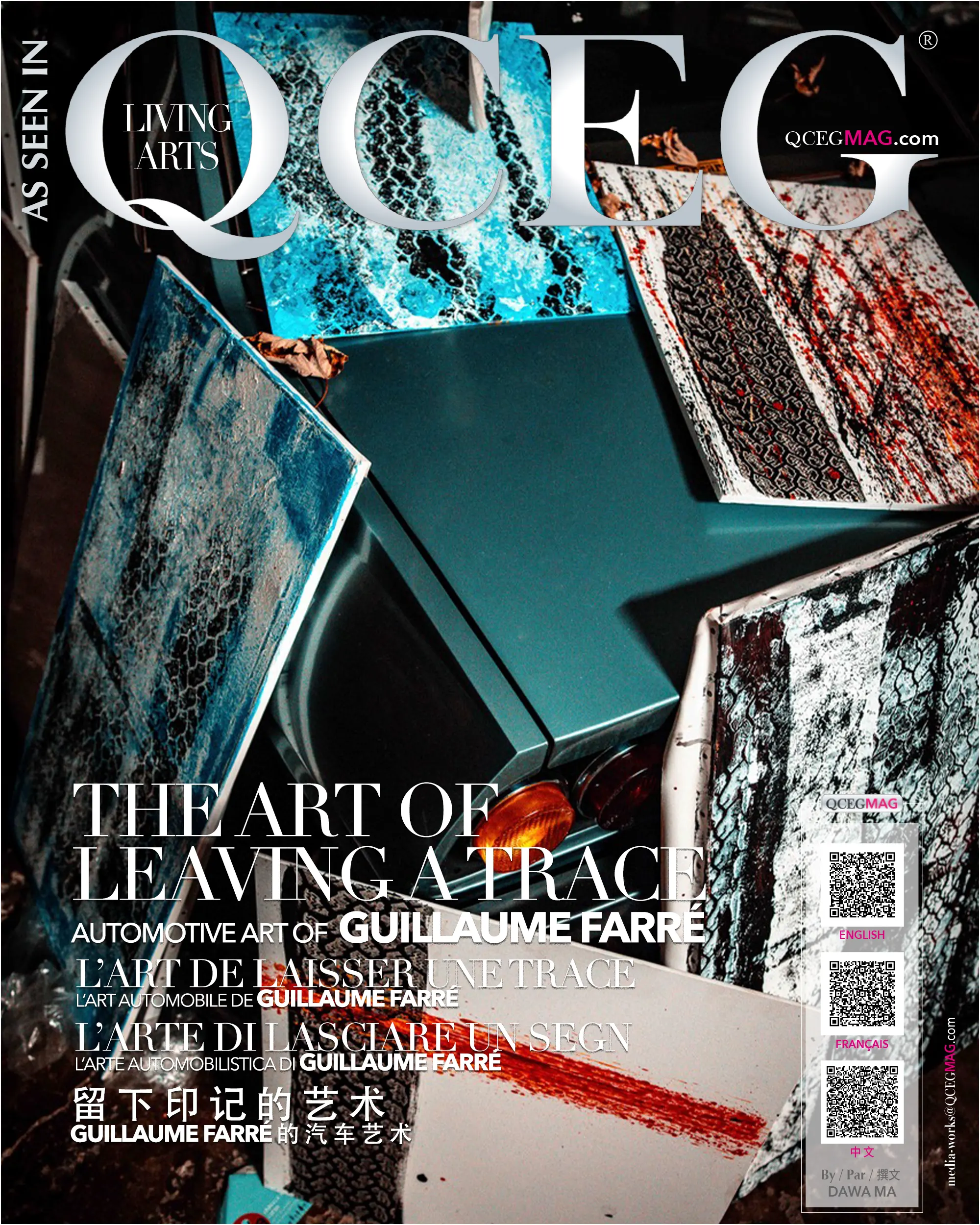
A QCEG PUBLICATION
QCEGPRO.COM LOGO
Guillaume Farré — The Art of Leaving a Trace | QCEG MAG
QCEG MAG EDITORIAL

THE ART OF
LEAVING A TRACE AUTOMOTIVE ART OF GUILLAUME FARRÉ

GUILLAUME FARRÉ · FERRARI · TOULOUSE & BIARRITZ

WHERE AUTOMOTIVE ELEGANCE
MEETS CONTEMPORARY ART

MOVEMENT · MEMORY · TRANSFORMATION


decorative divider


QCEG MAG EDITORIAL THE ART OF LEAVING A TRACE: AUTOMOTIVE ART OF GUILLAUME FARRÉ LIVING ARTS · ART FEATURE

What if the most meaningful part of a journey were not its destination, but the traces we leave behind? For French contemporary artist Guillaume Farré, this question lies at the heart of an artistic practice that brings together automotive heritage, abstract expression and a deeply personal exploration of the human experience.

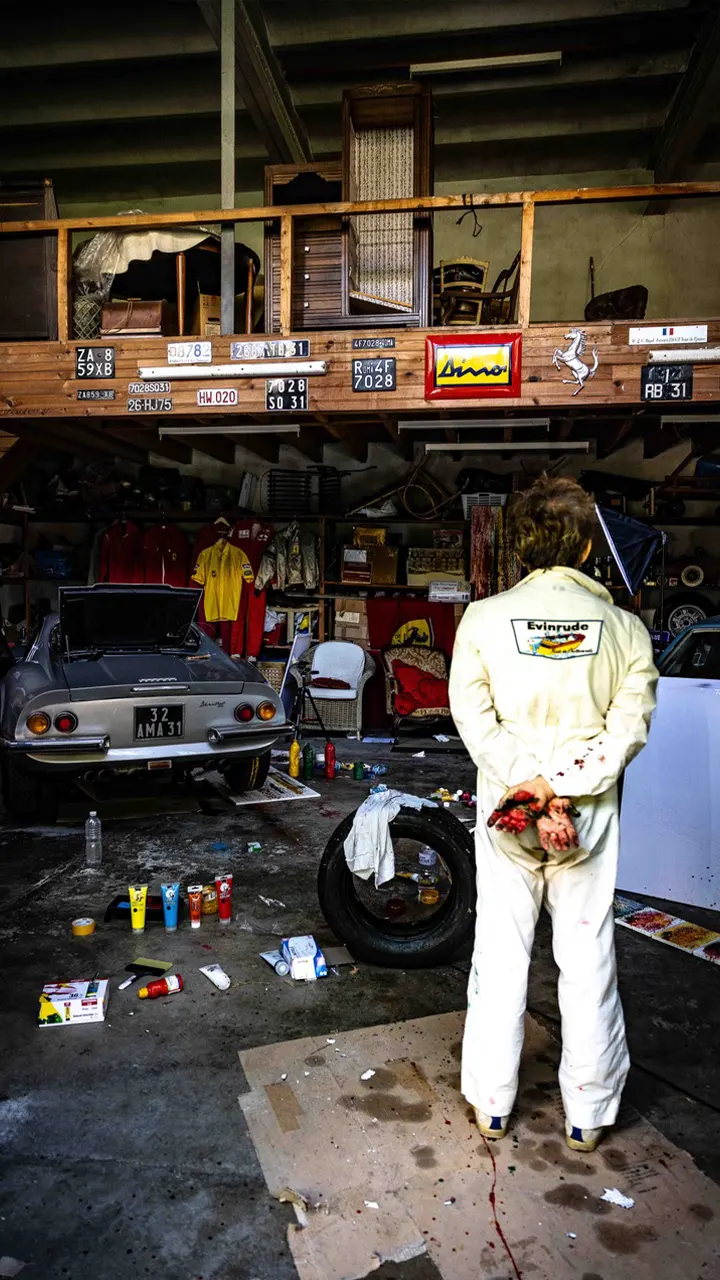
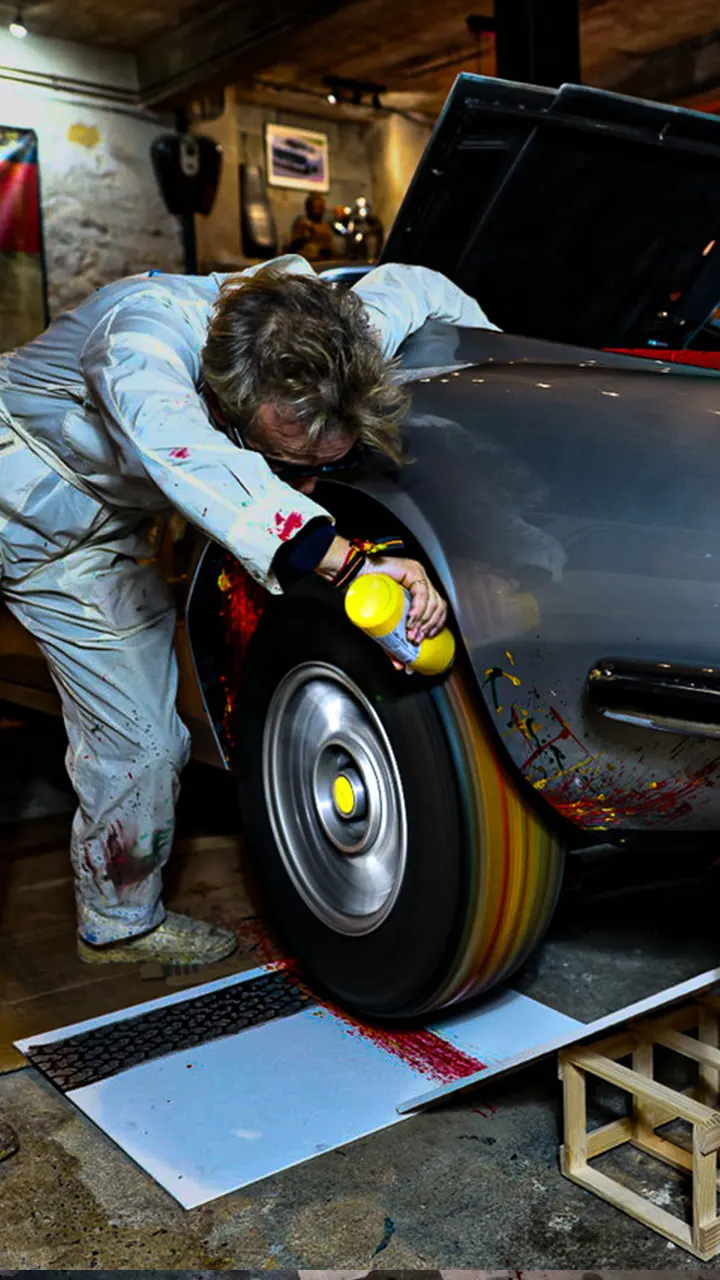
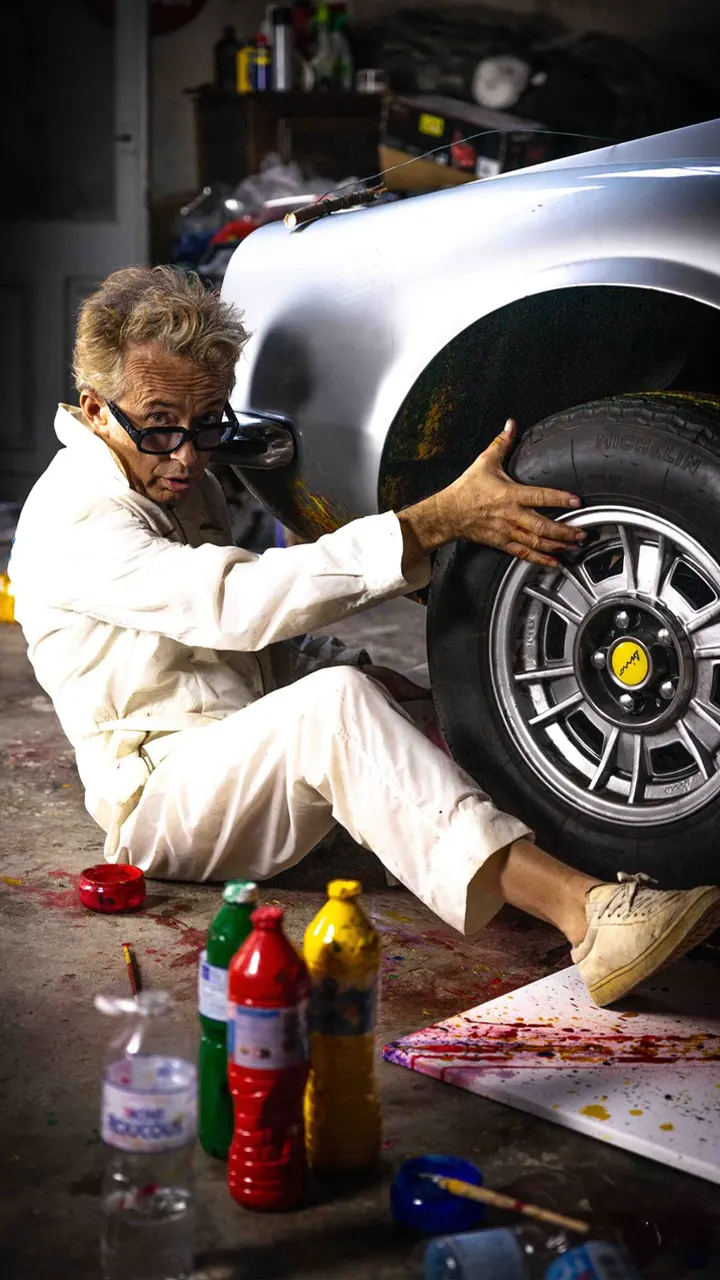
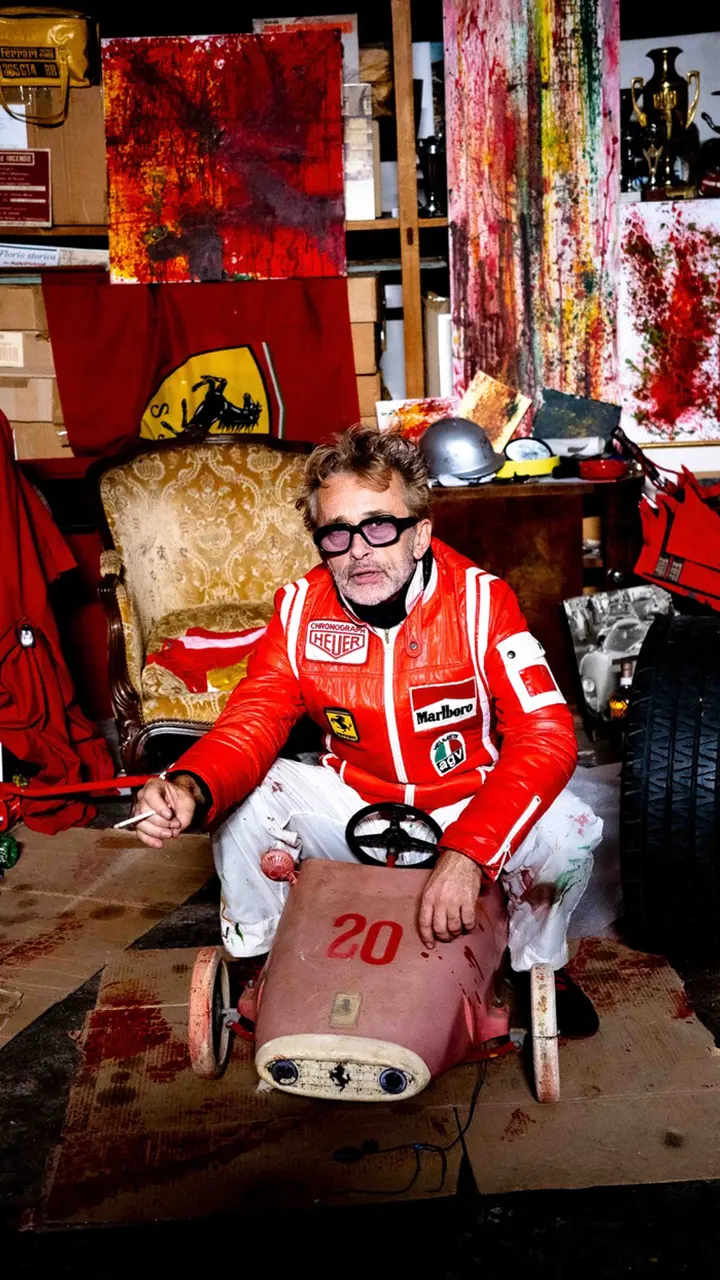
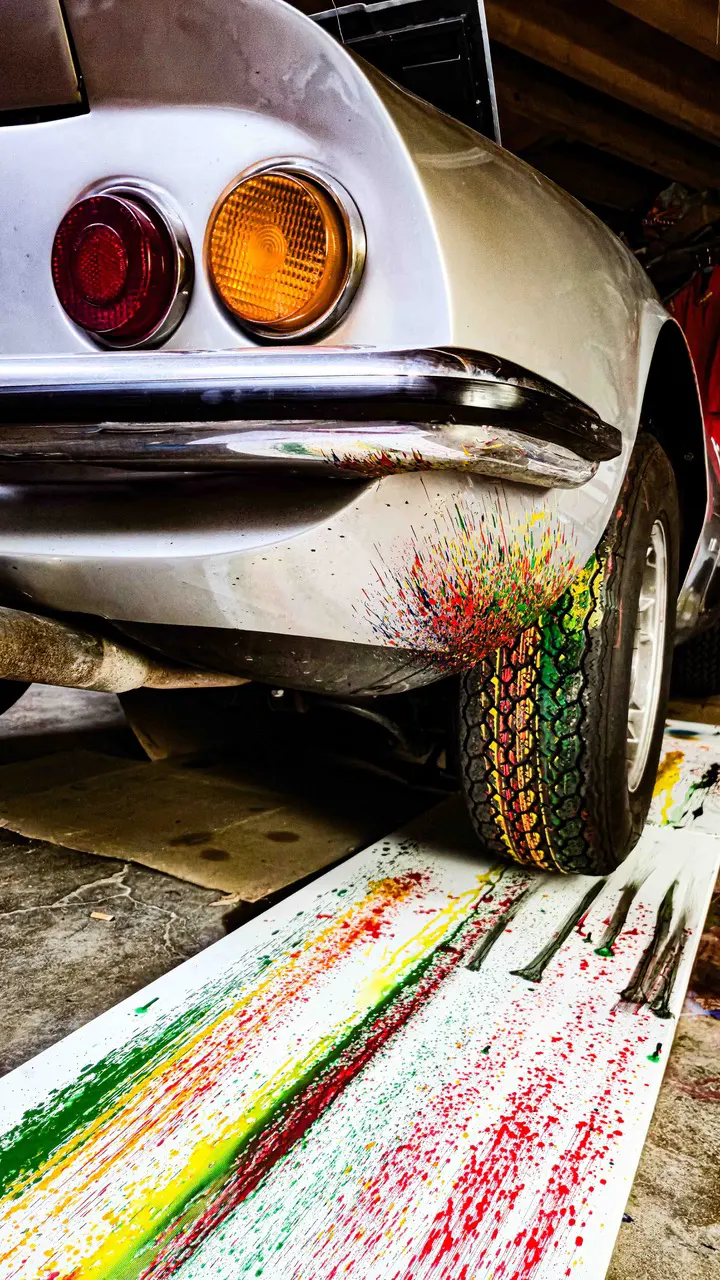
His unconventional paintbrushes? Two exceptional Ferraris: a Dino 246 GT and a 365 GT4 2+2.

Yet Farré's relationship with these remarkable machines extends far beyond their status as icons of Italian craftsmanship. Both are intimately connected to his childhood, having first captivated him at the Paris Motor Show in the 1970s before unexpectedly becoming part of his life decades later.

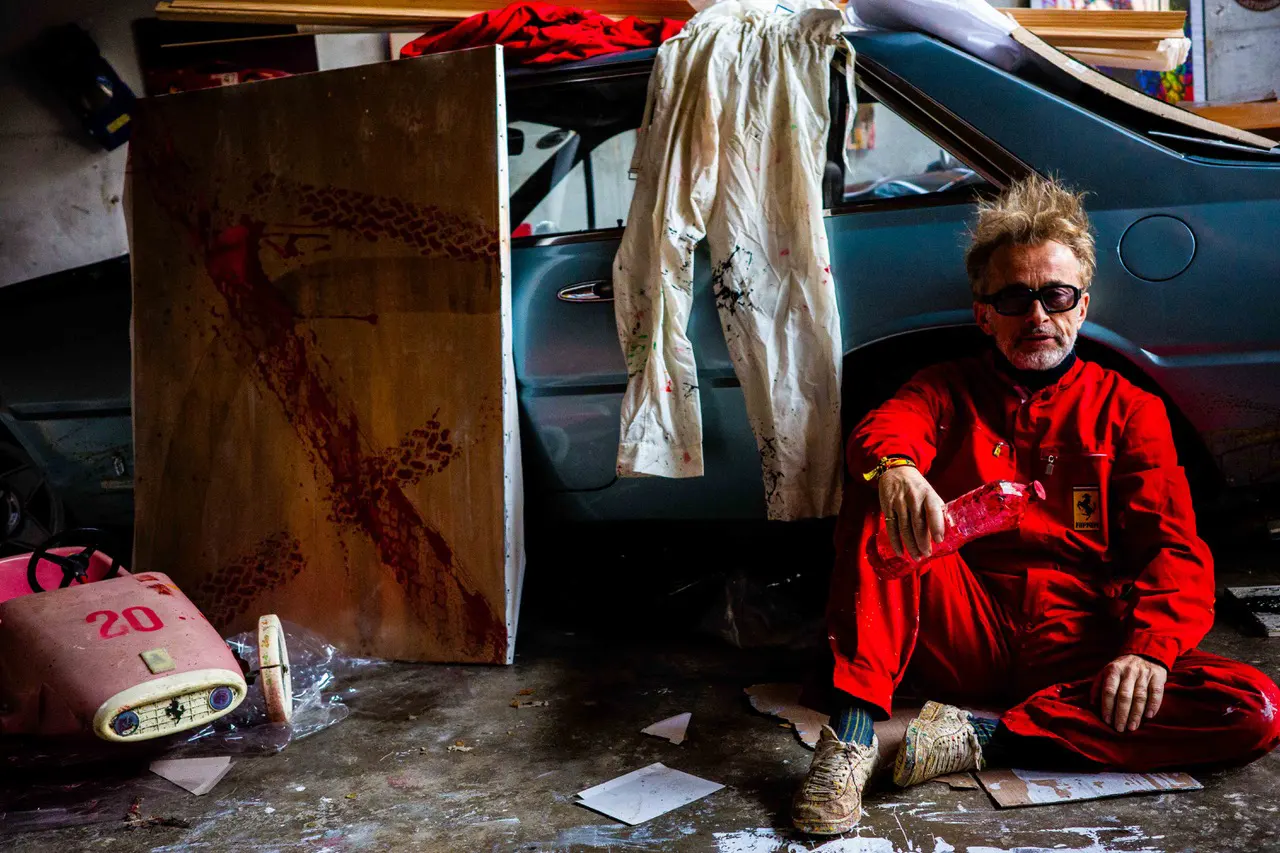
The origins of his artistic vision can be traced to Christmas 1972. As a young boy, Farré accidentally drove his pedal-powered Ferrari through spilled paint, leaving a succession of tyre marks across the family parquet floor. What his parents understandably regarded as a domestic catastrophe became, in his imagination, a moment of artistic revelation.

The journey itself becomes part of the artwork.

Years later, following the birth of his daughter, that childhood memory resurfaced. The idea was deceptively simple yet remarkably original: what if a real Ferrari could become an instrument of artistic expression?

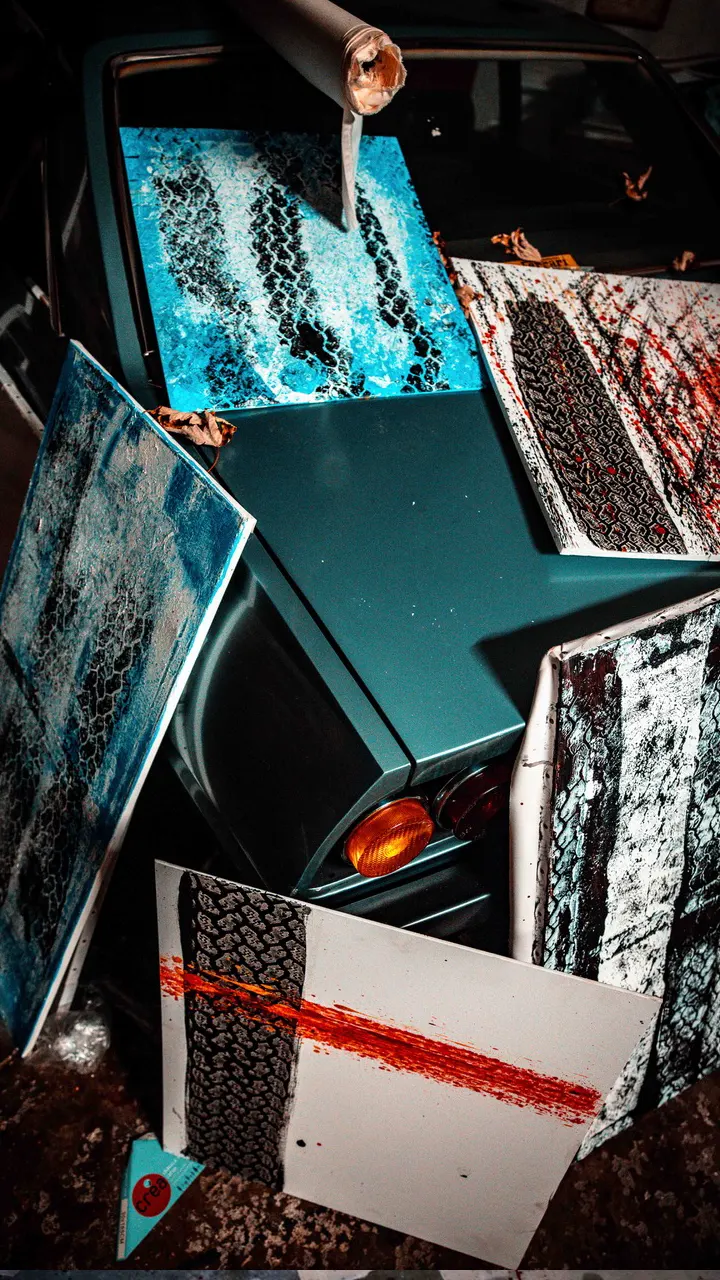
Today, working between his studios in Toulouse and Biarritz, Farré creates abstract compositions through tyre impressions, pigments, acceleration and carefully orchestrated trajectories. Each canvas becomes a dialogue between intention and unpredictability, where mechanical precision encounters the spontaneity of artistic creation.

But beneath the striking visual language lies something considerably more philosophical.

For Farré, movement represents existence itself. The intersecting lines evoke human encounters, unexpected turns, emotional scars and the passage of time. Even his most vibrant compositions retain darker imprints, acknowledging that beauty and hardship inevitably coexist.

His work also questions the contradictions of modern freedom. The automobile, a symbol of independence and progress, simultaneously leaves an environmental footprint. In Farré's hands, this paradox becomes an invitation to reflect on the consequences of our passage through the world.

Perhaps the most poetic expression of his practice occurs during his journeys between Toulouse and Biarritz, when a freshly painted canvas, secured to the roof of his Dino, continues evolving under the influence of wind, speed and the elements.

The journey itself becomes part of the artwork.

In an era increasingly fascinated by technological perfection and controlled outcomes, Guillaume Farré embraces the unexpected. His work reminds us that the beauty of existence often resides precisely in what cannot be predicted or repeated.

Ultimately, his art is not about cars. It is about life, movement and the indelible marks we leave upon the world.


decorative divider


ABOUT GUILLAUME FARRÉ


decorative divider


In an era increasingly fascinated by technological perfection and controlled outcomes, QCEG MAG considers how Farré's practice — movement as existence, memory as pigment, and the journey as artwork — positions his work at a rare intersection of automotive heritage, abstract expression and the human experience.
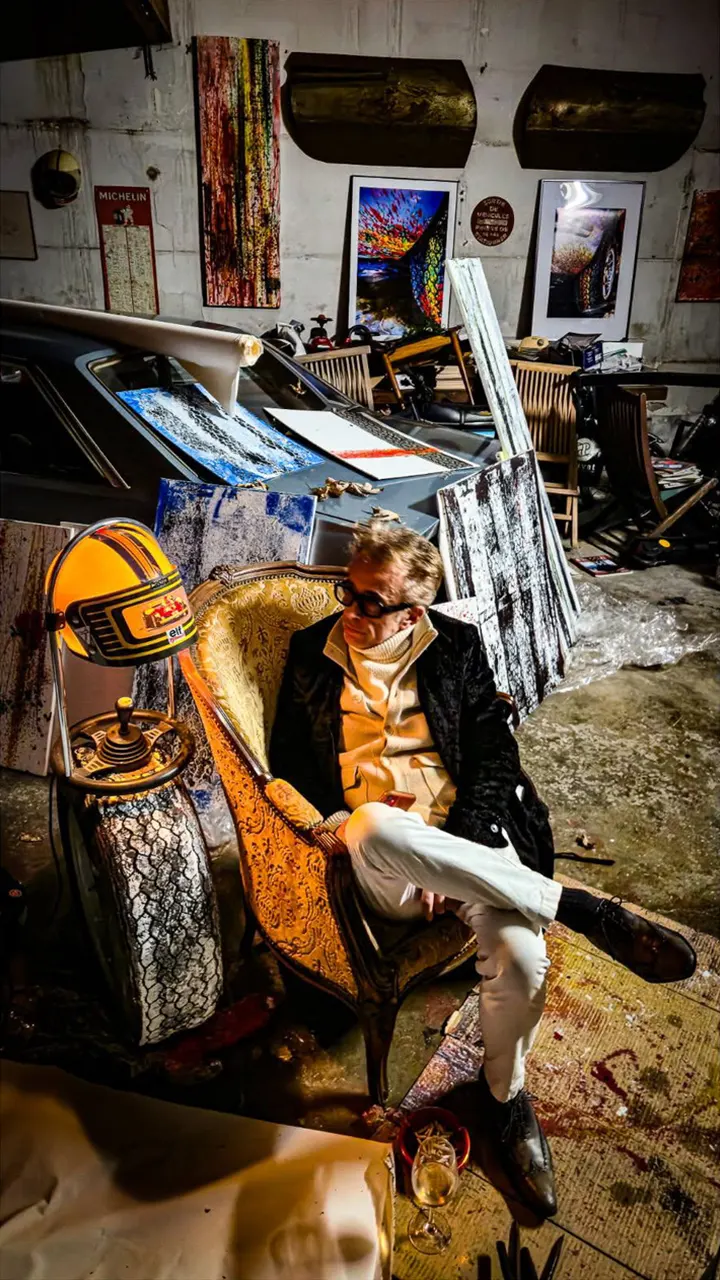
— Dawa Ma

THE JOURNEY ITSELF BECOMES PART OF THE ARTWORK.
"In an era increasingly fascinated by technological perfection and controlled outcomes, Guillaume Farré embraces the unexpected. His work reminds us that the beauty of existence often resides precisely in what cannot be predicted or repeated."


IN HIS OWN WORDS

Guillaume Farré

QCEG:

Guillaume, your paintbrushes are two Ferraris — a Dino 246 GT and a 365 GT4 2+2. What do these machines mean to you beyond their status as icons of Italian craftsmanship?

GUILLAUME FARRÉ:

Both are intimately connected to my childhood. I first saw them at the Paris Motor Show in the 1970s, and decades later they unexpectedly became part of my life. They are not simply cars to me — they carry memory, fascination and a whole personal history.

QCEG:

Your artistic vision traces back to Christmas 1972, when you accidentally drove your pedal-powered Ferrari through spilled paint. Looking back, how important was that accident?

GUILLAUME FARRÉ:

My parents understandably saw a domestic catastrophe. In my imagination, it became something else entirely — a moment of artistic revelation. Years later, after the birth of my daughter, that memory resurfaced and became the foundation of my practice.

QCEG:

Your method is deceptively simple: what if a real Ferrari could become an instrument of artistic expression? How would you describe what happens on the canvas?

GUILLAUME FARRÉ:

Each canvas becomes a dialogue between intention and unpredictability. Mechanical precision meets the spontaneity of artistic creation. I orchestrate the trajectories and the pigments, but I also leave room for what cannot be controlled.

QCEG:

Beneath the striking visual language, your work is deeply philosophical. What does movement represent to you?

GUILLAUME FARRÉ:

For me, movement represents existence itself. The intersecting lines evoke human encounters, unexpected turns, emotional scars and the passage of time. Even my most vibrant compositions retain darker imprints, because beauty and hardship inevitably coexist.

QCEG:

Your work also questions the contradictions of modern freedom — the automobile as a symbol of independence, and at the same time an environmental footprint. How do you approach that paradox?

GUILLAUME FARRÉ:

It is a paradox I cannot ignore. In my hands, it becomes an invitation to reflect on the consequences of our passage through the world. The work does not resolve the contradiction — it asks the viewer to sit with it.

QCEG:

Perhaps the most poetic expression of your practice is the canvas secured to the roof of your Dino during the drive between Toulouse and Biarritz. What does the journey add to the work?

GUILLAUME FARRÉ:

The canvas continues evolving under the influence of wind, speed and the elements. The journey itself becomes part of the artwork. It is the clearest expression of what I am trying to do — allowing the world to leave its mark.

QCEG:

Working between Toulouse and Biarritz, how do those two studios shape the work?

GUILLAUME FARRÉ:

Both places give me different rhythms and different light. The studios are where the work is prepared, but the journeys between them are where the work continues to live. The two are inseparable for me.

QCEG:

In an era increasingly fascinated by technological perfection and controlled outcomes, why is embracing the unexpected so important to you?

GUILLAUME FARRÉ:

Because the beauty of existence often resides precisely in what cannot be predicted or repeated. I am not interested in perfection — I am interested in the trace, the accident, the mark that could only have happened once.

QCEG:

Finally, after everything we have discussed, what would you most like a viewer to discover when they stand in front of one of your paintings?

GUILLAUME FARRÉ:

Ultimately, my art is not about cars. It is about life, movement and the indelible marks we leave upon the world. I hope the viewer discovers something of that — and perhaps something of themselves.

MORE ARTICLES ⟱
LIVING ARTS


The Art of Leaving a Trace — Guillaume Farré | QCEG MAG

THE ART OF LEAVING A TRACE — GUILLAUME FARRÉ

22 OCTOBER 2026
“Where automotive elegance meets contemporary art, French artist Guillaume Farré transforms movement into memory, using the wheels of his beloved Ferraris to create an extraordinary visual language.”


Read More
Beyond the Surface — The Dreamlike World of Carolina Pavia | QCEG MAG

BEYOND THE SURFACE — THE DREAMLIKE WORLD OF CAROLINA PAVIA

16 OCTOBER 2026
“Flowers become faces, bodies dissolve into nature and colour carries its own language. Inside the surreal universe of Carolina Pavia, on the occasion of her first European exhibition in Paris.”


Read More
When the Invisible Became Personal — Patrick Dubois of Natur Air

WHEN THE INVISIBLE BECAME PERSONAL — PATRICK DUBOIS OF NATUR AIR

10 OCTOBER 2026
“QCEG MAG meets Patrick Dubois, founder and president of Natur Air — on Covid-19, the science of air, measurable evidence and why the unseen deserves our attention.”


Read More
An Invitation to L’Esprit d’Escalier — Mateo on Art, Emotion and Healing

AN INVITATION TO L’ESPRIT D’ESCALIER — MATEO ON ART, EMOTION AND HEALING

2 OCTOBER 2026
“QCEG MAG steps inside Galerie L’Esprit d’Escalier in Paris and meets Mateo — on art, emotion, poetry, Latin, colour and why art does not need to give us answers.”


Read More
ELVORA — Ancient Wisdom. Modern Science. Human Compassion.
ELVORA — ANCIENT WISDOM. MODERN SCIENCE. HUMAN COMPASSION.

3 SEPTEMBER 2026
“An intimate Q&A with fourth-generation heir Li Zhen, exploring how ELVORA bridges traditional Chinese wisdom with modern science to support vitality, balance and healthy ageing.”


Read More
Chris Oven — Creating Beyond Borders and the Rhythm of Life

CREATING BEYOND BORDERS AND THE RHYTHM OF LIFE

9 JULY 2026
“Sculptor, painter and inventor Chris Oven shares how imagination, movement and innovation converge to create artworks that transcend borders and inspire future generations.”


Read More