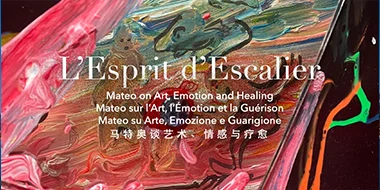










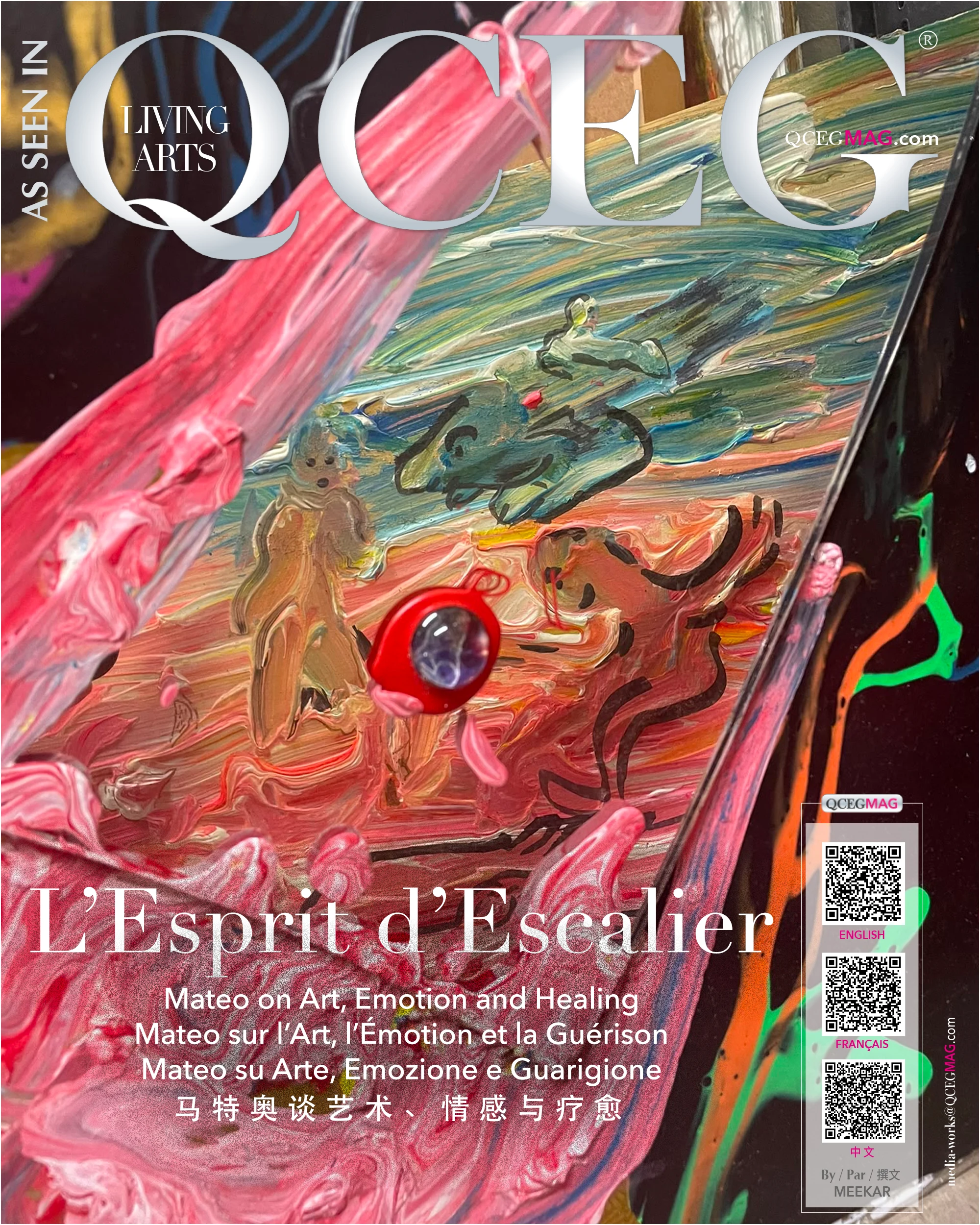
AN INVITATION TO L’ESPRIT D’ESCALIER ART, EMOTION AND THE GALLERY THAT REFUSES TO SIT QUIETLY
GALERIE L’ESPRIT D’ESCALIER · PARIS
I was invited to an exhibition at Galerie L’Esprit d’Escalier, and I arrived expecting an evening of art. What I was not expecting was to walk into what felt like a small, electric universe.
The gallery was completely overcrowded. People were everywhere. Artists were talking animatedly, photographers were moving through the crowd, music was playing, and conversations were unfolding in several languages at once. Everywhere I looked, there was something or someone demanding attention. It was difficult to take everything in, and that was precisely what made it so exciting.
There were artists from different countries and generations, photographers capturing the evening, collectors looking closely at the work, architects, designers, cultural figures, and people whose names you might recognise if you know the Paris creative scene well. But the extraordinary thing was that you could easily miss them. There was simply too much happening.
One moment, you were looking at a painting. The next, someone had started a conversation beside you. Music drifted through the room. An artist was explaining a work. A photographer was capturing a fleeting moment. Someone was laughing. Someone else was passionately discussing an idea.
The exhibition seemed to extend beyond the walls of the gallery. The people had become part of the exhibition.
This was my first encounter with L’Esprit d’Escalier, and I immediately understood that this was not a conventional Paris gallery. It was a vibrant space, bringing together people of different generations, nationalities and backgrounds, with an energy that made the gallery feel completely alive. There was an unmistakable feeling of creativity in the room, the kind that happens when people from different backgrounds come together without knowing exactly where the evening will lead.
"YOU NEVER QUITE KNOW WHAT THE EVENING MIGHT BRING: AN ARTIST, A PHOTOGRAPH, A CONVERSATION, A NEW FRIENDSHIP, OR AN UNEXPECTED CULTURAL CONNECTION."
That is perhaps the real charm of L’Esprit d’Escalier. You never quite know what the evening might bring: an artist, a photograph, a conversation, a new friendship, or an unexpected cultural connection.
In my case, the evening brought an unexpected encounter with the person at the heart of it all, Mateo, the owner of L’Esprit d’Escalier, who was also presenting his own work in a corner of the gallery. Amid the movement and energy of the evening, we began talking about art, culture, identity, creativity and the vision behind L’Esprit d’Escalier.
EMOTION, POETRY AND THE MESSAGE INSIDE THE WORK
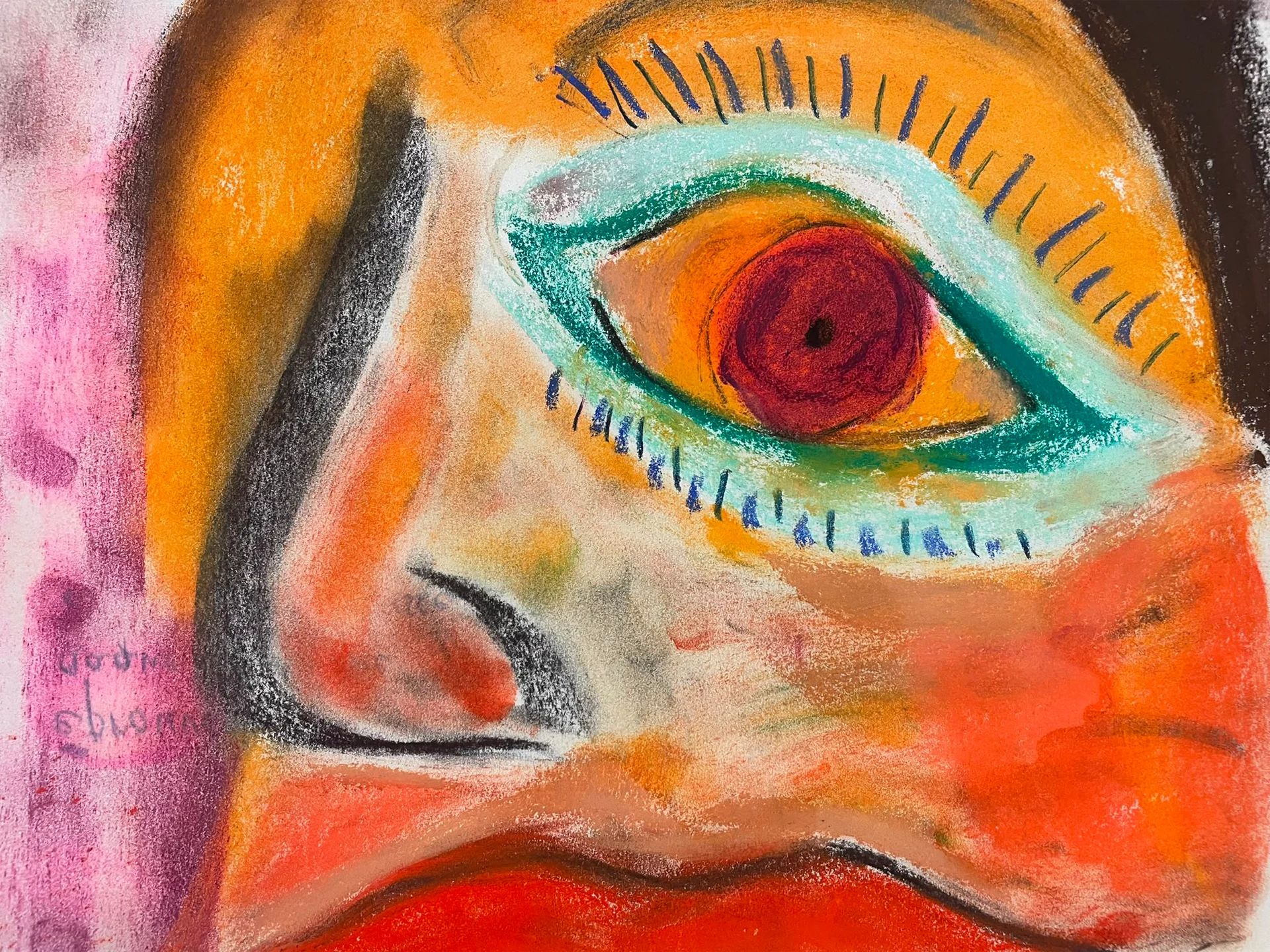
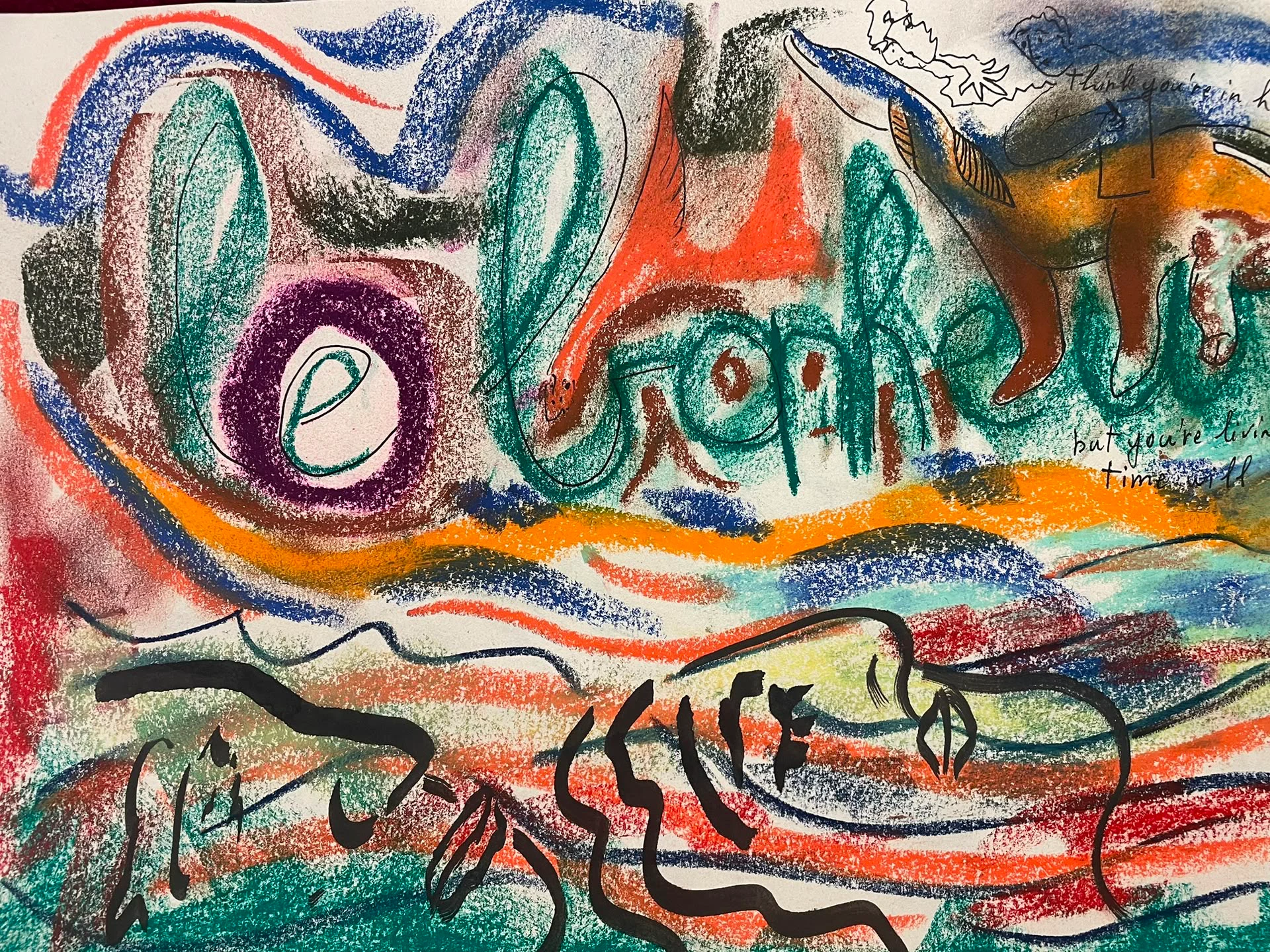
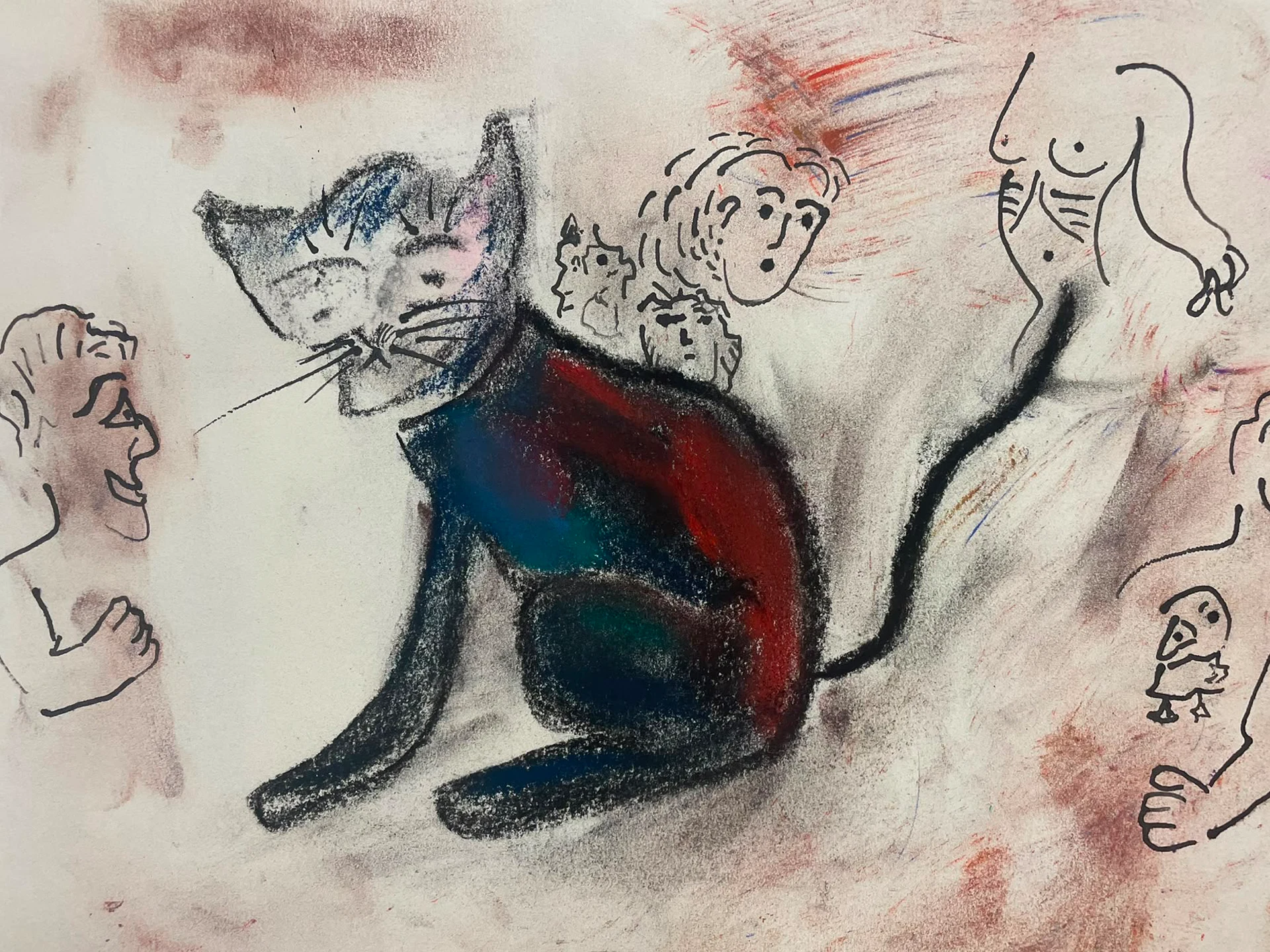
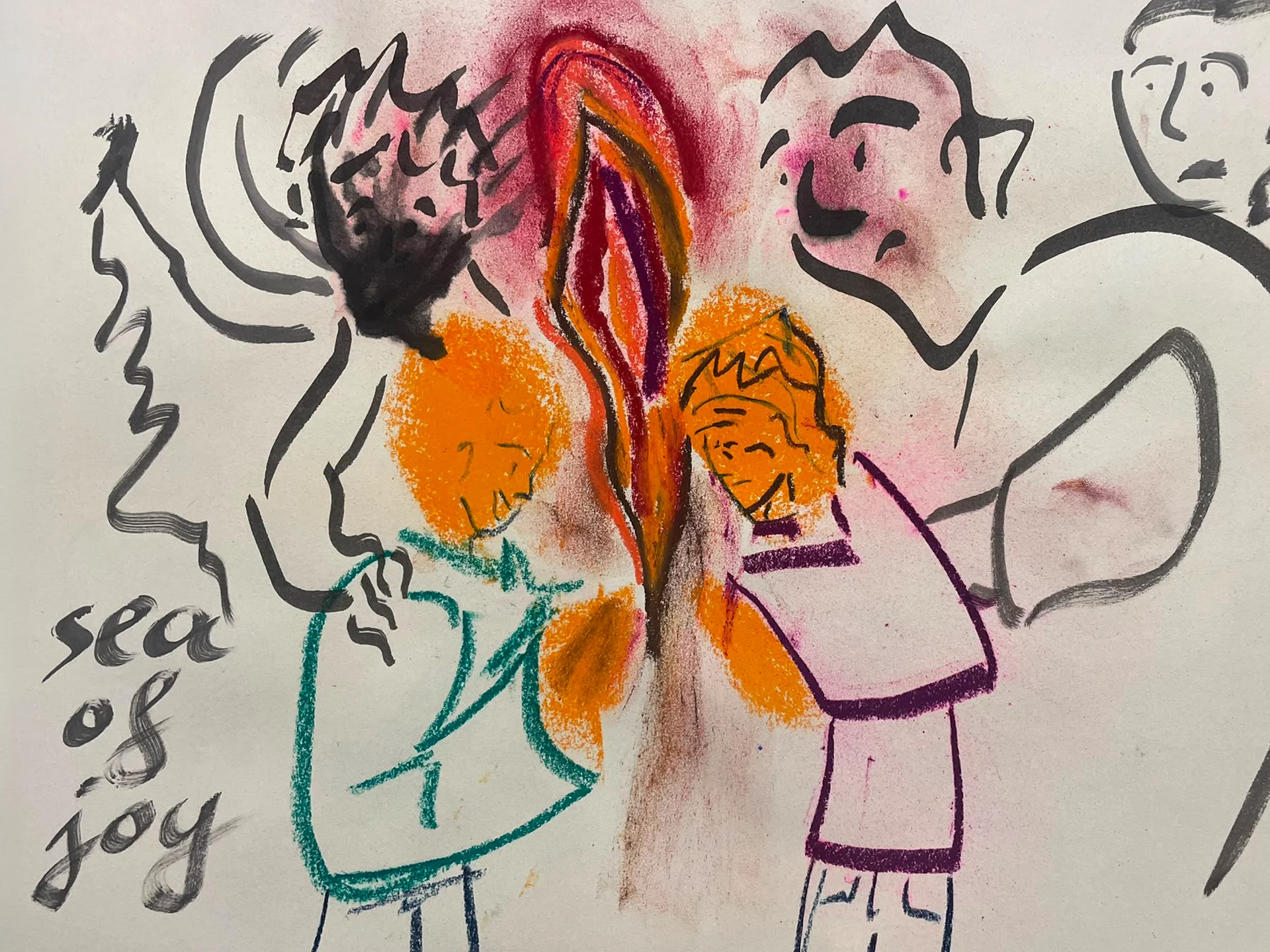
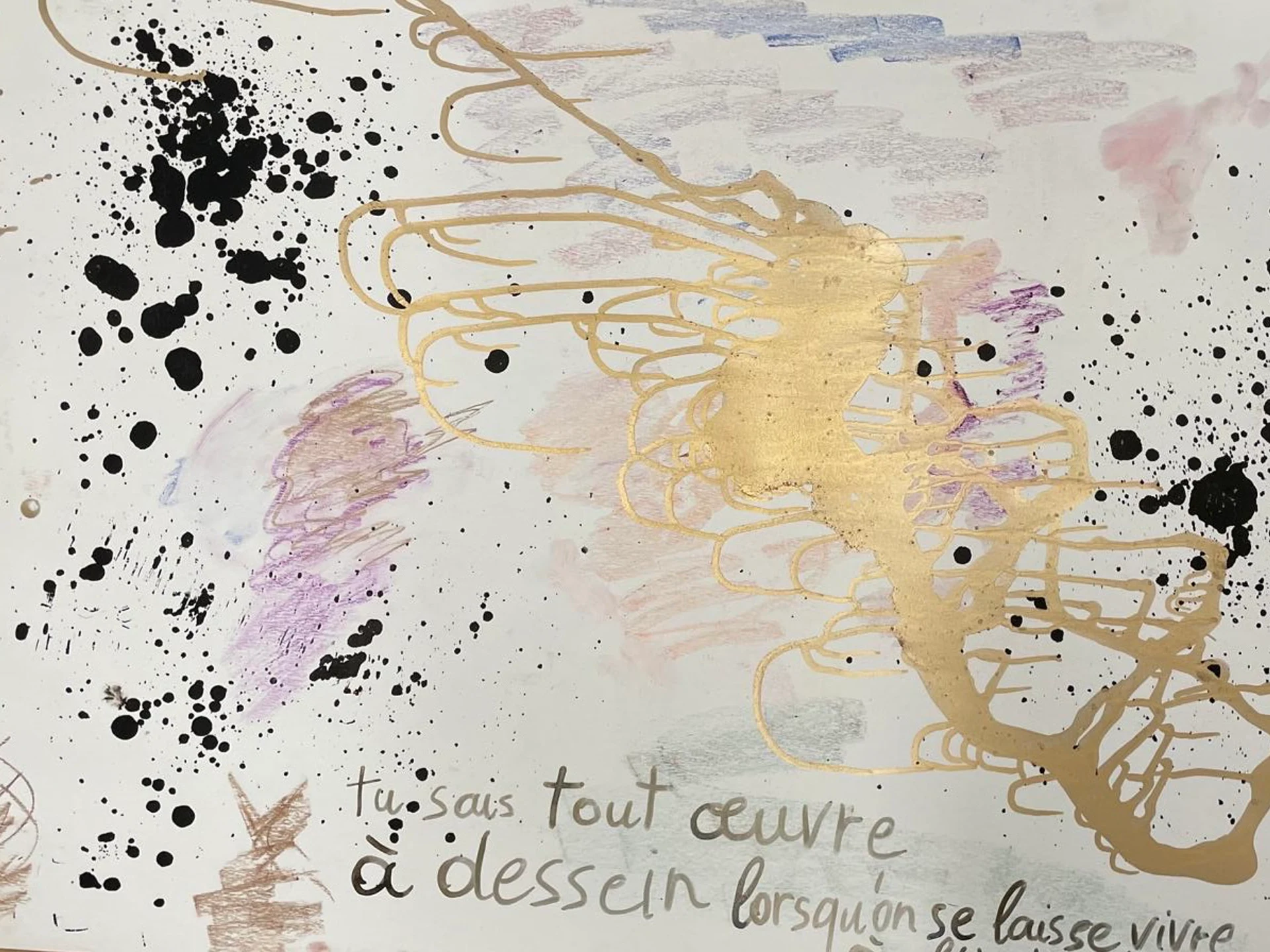
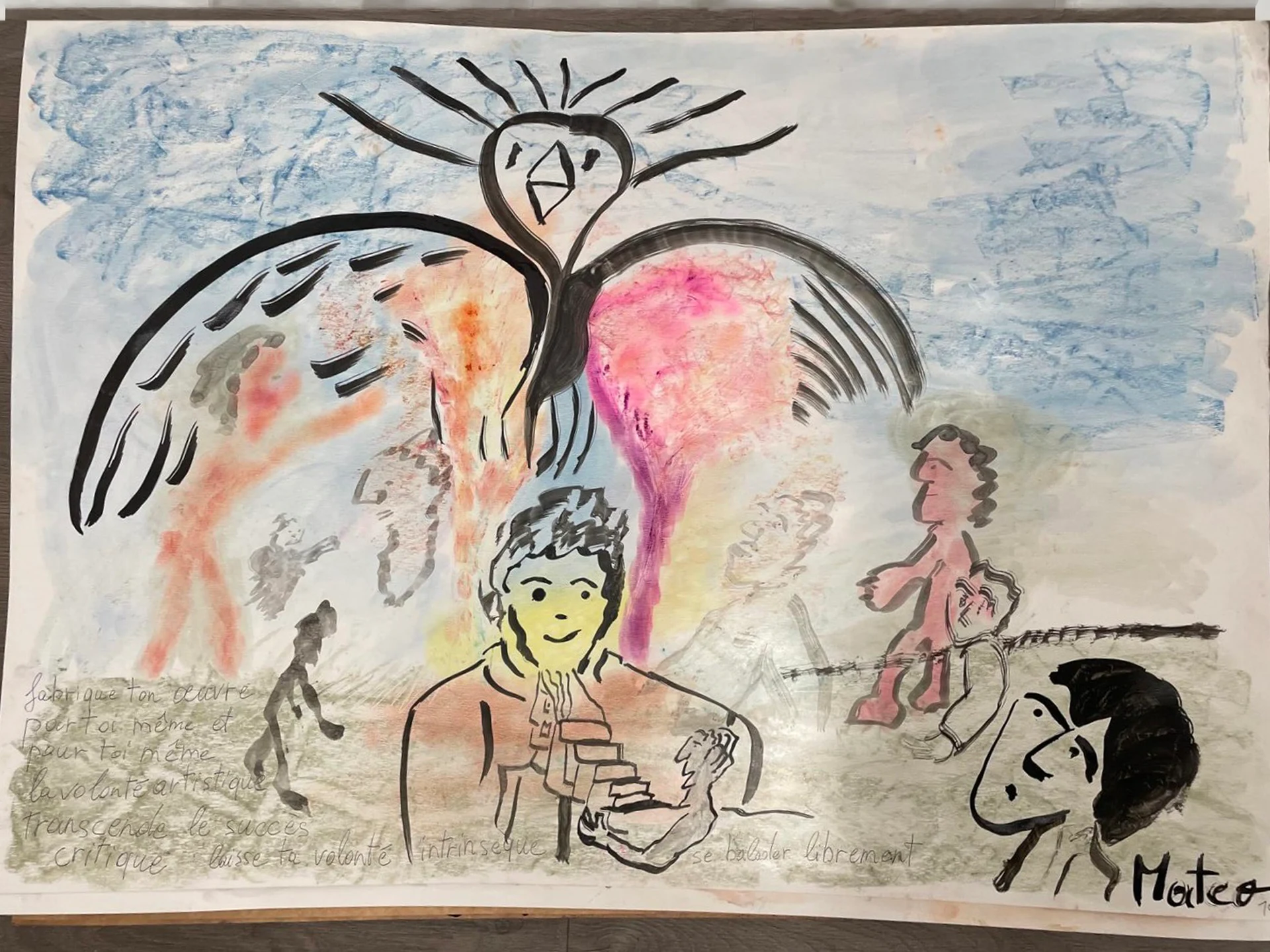
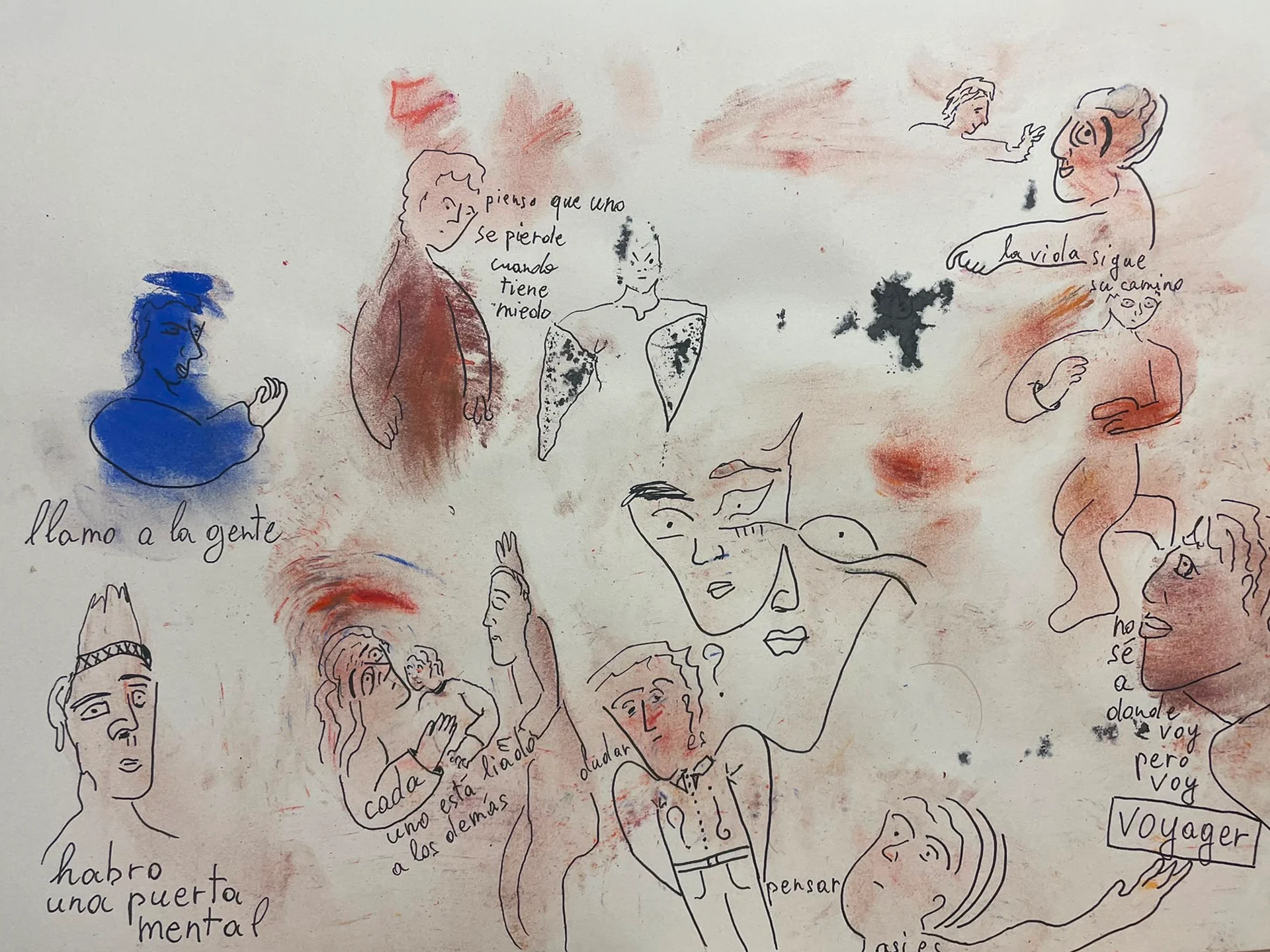
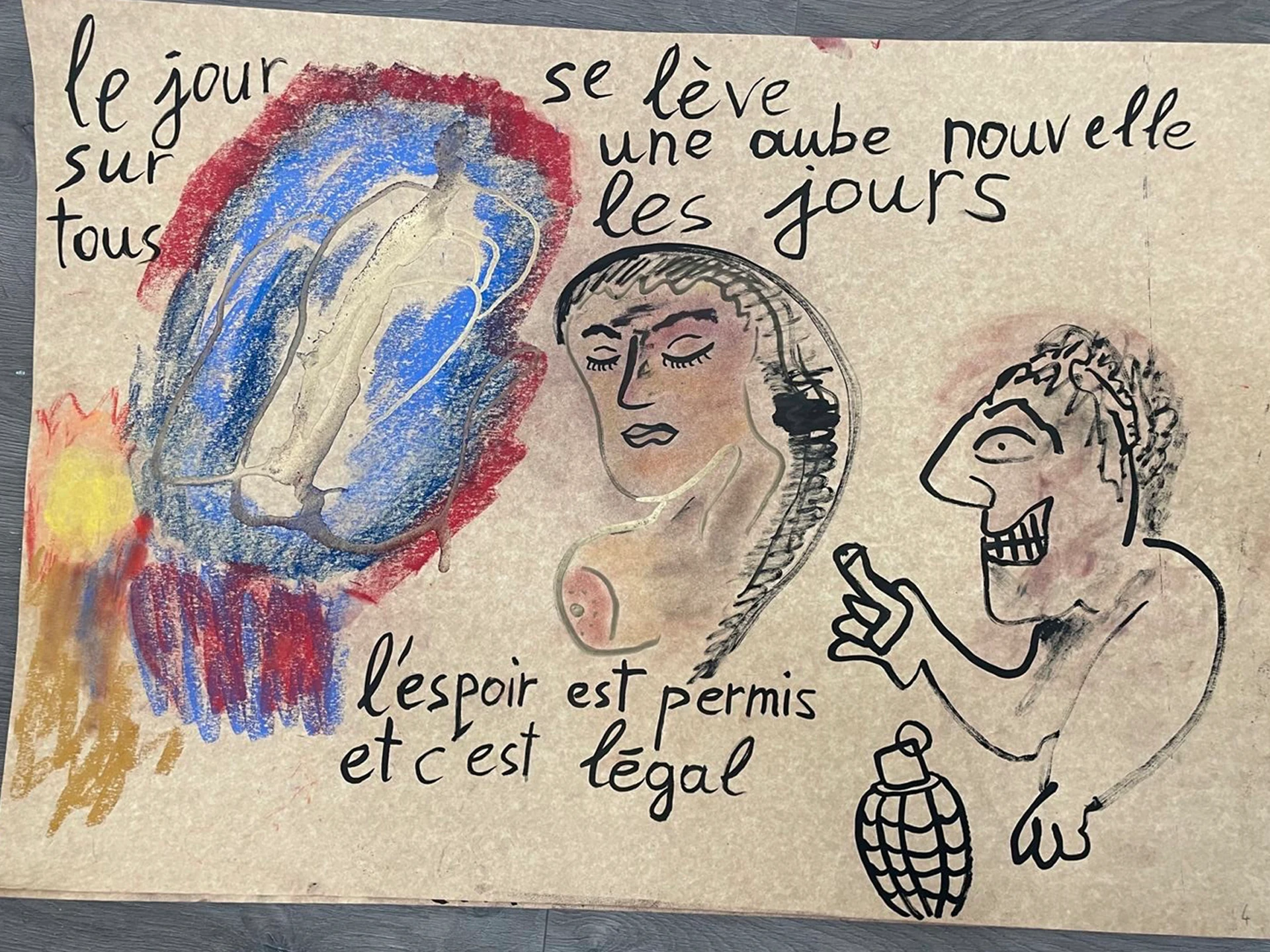
His images were colourful and fun, and yet they carried something far more serious beneath the surface. Emotion, he told me, is at the heart of his work. He tries to capture what he is feeling in a particular moment and give it a visual form — and he does not always know what the final image will say when he begins. Sometimes the meaning reveals itself as the work develops.
Time, for Mateo, is not measured in hours. What matters is not how long the hand works, but whether something true has been captured from that moment. A feeling can last for days, and yet sometimes it only needs a few minutes to become visible. That is how fourteen works can emerge in a single night: by following an idea or an emotion rather than trying to control it.
Poetry runs throughout his work. He usually writes the poems first and then combines the words with drawings, most often inside books, although more recently he has been experimenting with individual sheets of paper. One piece in particular, Accroche-toi — “Hold on” or “Hold on tightly” — caught my attention. For Mateo, it speaks about the atrocities happening right in front of us, and about the destruction of the natural world. His empathy makes it impossible for him to ignore them. It also makes him angry.
He does not shy away from the darkness. He speaks of growing inequalities, political manipulation and systems that concentrate wealth and power. It feels, he says, as though machines are becoming omnipresent, and he worries that humanity may slowly lose itself.
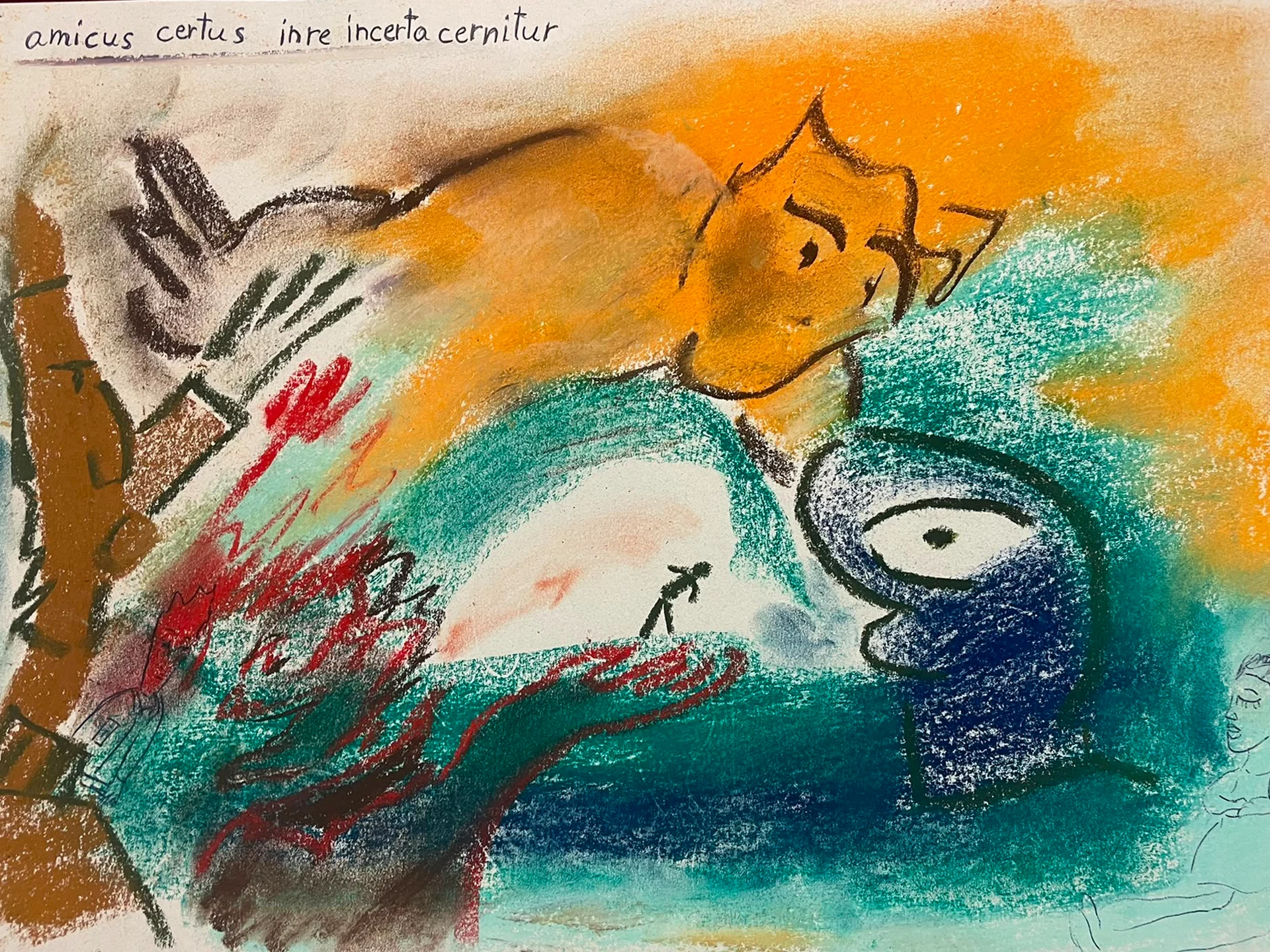
And yet his work is not without light. Throughout it, Latin phrases appear — among them Sit tibi terra levis, “May the earth be light upon you.” Traditionally said to someone who has died, Mateo uses it for the living, and interprets it differently: as an invitation to live fully, to run, to jump, and to appreciate life while we have it. We owe that, he says, to those who are suffering.
"I DO NOT WANT TO GIVE PEOPLE ANSWERS. I WANT TO PLACE QUESTIONS INSIDE THEM."
His work is deeply philosophical, and he is clear about what he hopes people take away from it. He does not want to give people answers. He wants to place questions inside them. If someone leaves his exhibition questioning where we are, who we are and what kind of world we are creating, then the painting has done its job.
COLOUR AS A LANGUAGE — AND ART AS HEALING
Our conversation turned to colour and to the studies showing how profoundly it influences our emotions — how hospitals so often use soft green tones because they help patients feel calmer. Mateo agreed immediately. Colour, he says, has its own language.
People often confuse art with culture, he told me, but culture is only one part of it. Art reaches places that words often cannot. Creating art heals the artist. Experiencing art heals the viewer. Music, painting, dance and poetry all speak directly to our subconscious. They can calm us, move us, excite us or challenge us without saying a single word.

Perhaps this is what makes L’Esprit d’Escalier so intriguing. It is not simply a place where art is displayed; it is a place where ideas, emotions and people meet. Mateo’s philosophy seems to live within the gallery itself. In a world that can often feel increasingly divided and uncertain, L’Esprit d’Escalier offers something refreshingly different: a space for curiosity, imagination and connection. Here, a painting can become a conversation, a poem can become a question, and a chance encounter can become a new way of seeing.
Walking out of the gallery that evening, I found myself thinking about Mateo’s belief that art does not need to give us answers. Perhaps its greatest power is simply to make us look again. And that is what L’Esprit d’Escalier seems to invite us to do: to look again, think differently, feel deeply, and remain open to what might happen next. Because sometimes the most interesting part of an artistic journey is not knowing exactly where the stairs will lead.
With the exhibition now part of the gallery’s story, QCEG MAG speaks exclusively with Mateo about emotion, poetry, Latin, colour, art as therapy, and the vision behind L’Esprit d’Escalier.