











HAYELI QUAND LA MODE DEVIENT UNE TOILE VIVANTE
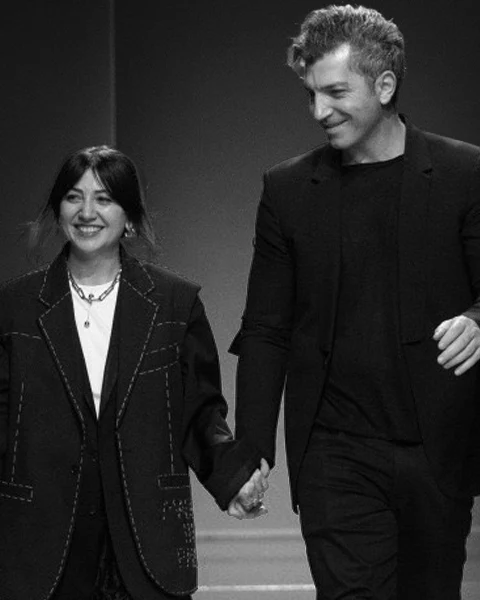
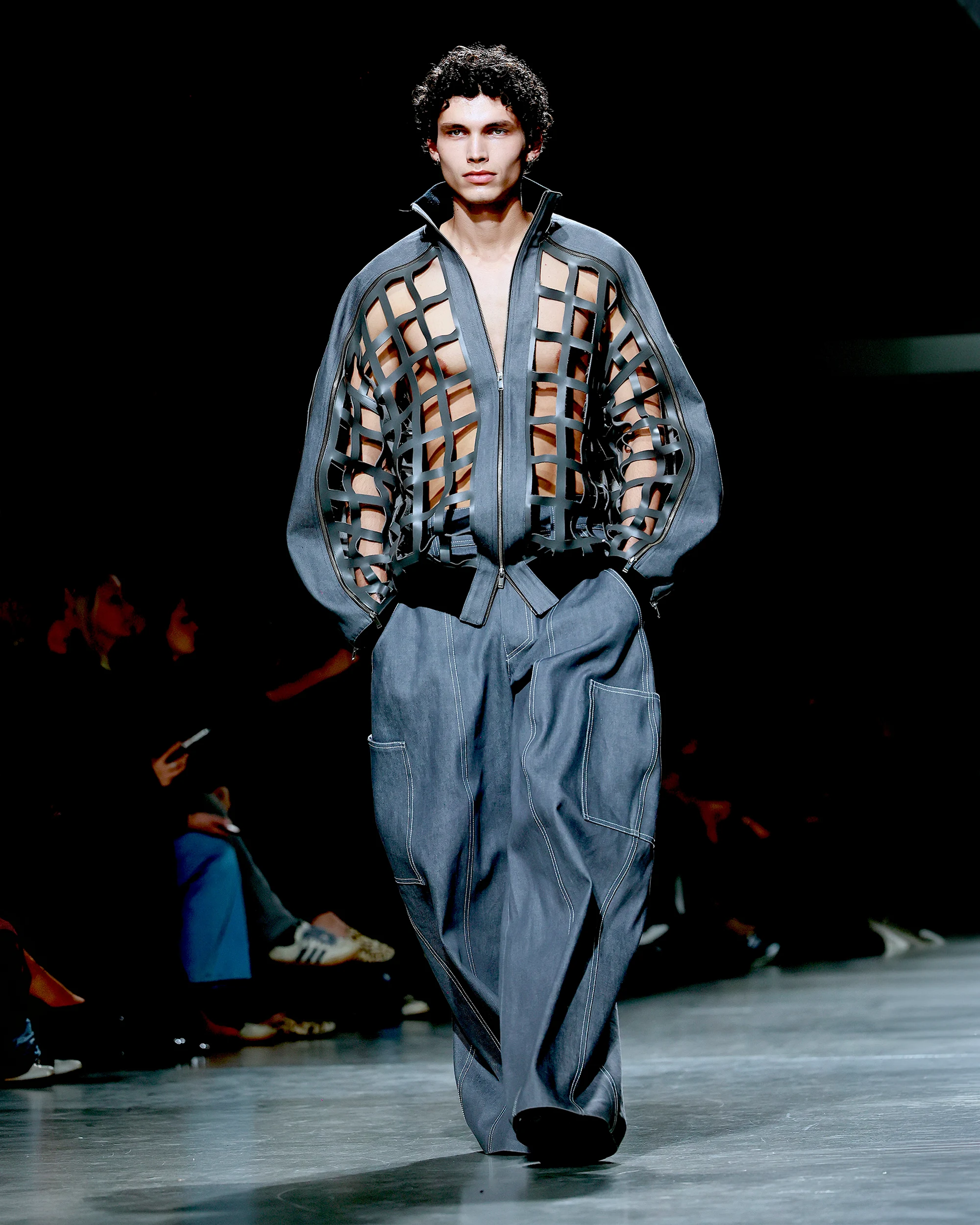
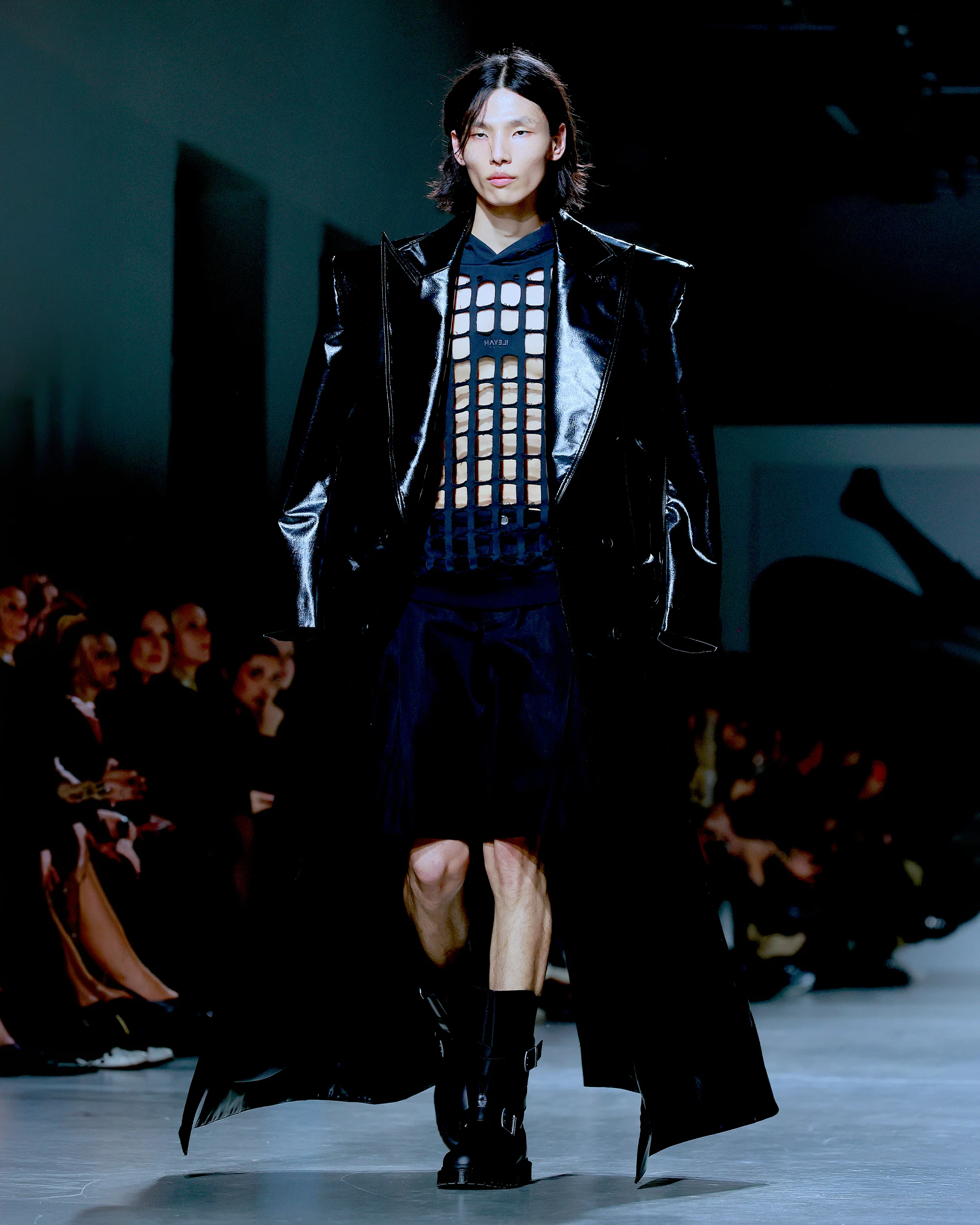
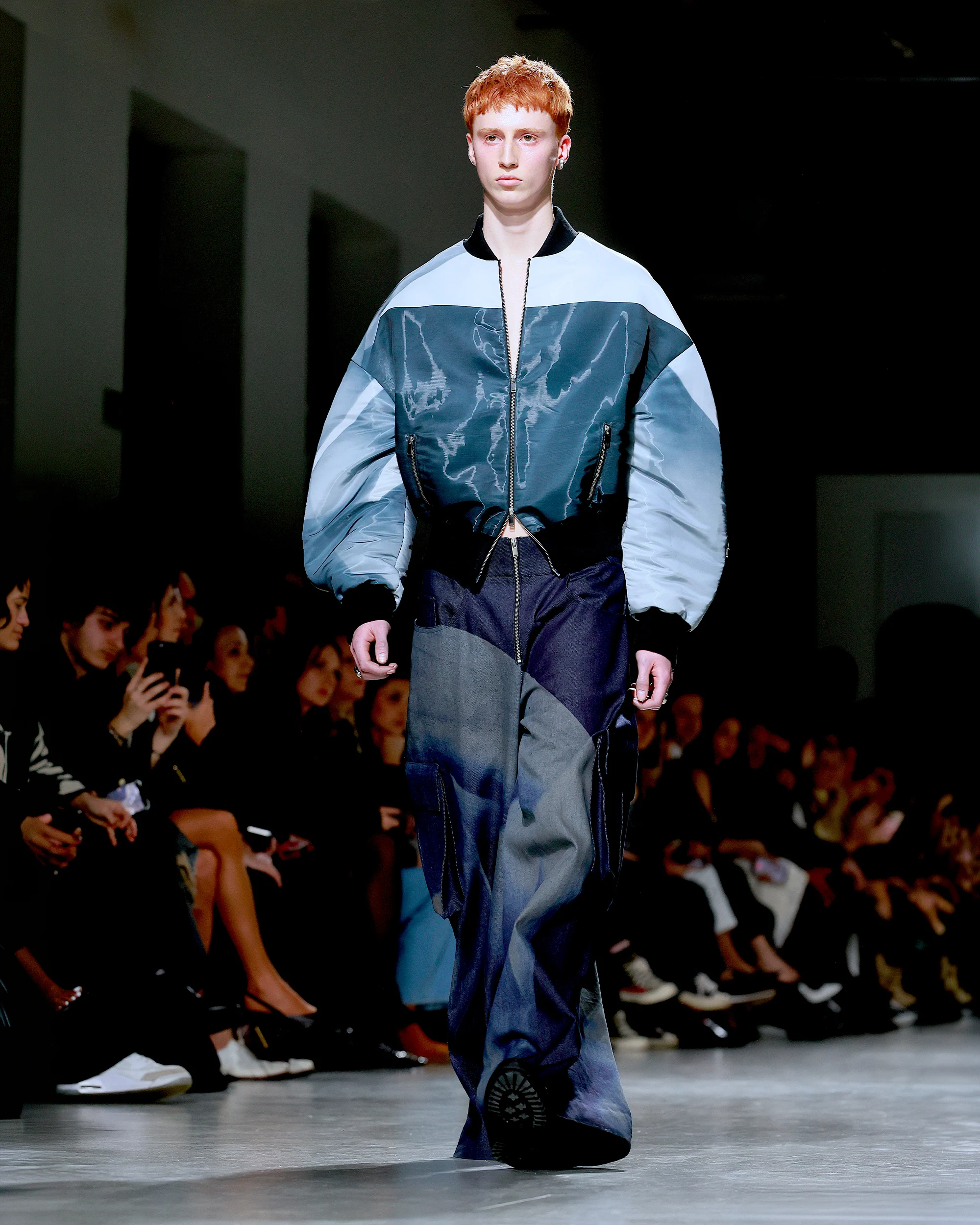
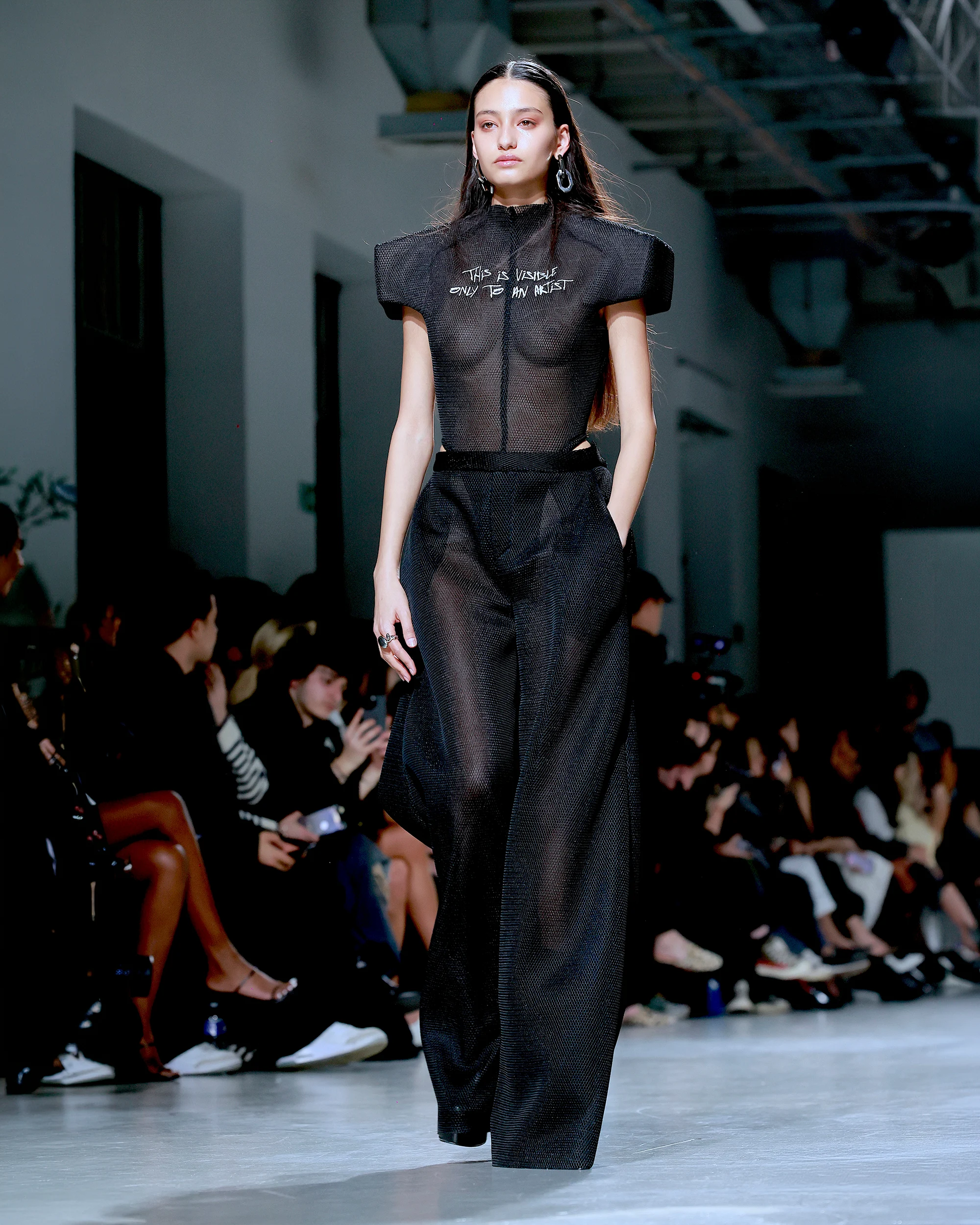
Au Palais de Tokyo, lors de la Fashion Week de Paris, la créatrice Armine Ohanyan a dévoilé HAYELI AUTOMNE/HIVER 2026, une collection intitulée « Multiple » qui remet subtilement en question les codes traditionnels du défilé. Présentée comme une expérience artistique immersive plutôt qu’un simple show, la collection inscrit la mode, l’identité et l’art contemporain dans un dialogue visuel et émotionnel commun.
Le vaste espace dédié à l’art contemporain s’est rapidement rempli de plus de 400 invités — rédacteurs, collectionneurs, créatifs et clients fidèles — venus découvrir la nouvelle vision de la designer. Ce qui a suivi relevait moins d’une présentation classique que d’une installation vivante, où les silhouettes existaient à la fois comme expression artistique et comme propositions de design raffinées et portables.
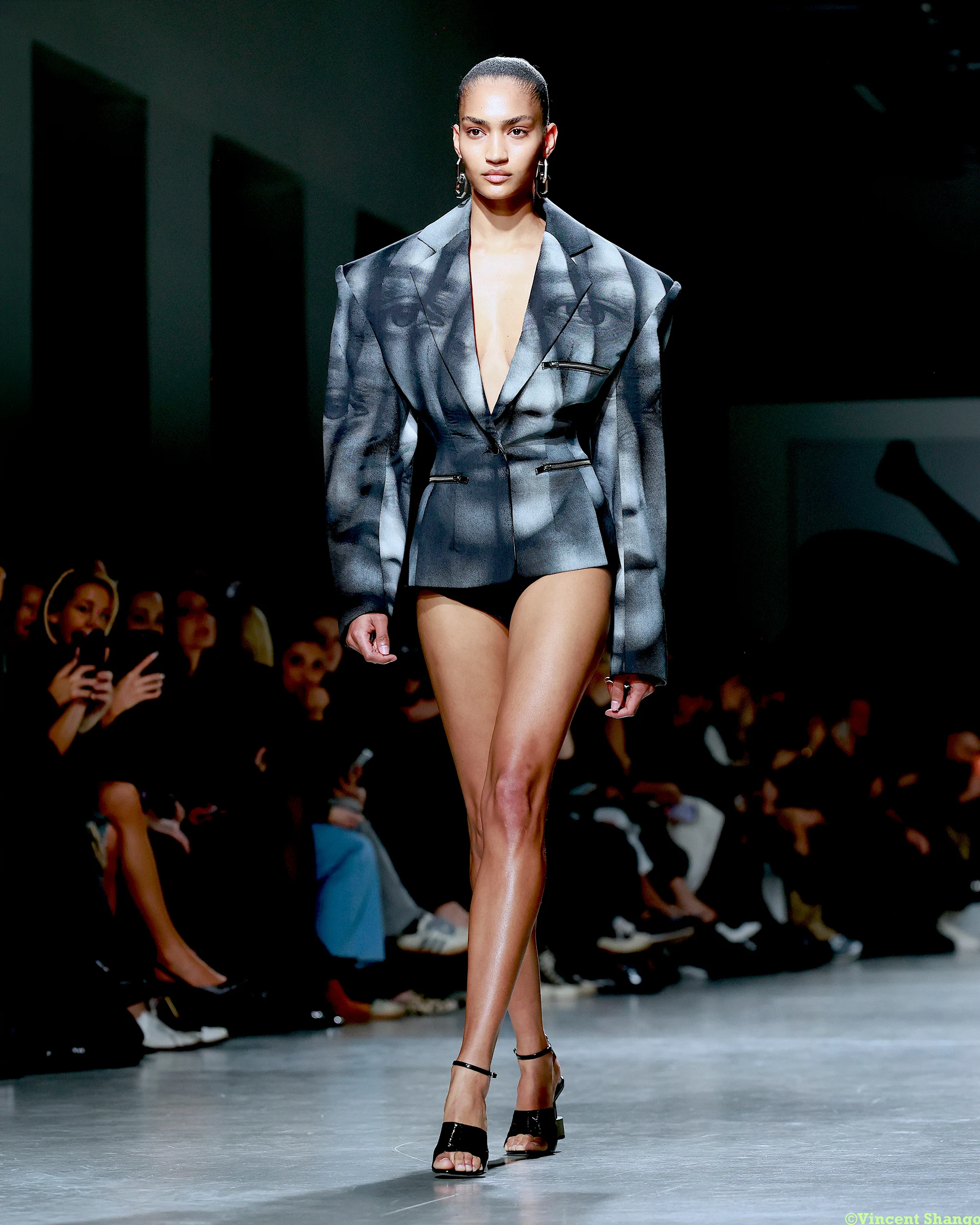
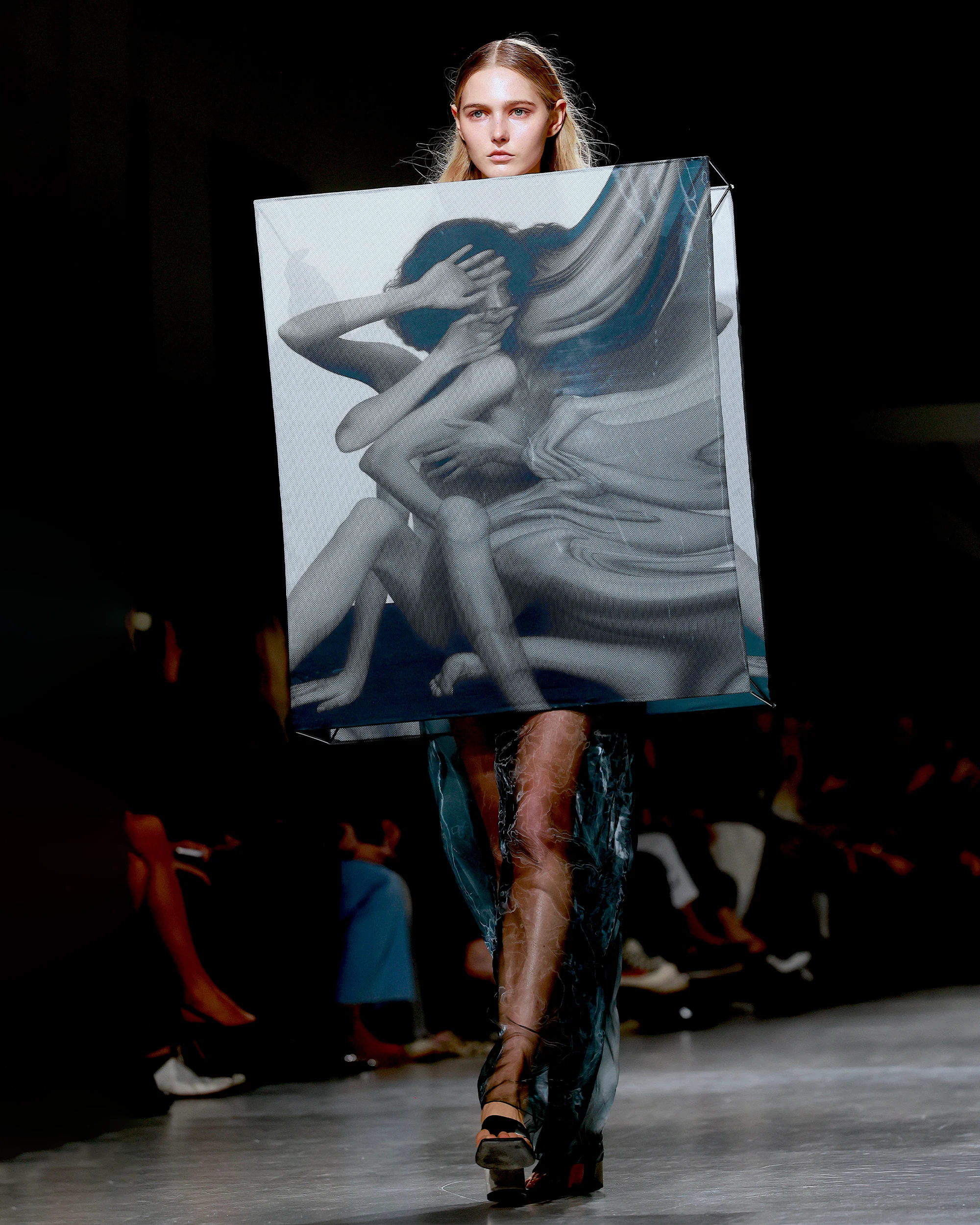
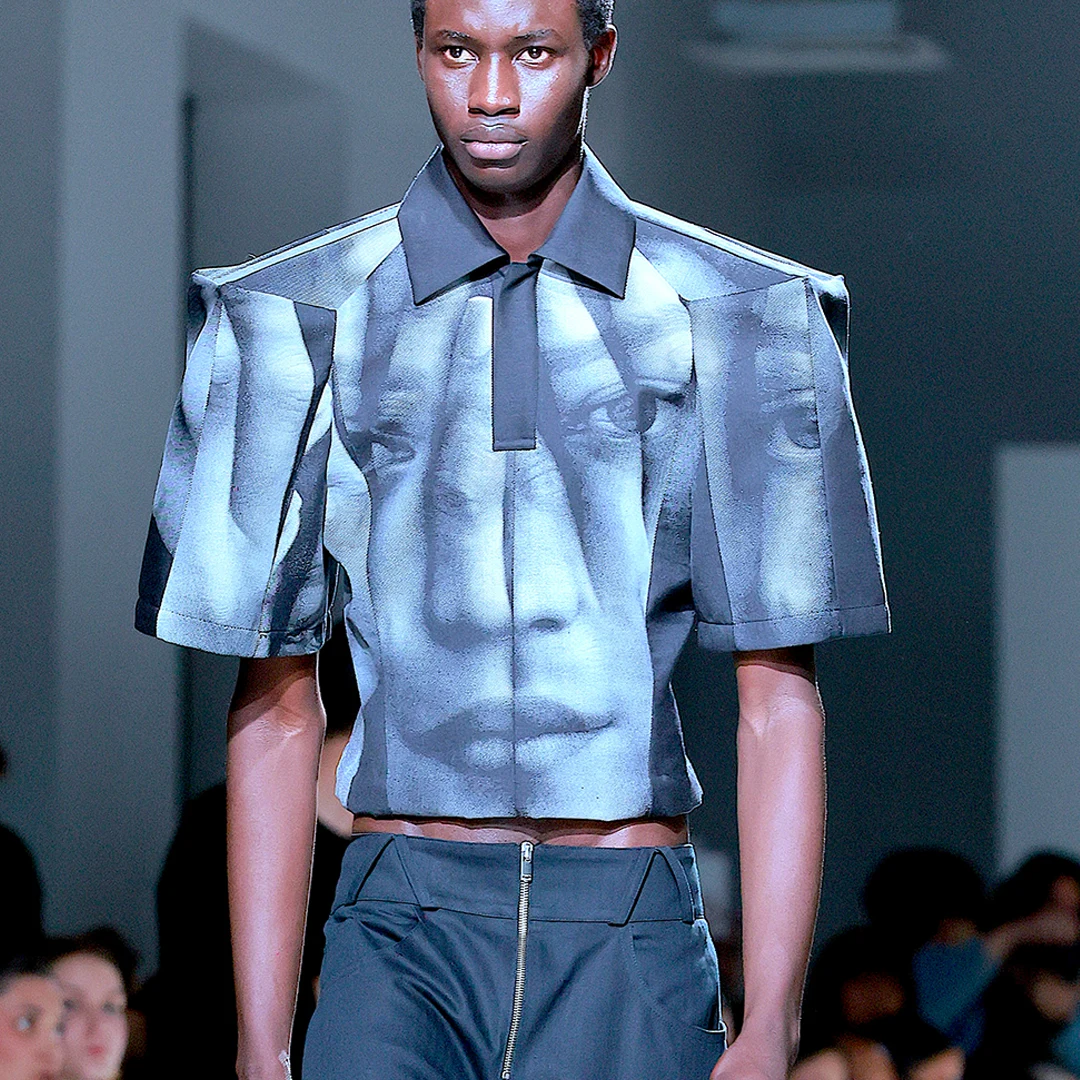
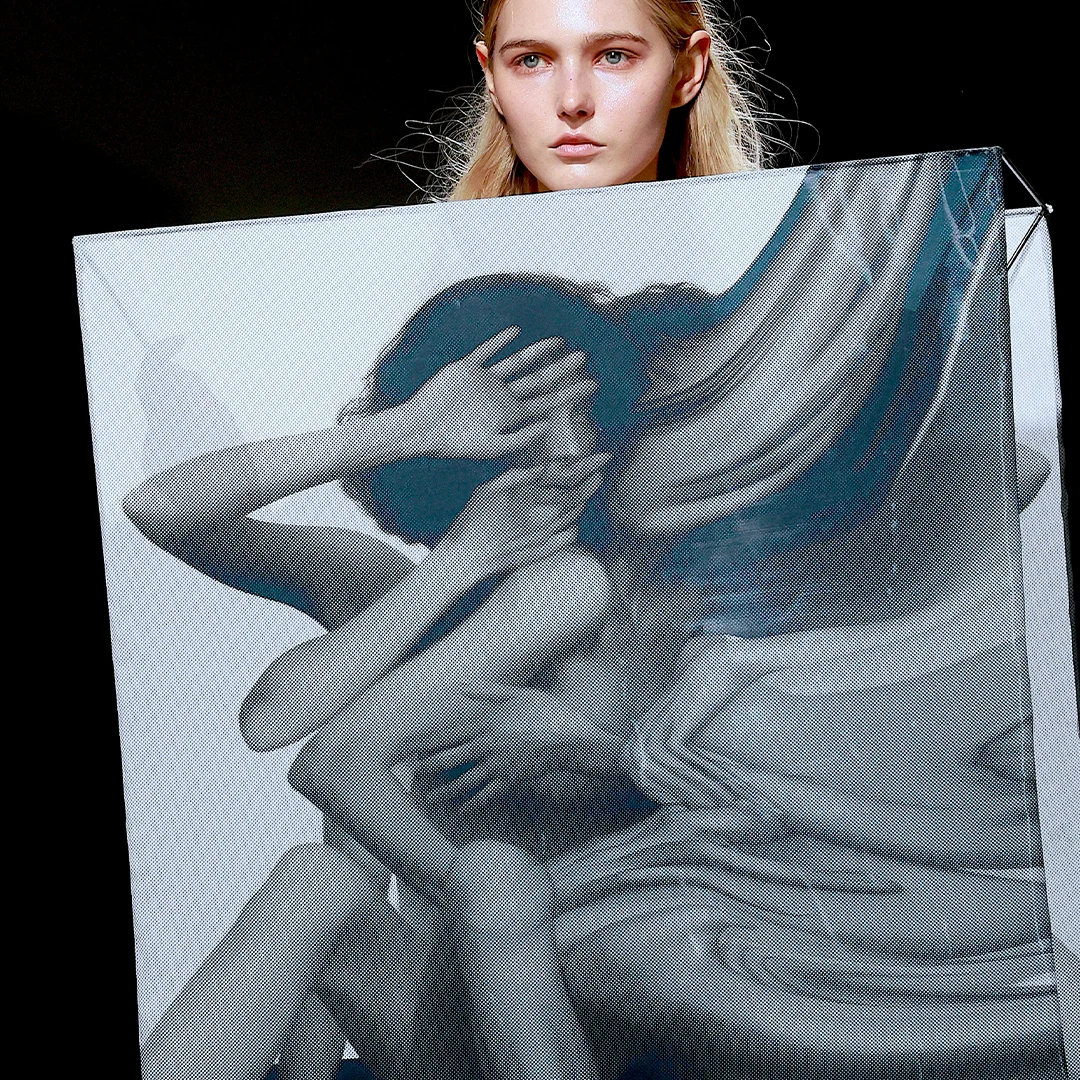
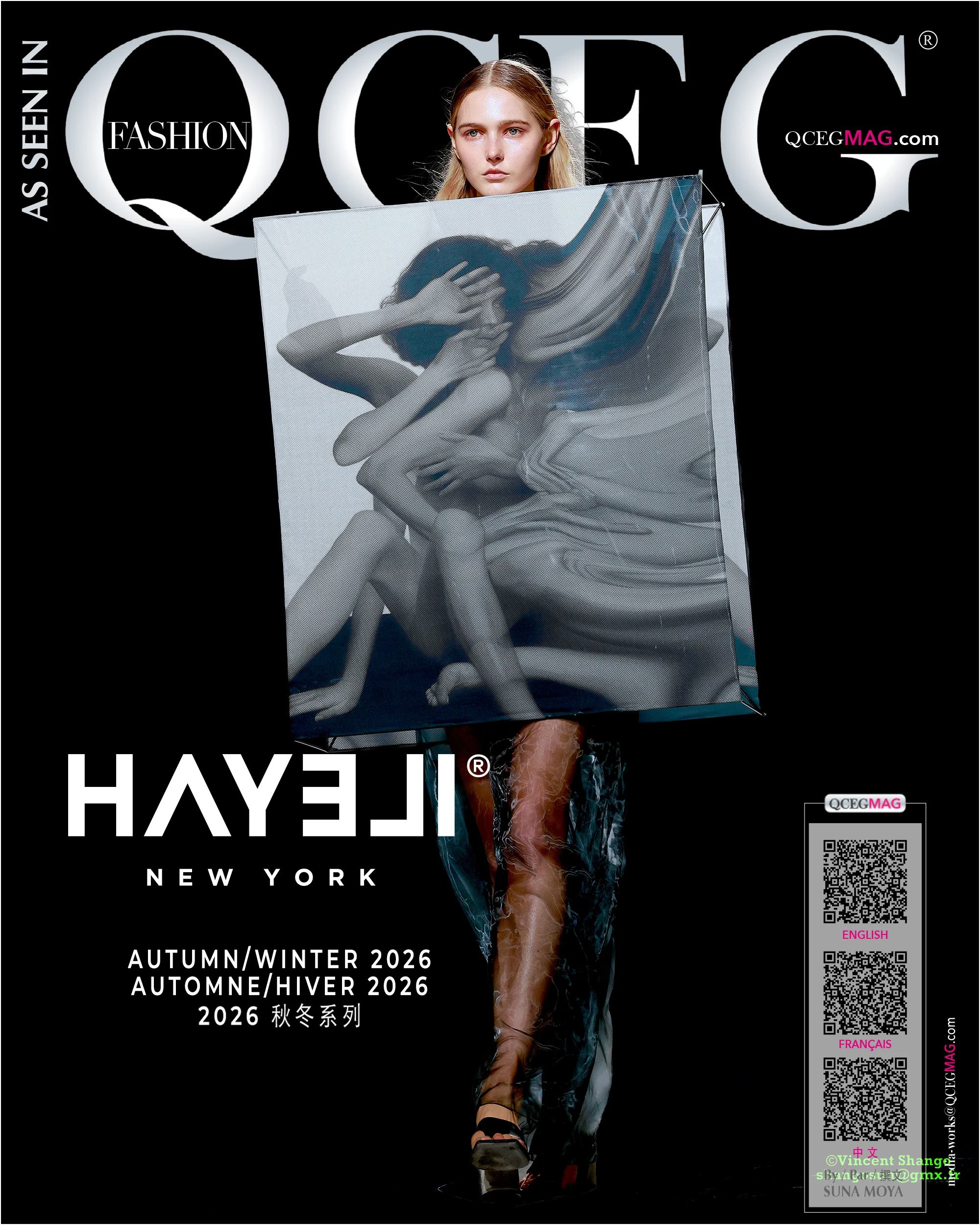
L’environnement lui-même constituait une composante essentielle du récit. De monumentaux portraits en noir et blanc de l’artiste arméno-américain Tigran Tsitoghdzyan étaient disposés dans tout le lieu, leur intensité hyperréaliste façonnant l’atmosphère. Lorsque le premier mannequin est apparu, la scène a pris une dimension presque irréelle — comme si elle surgissait directement des toiles, abolissant la frontière entre le corps et la peinture.
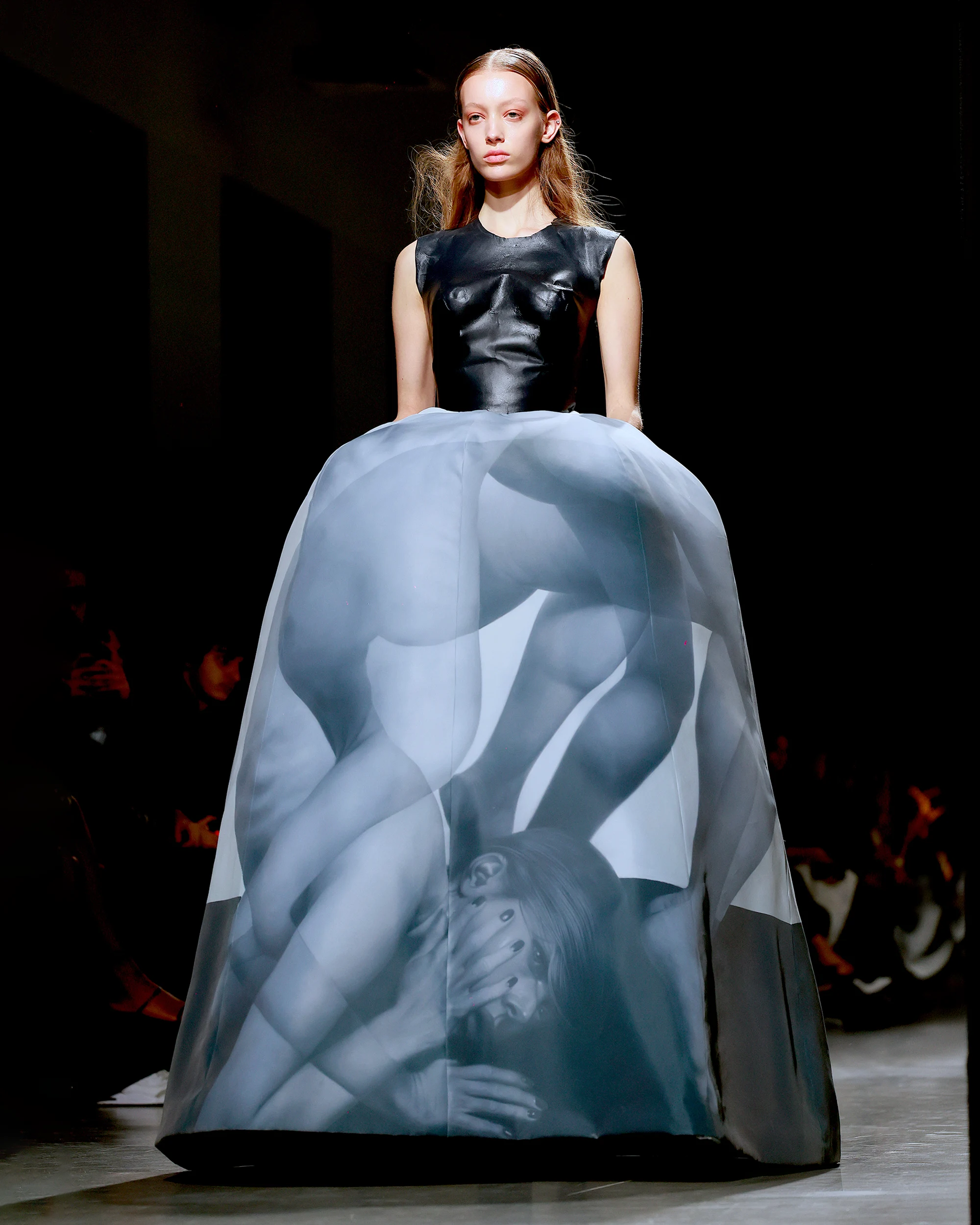
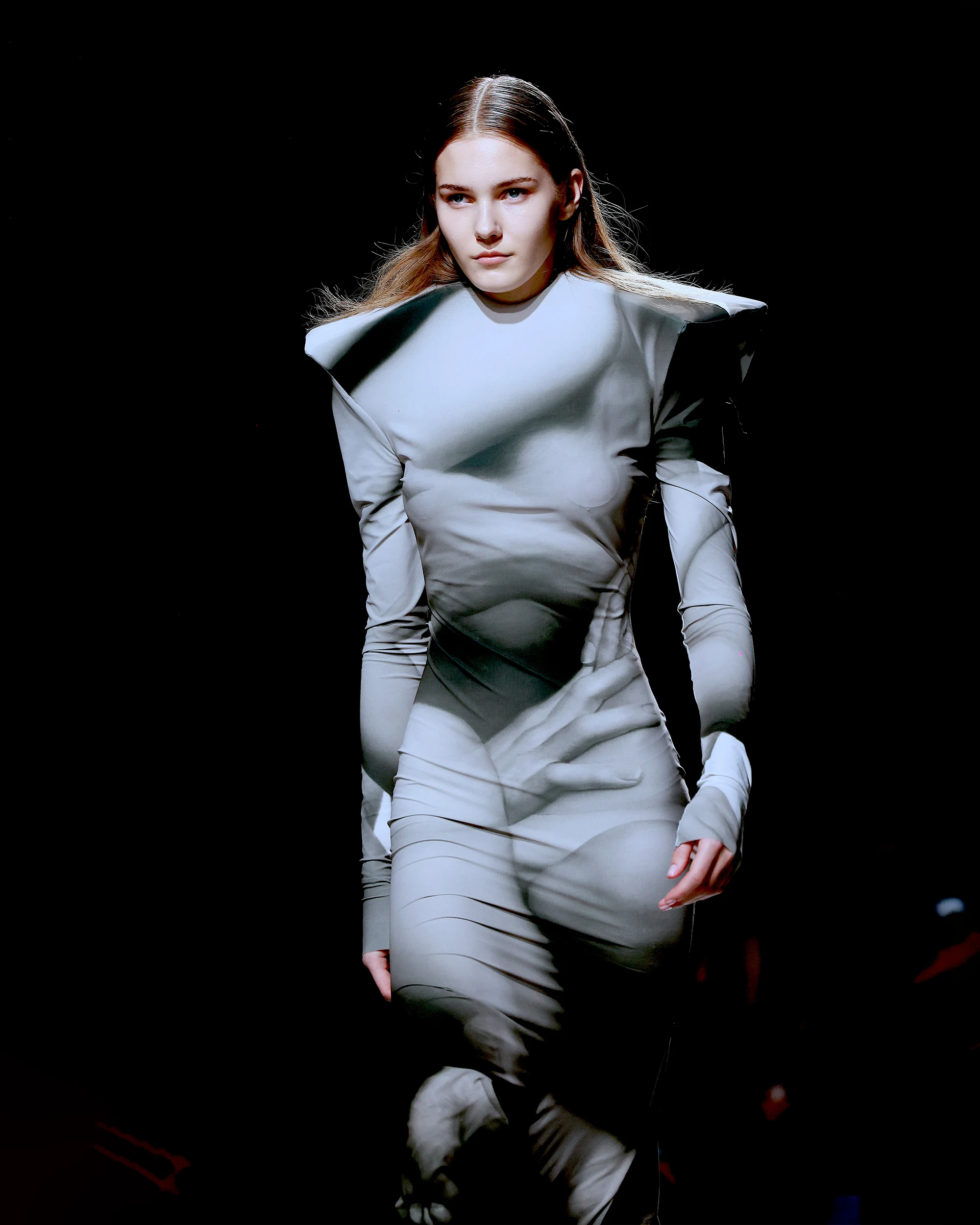
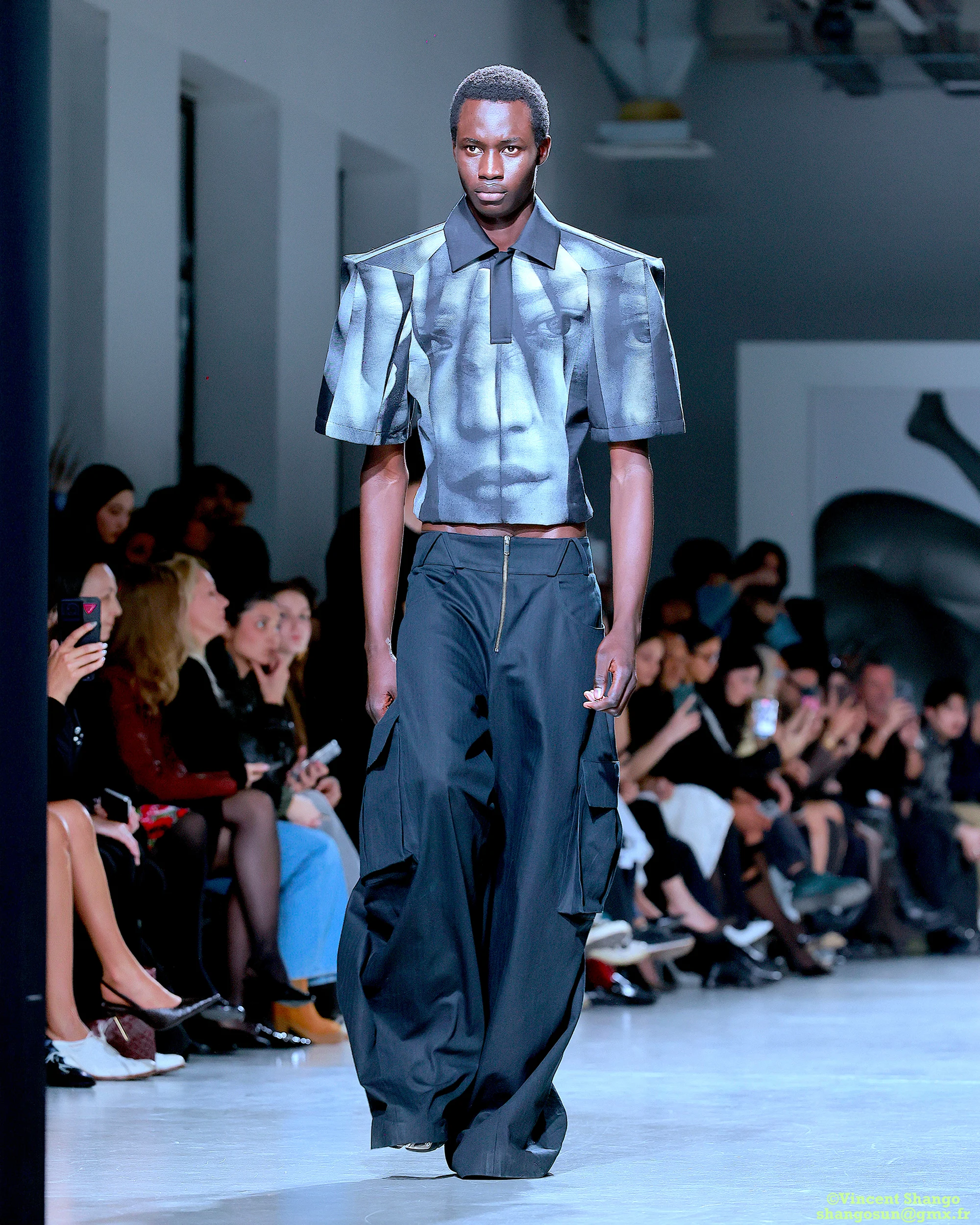
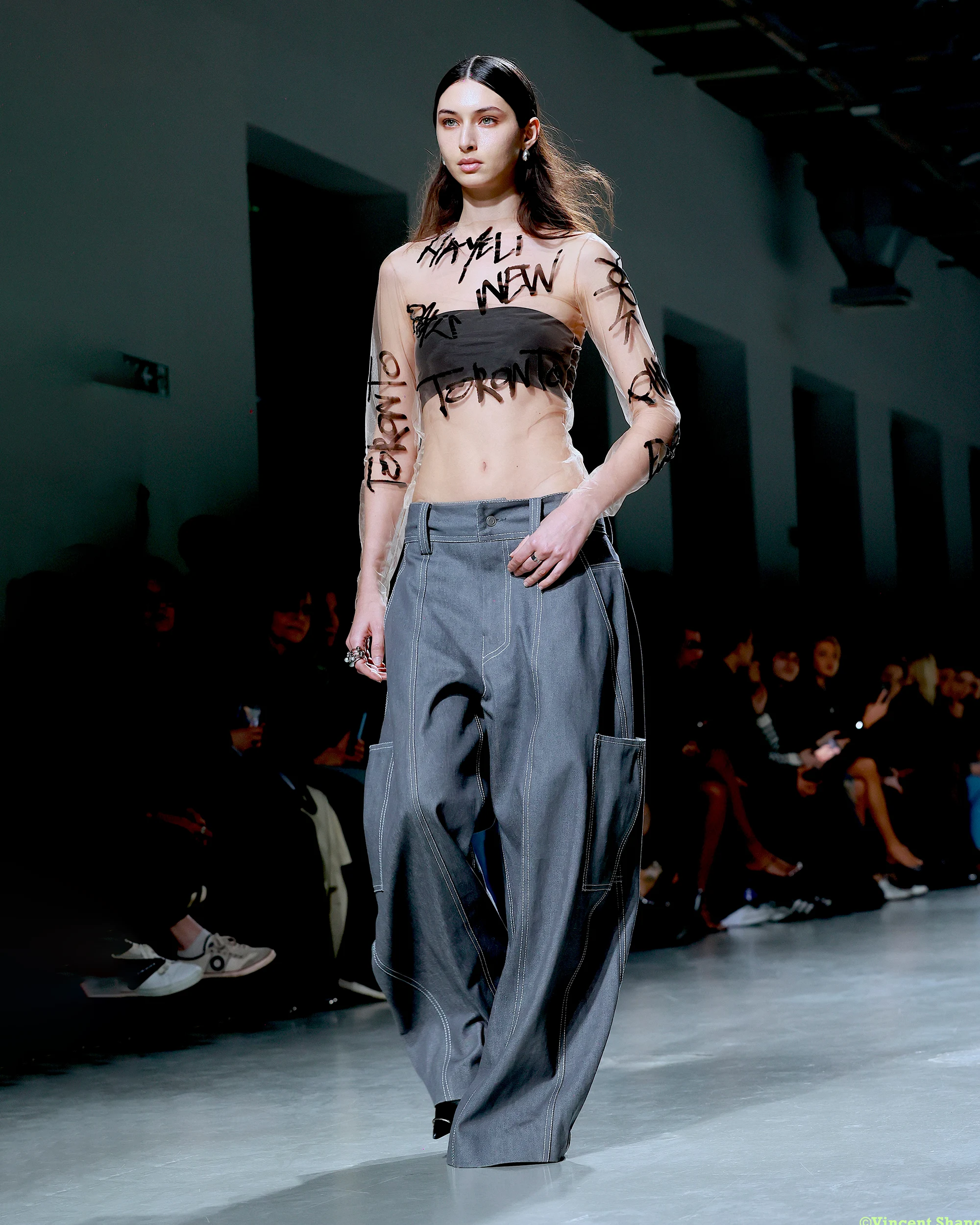
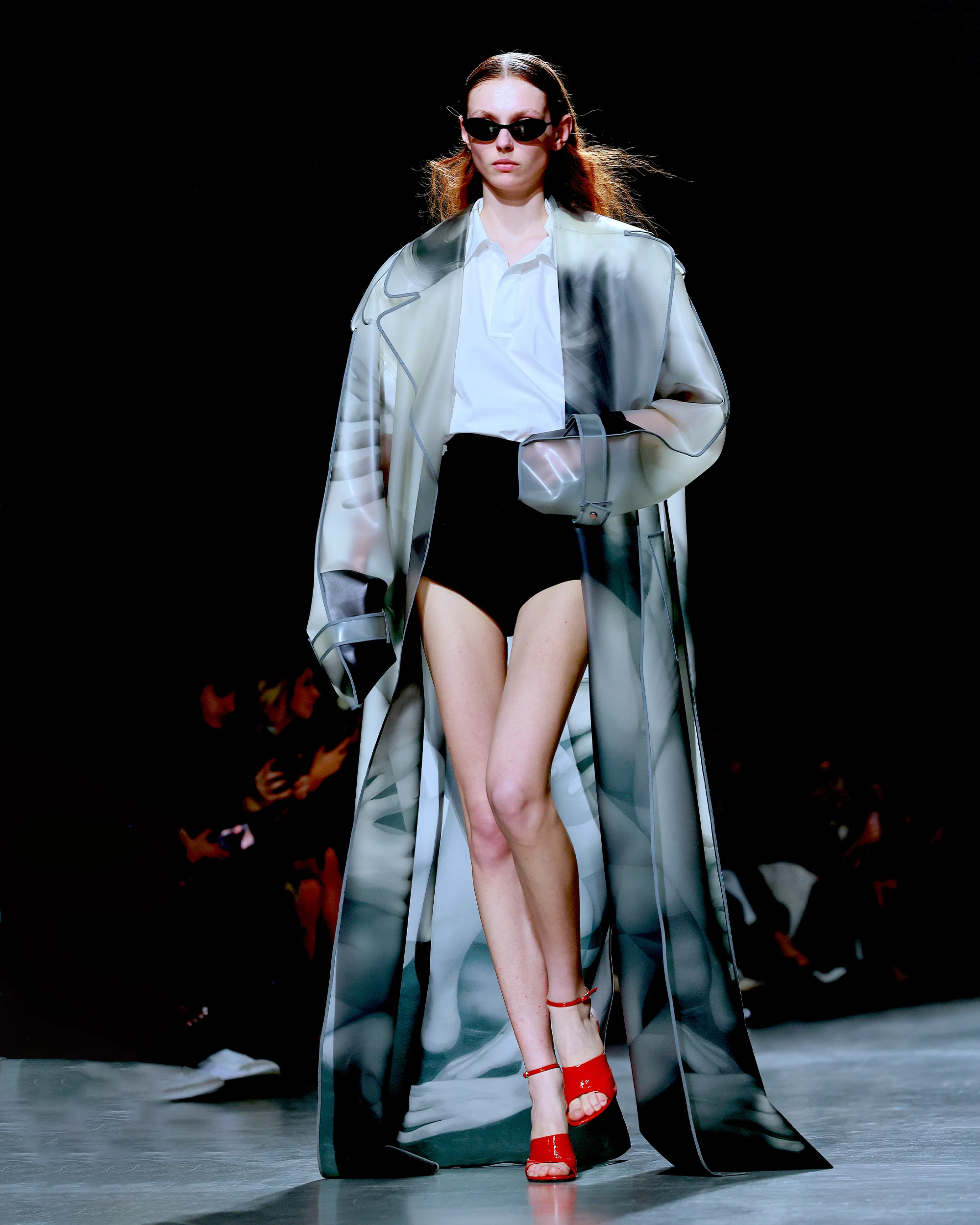
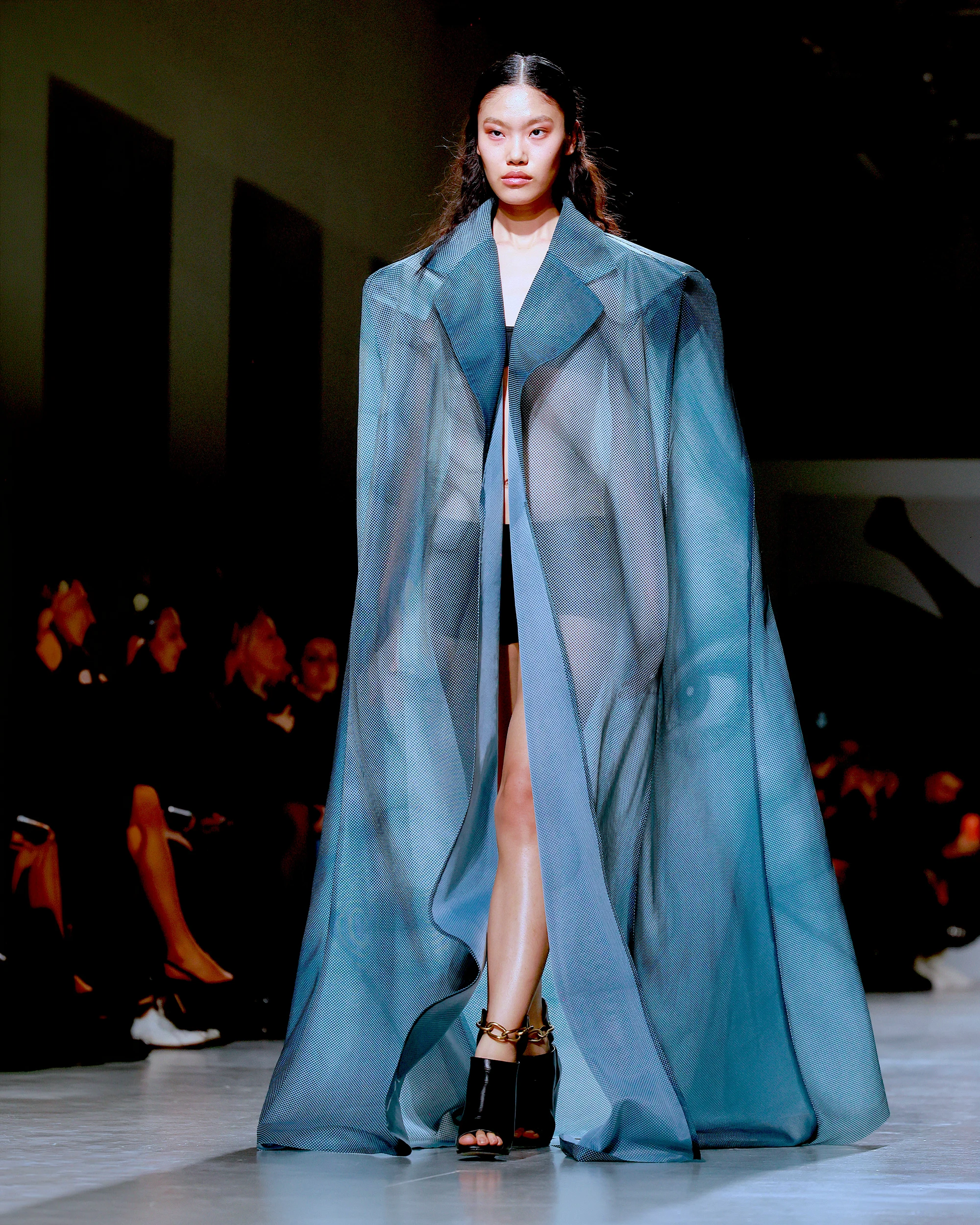
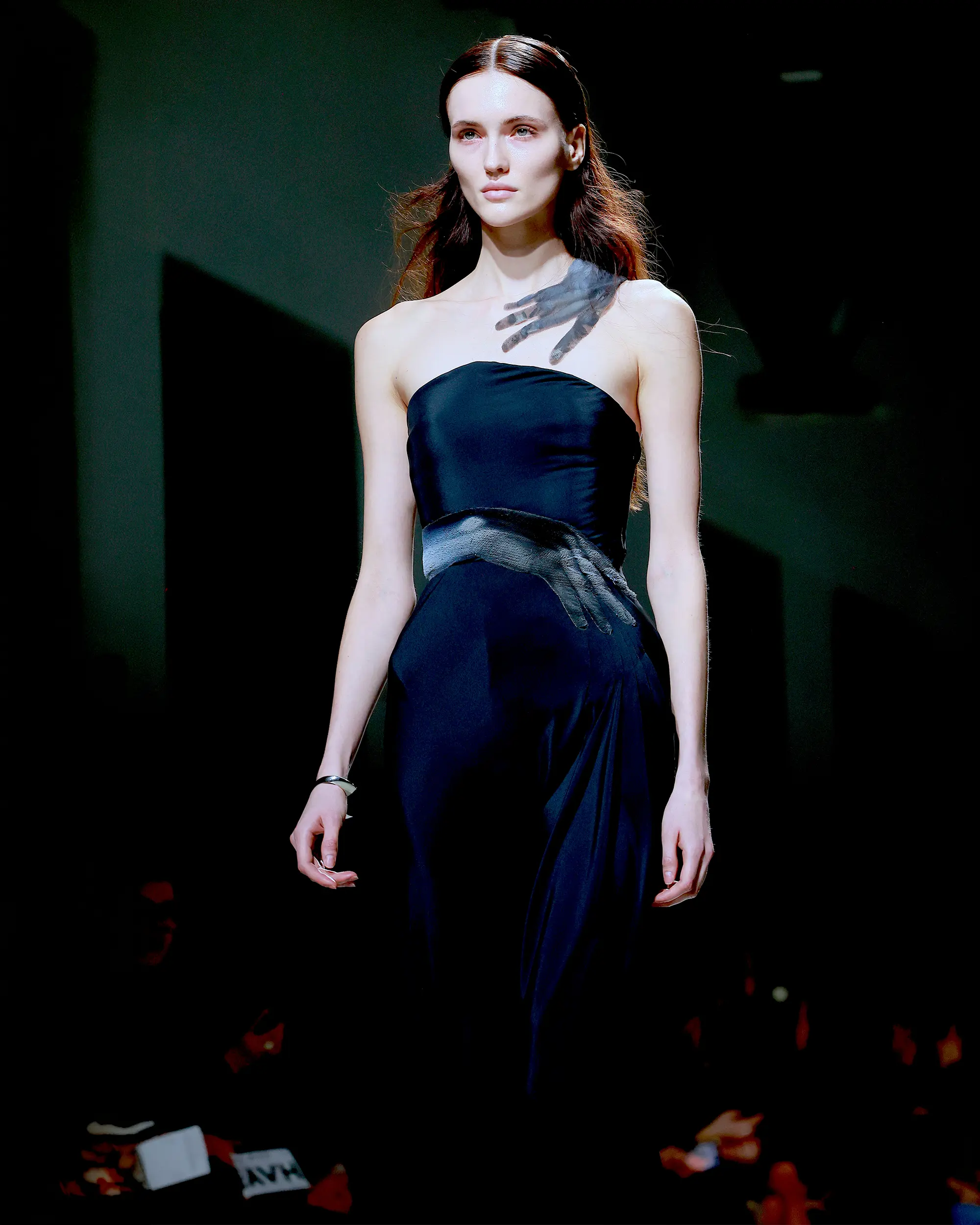
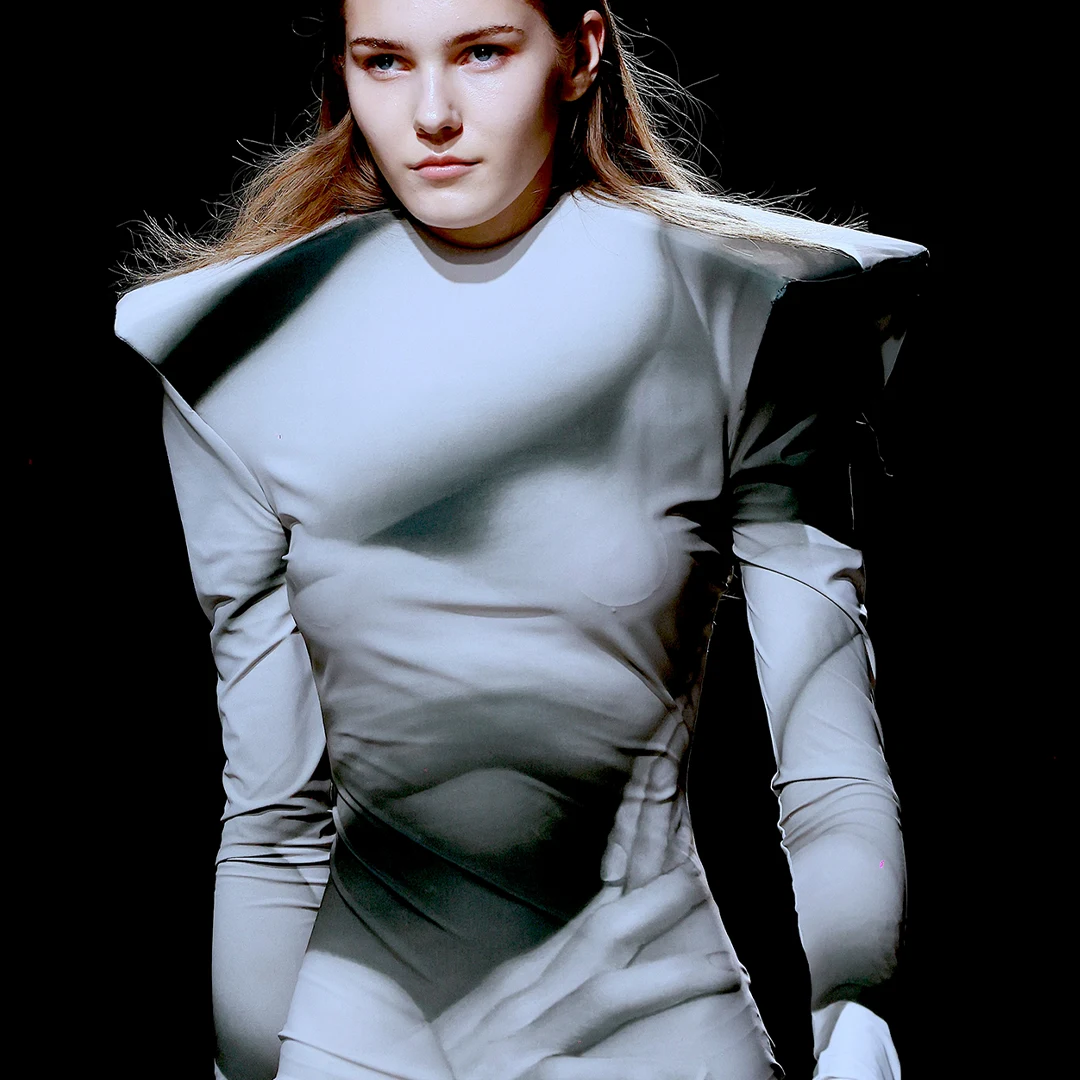
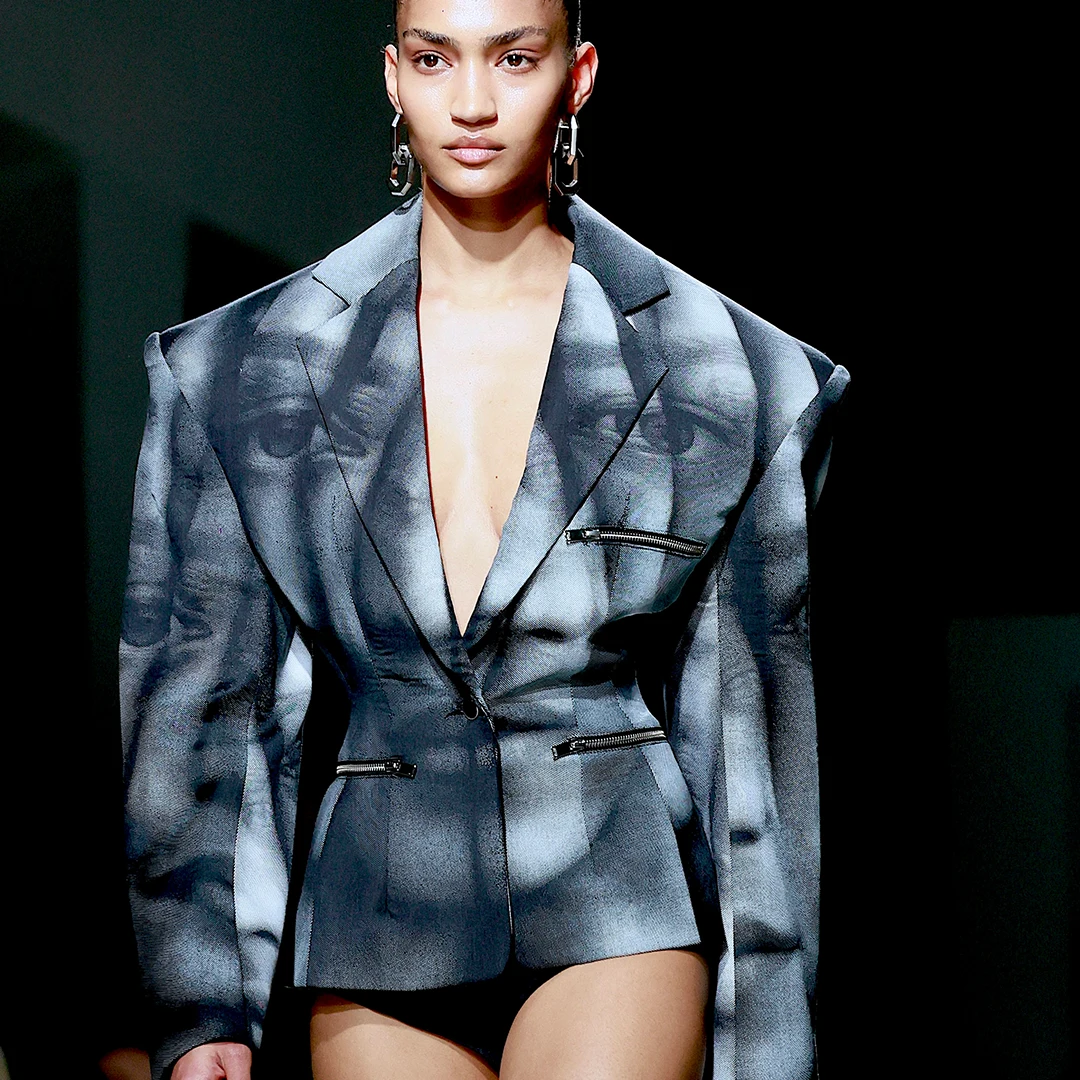
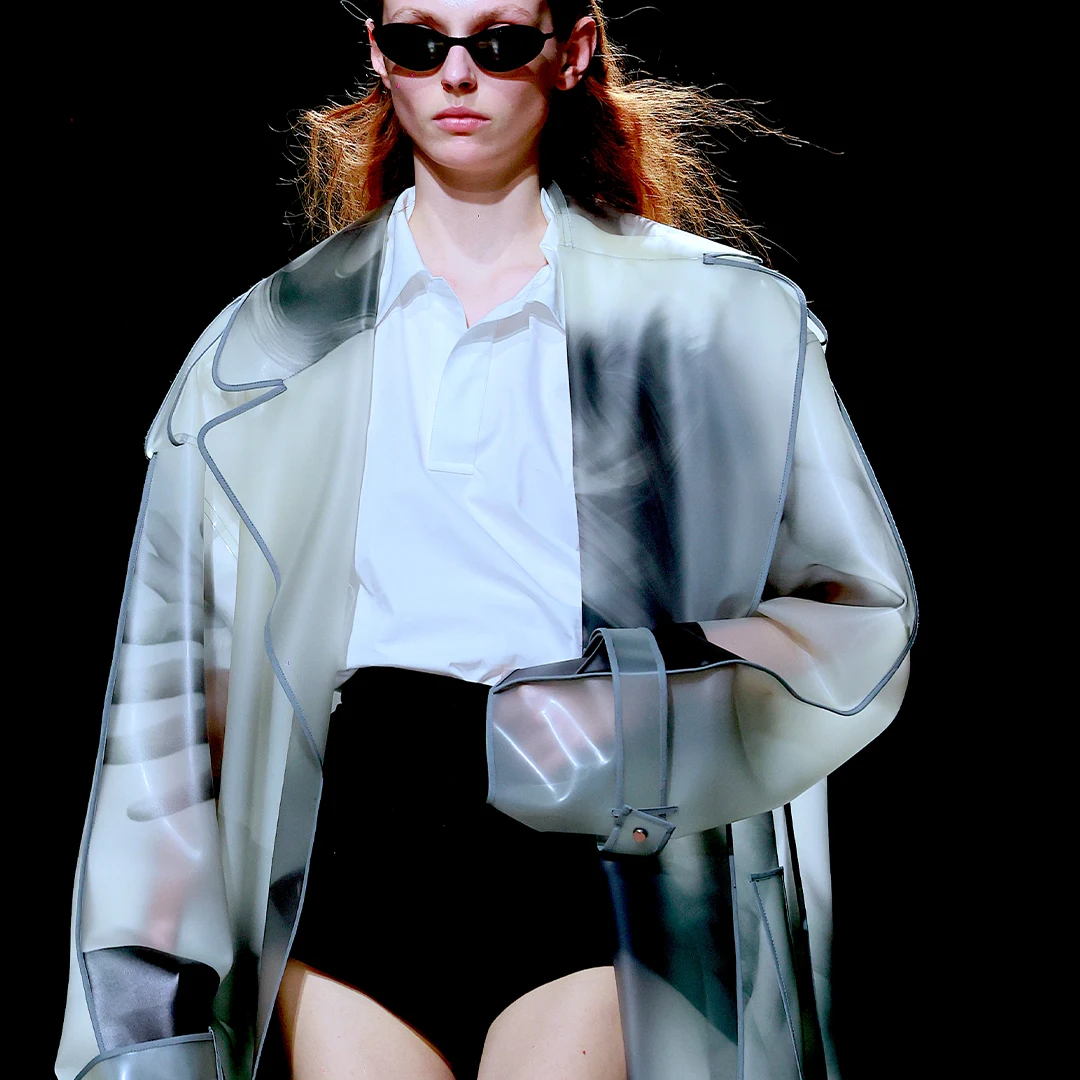
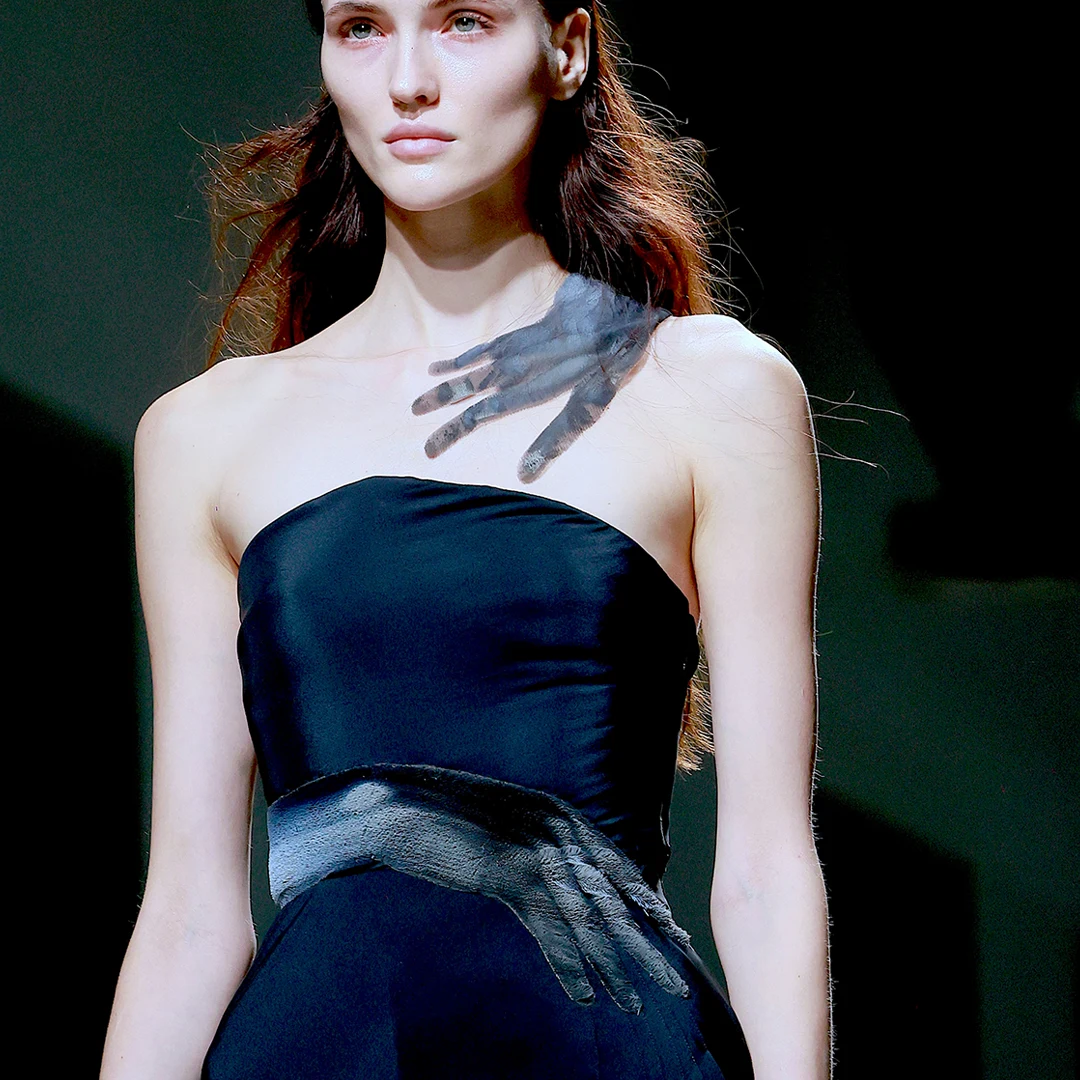
Cette collaboration avec Tsitoghdzyan a défini la séquence d’ouverture de la collection automne/hiver. Ses portraits saisissants ont été transposés sur les textiles, apparaissant sur des manteaux sculpturaux et des robes fluides, transformant les vêtements en œuvres d’art en mouvement. À mesure que les modèles évoluaient dans l’espace, les visages semblaient se modifier sous l’effet de la lumière et du mouvement, donnant l’étrange sensation que les images respiraient sur le corps.
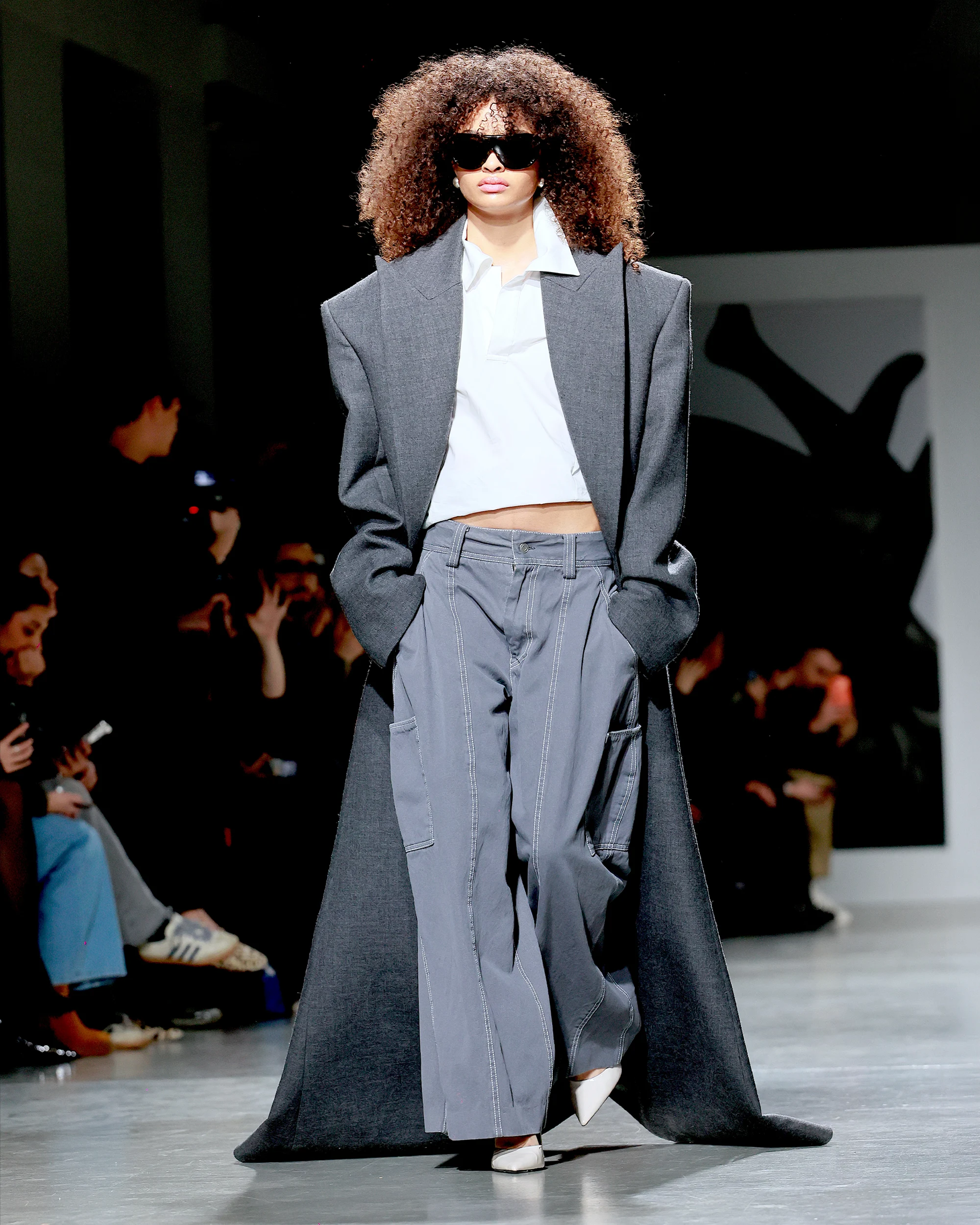
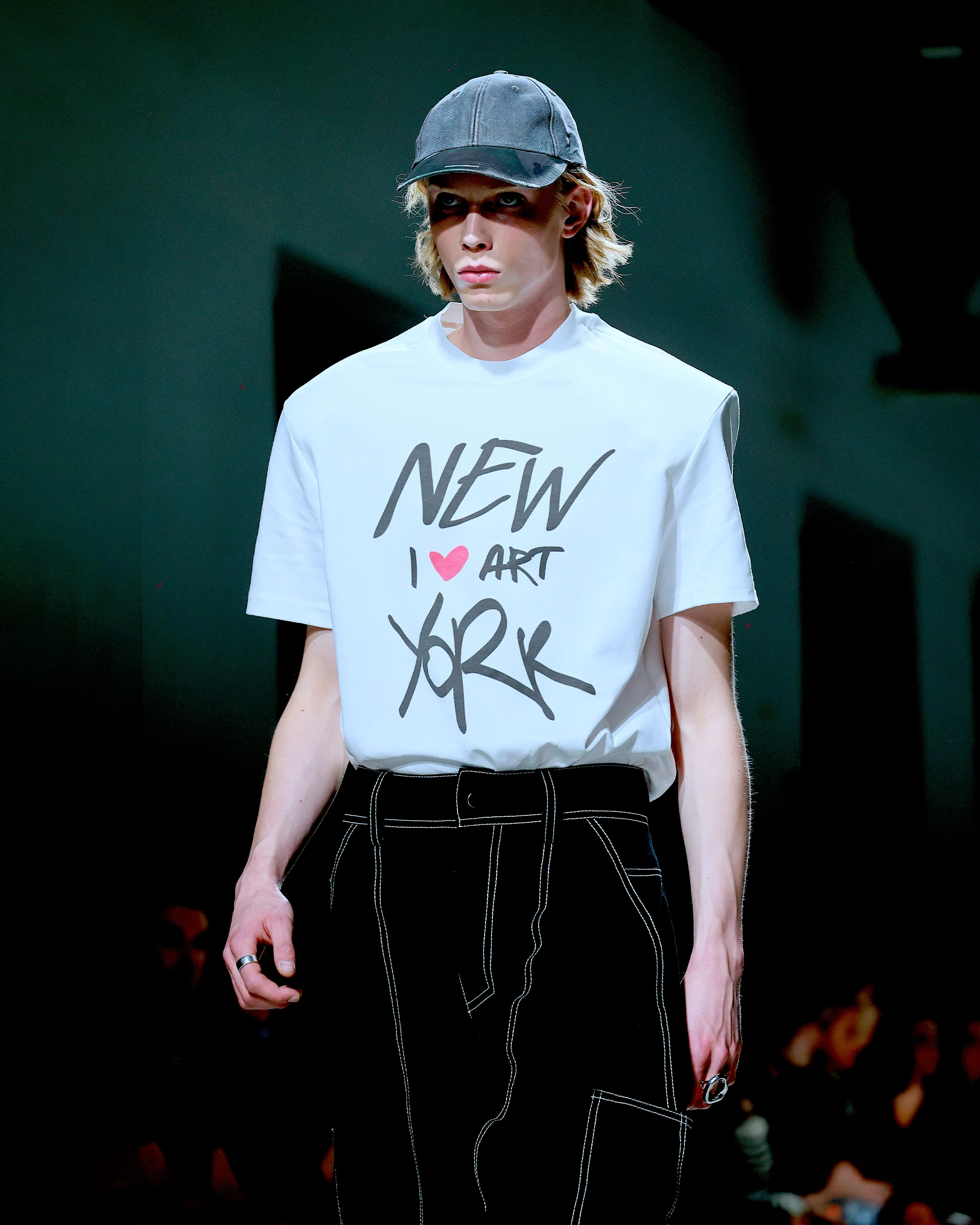
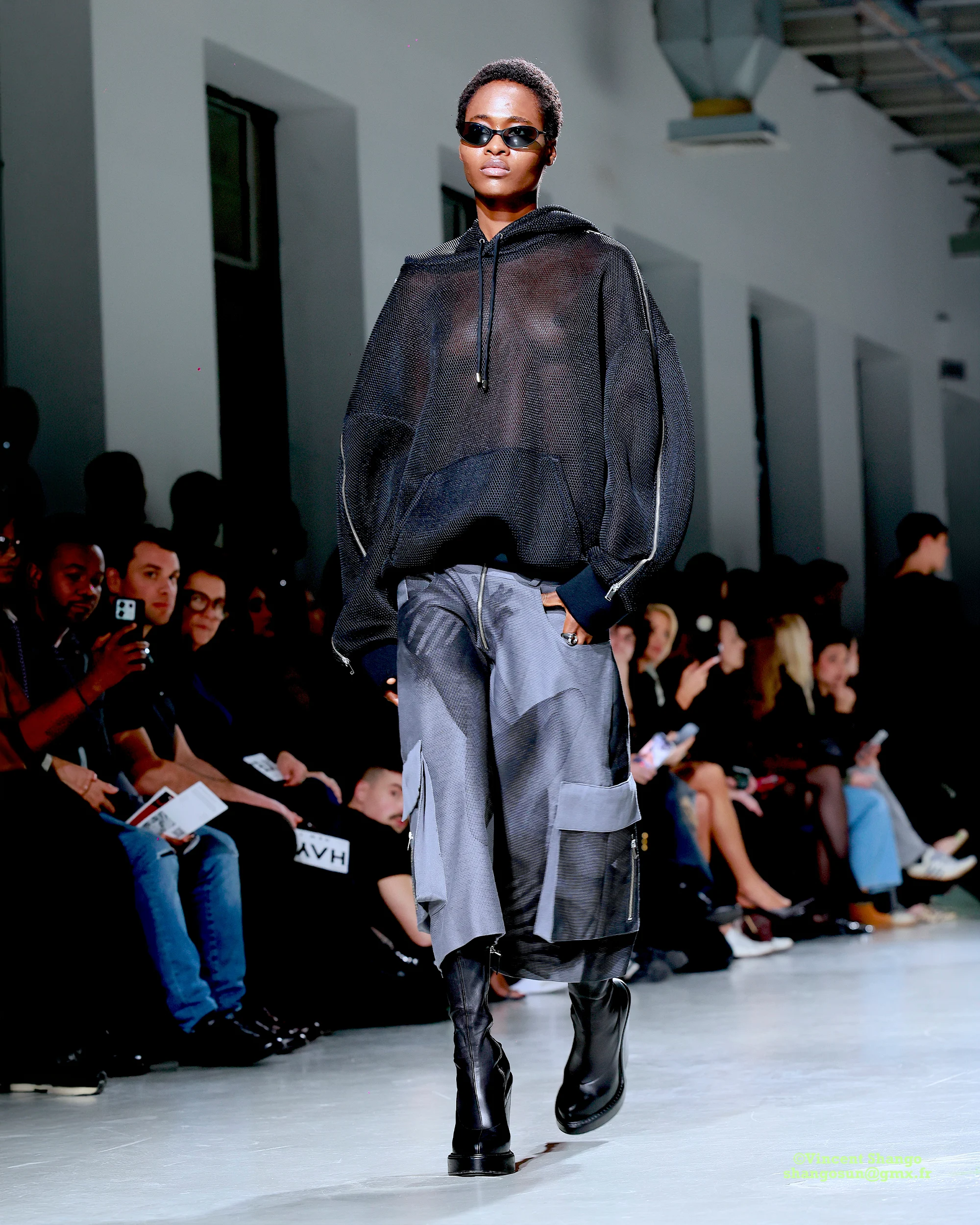
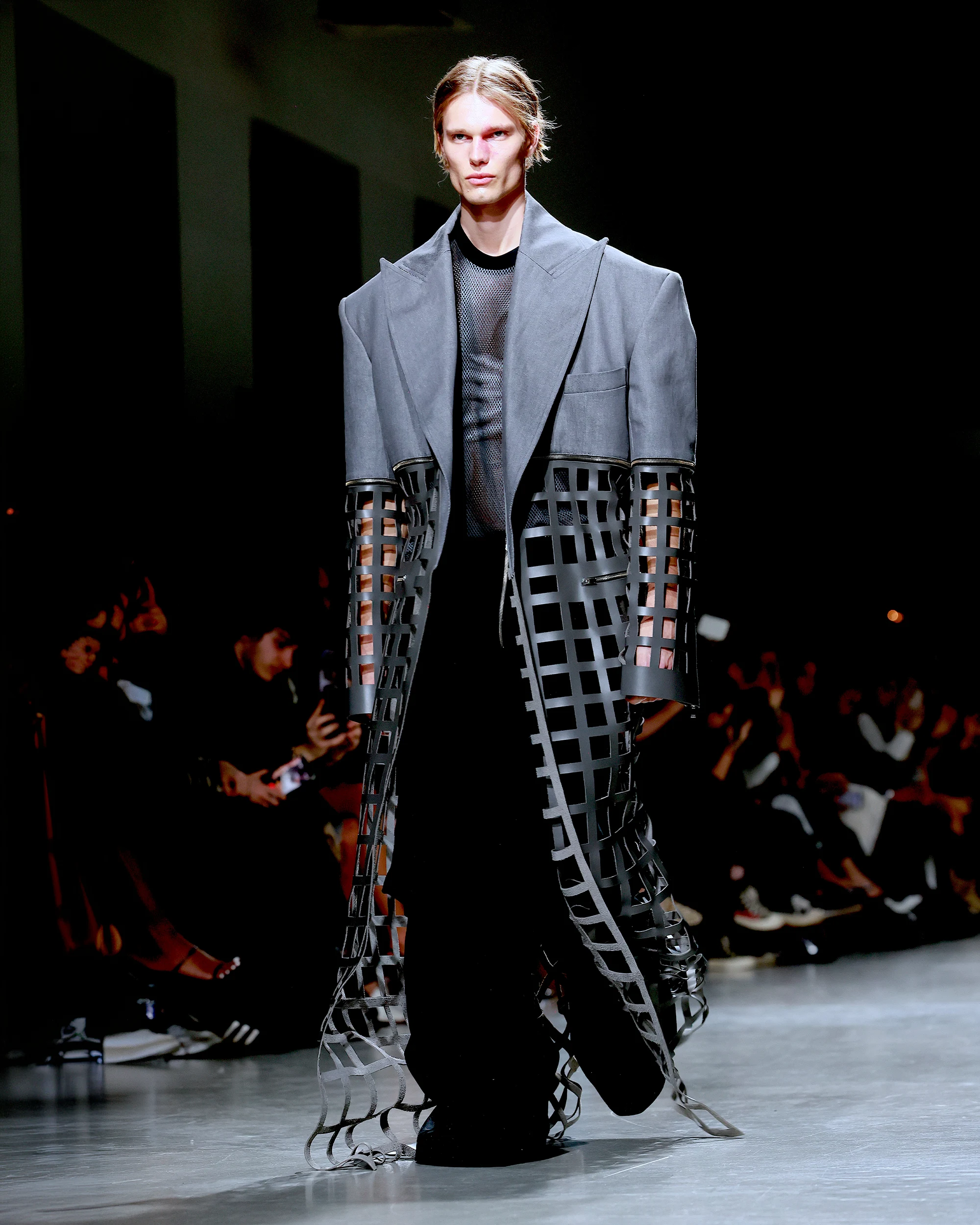
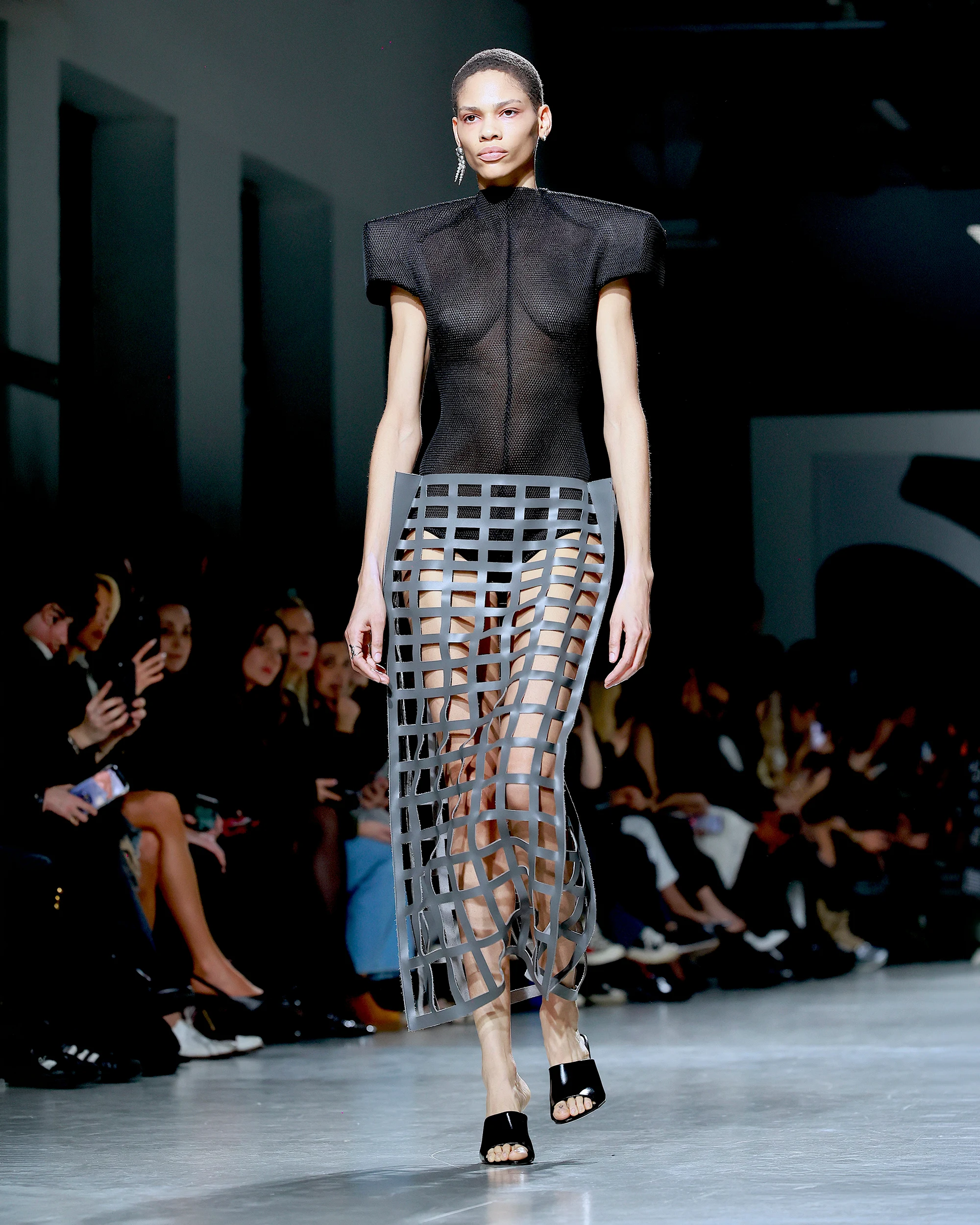
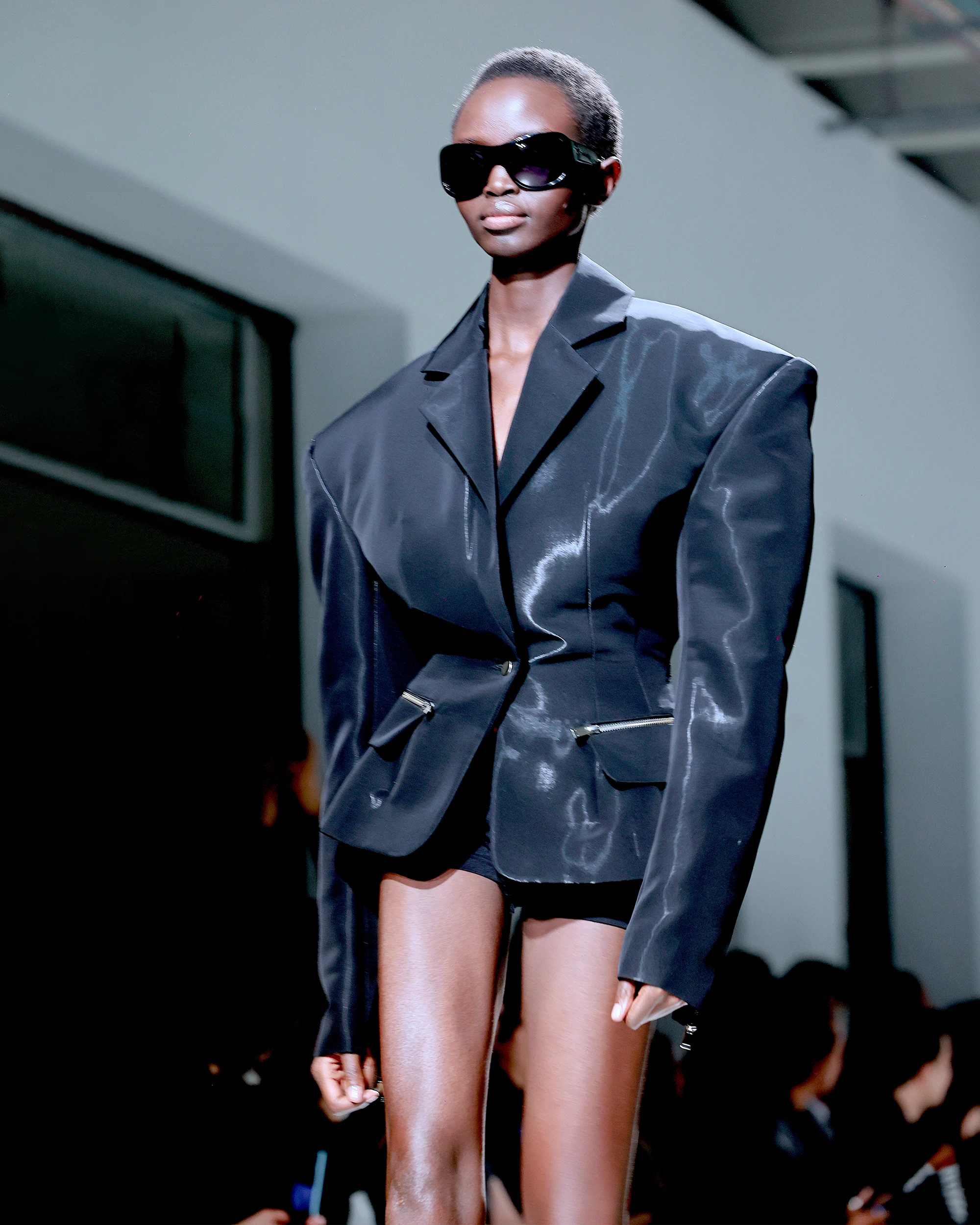
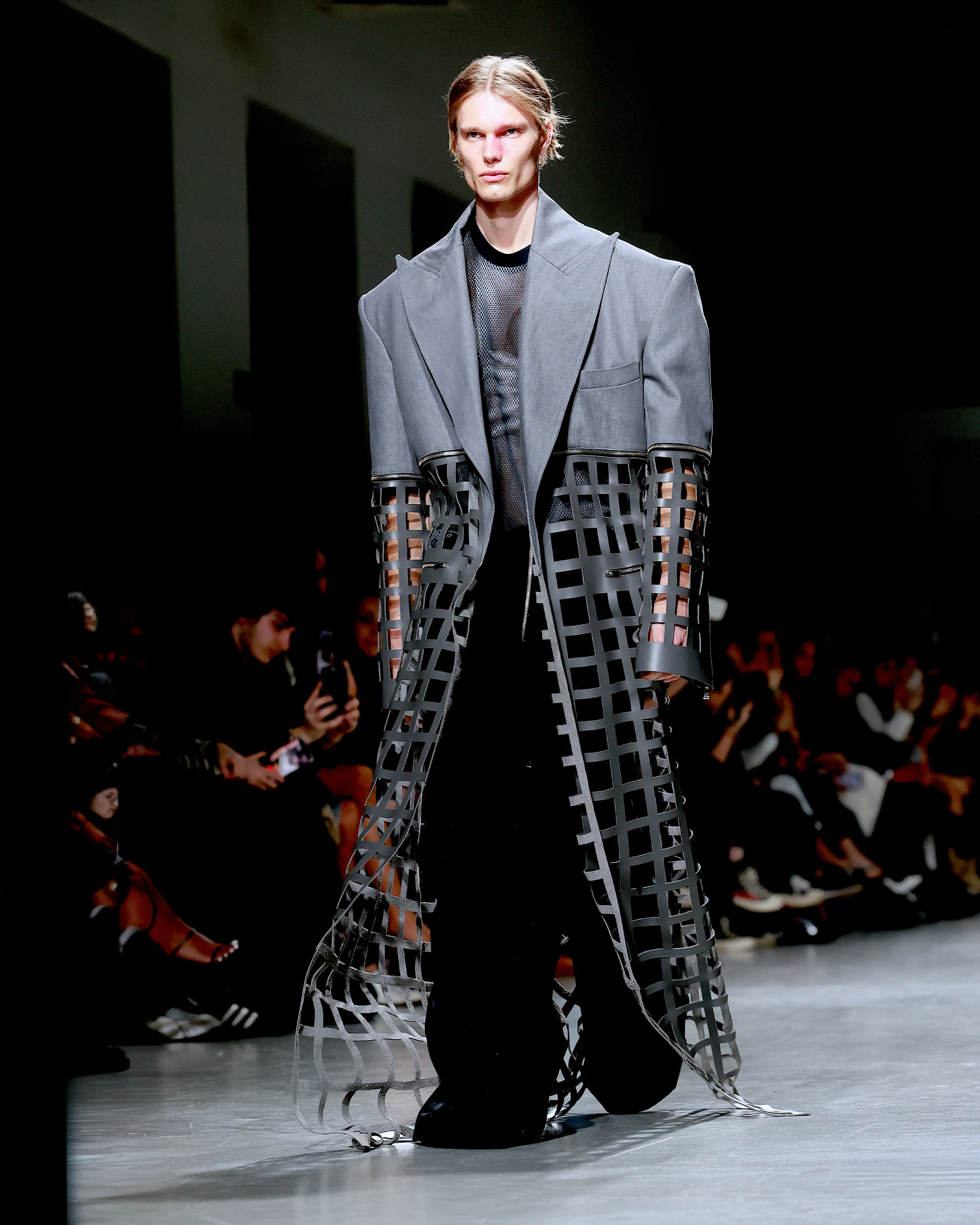
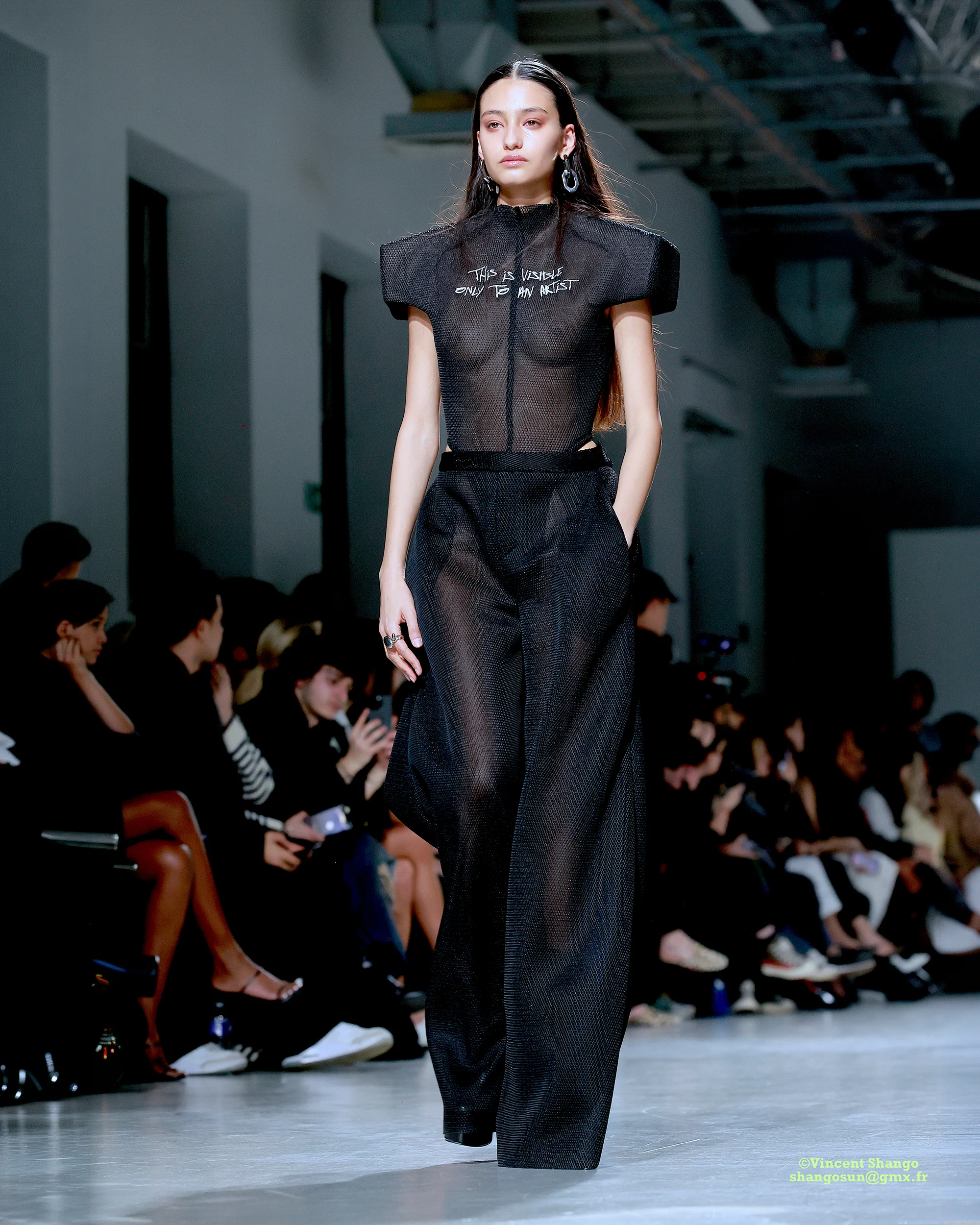
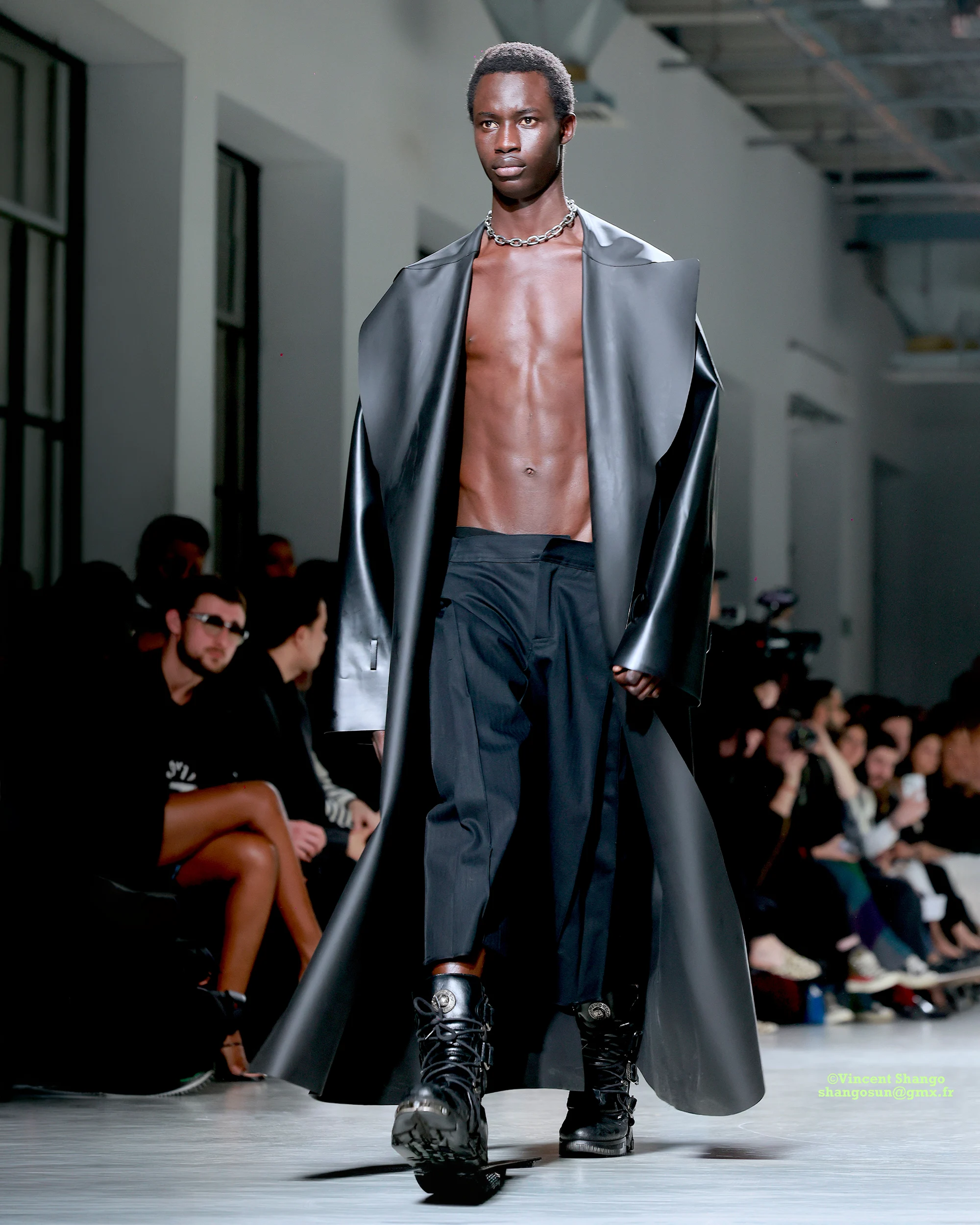
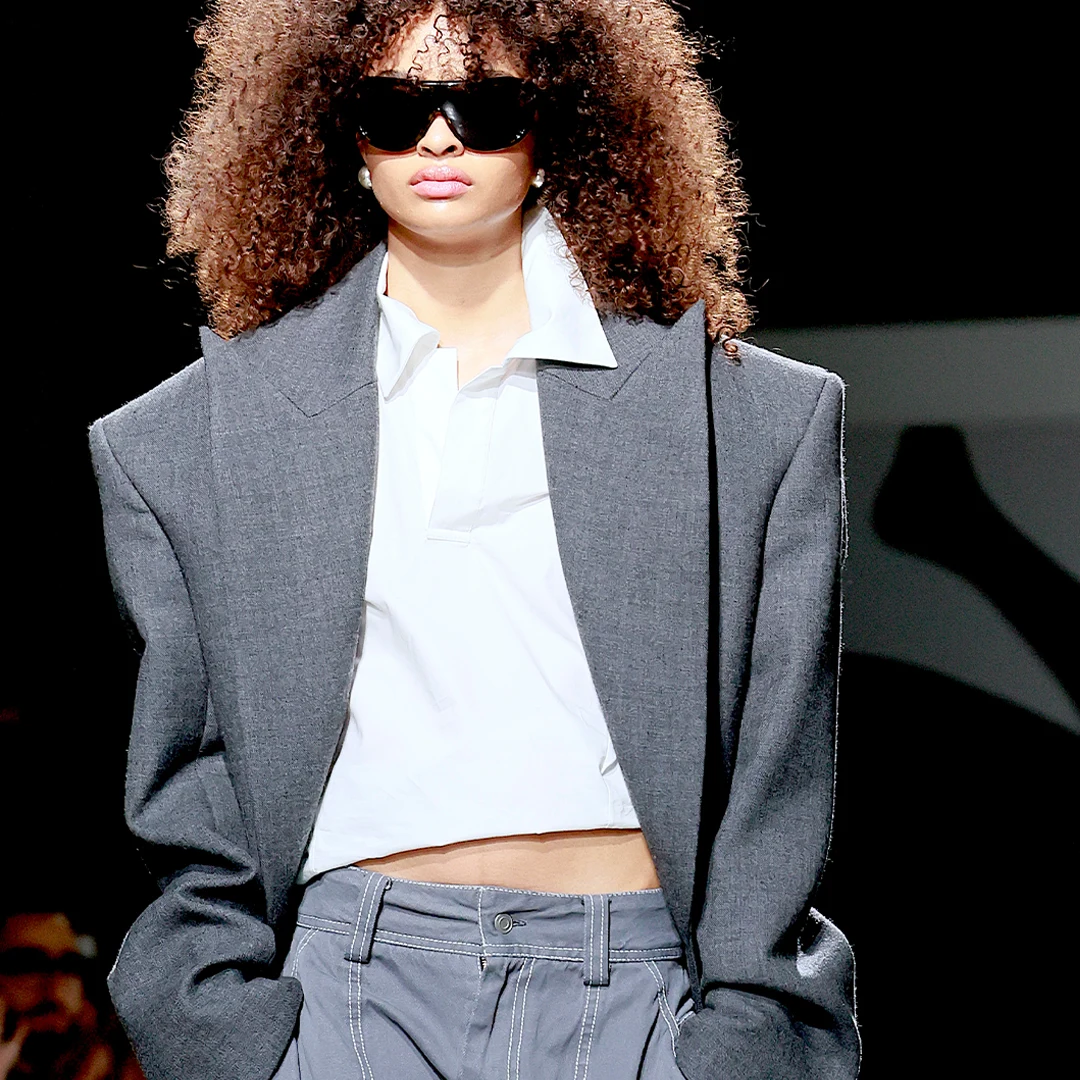
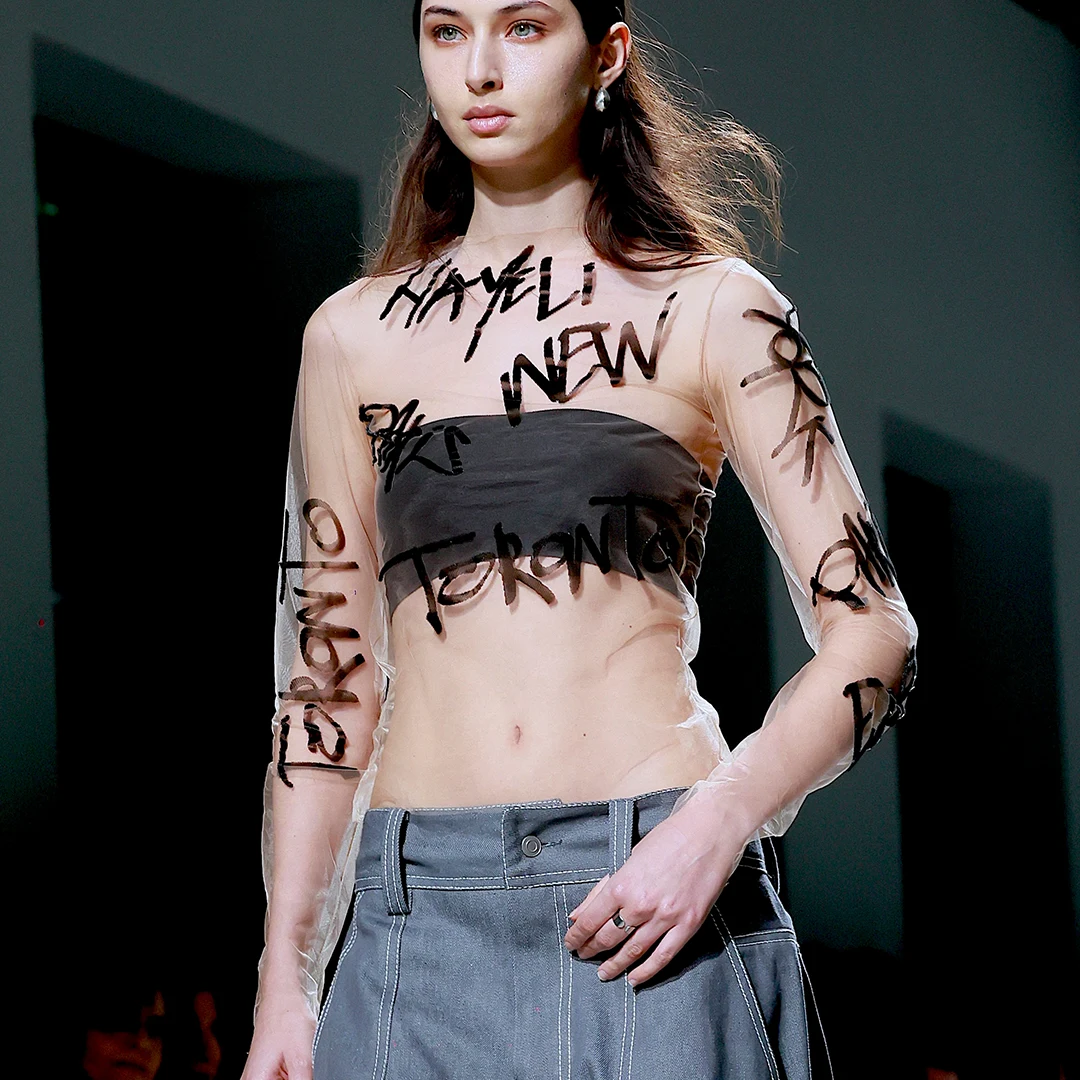
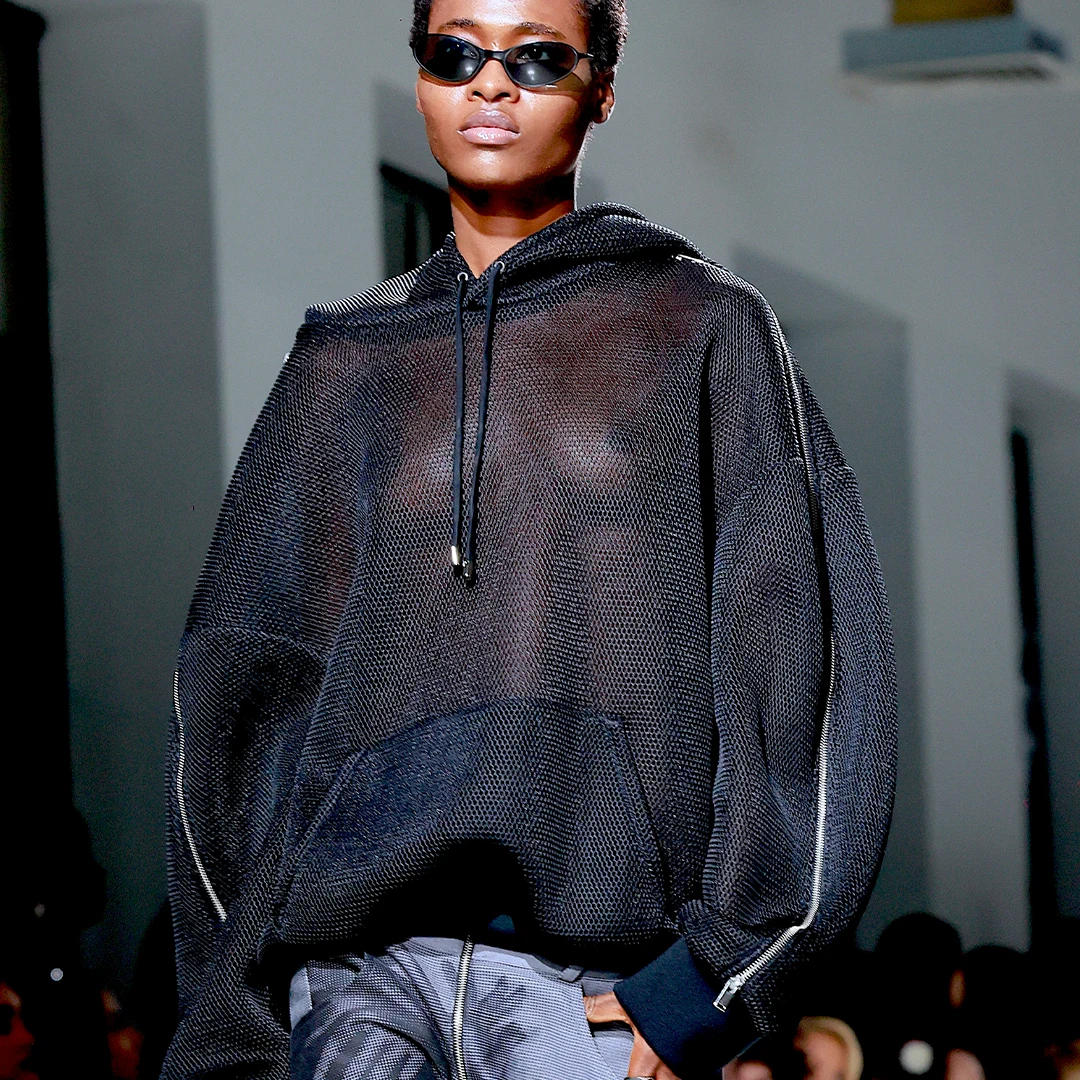
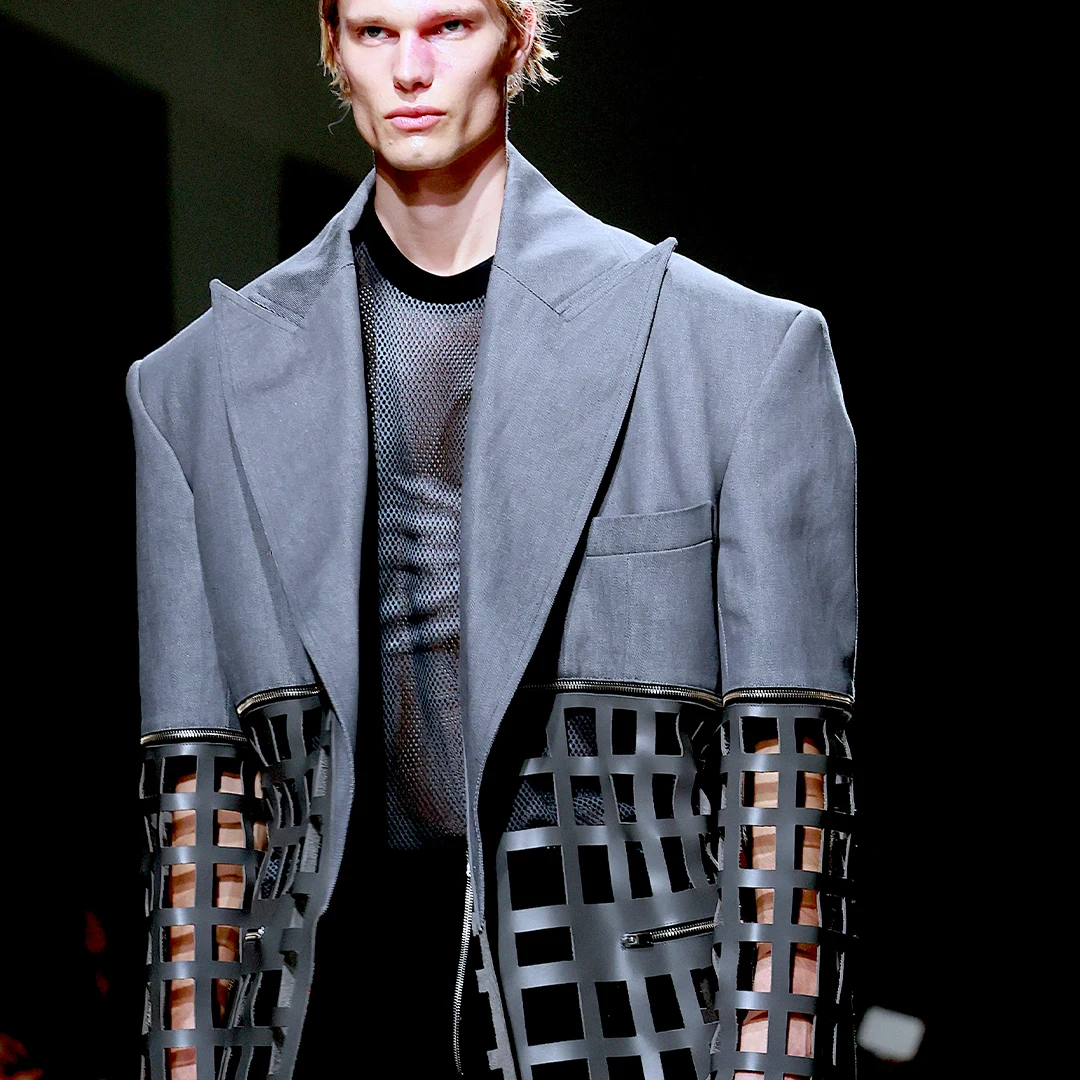
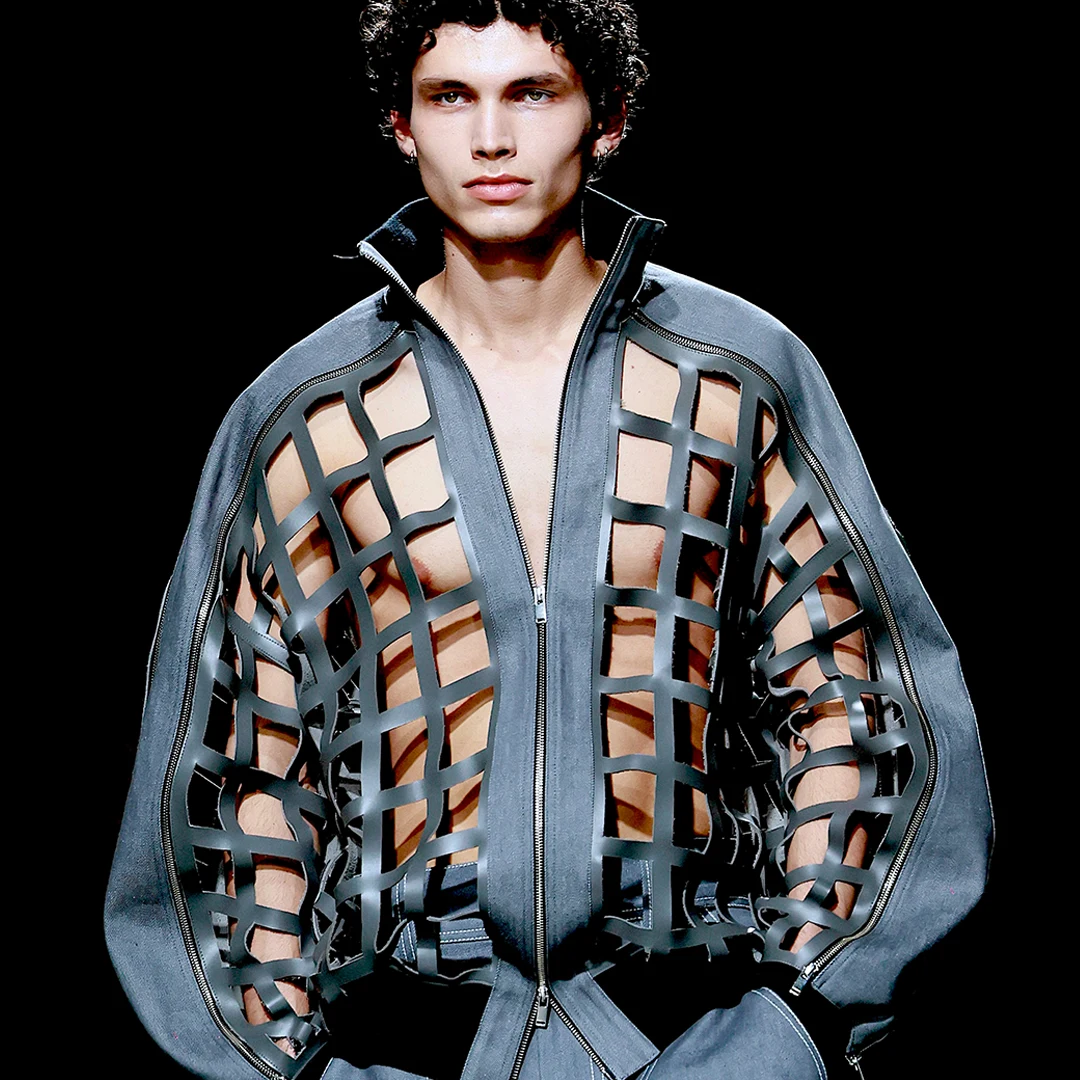
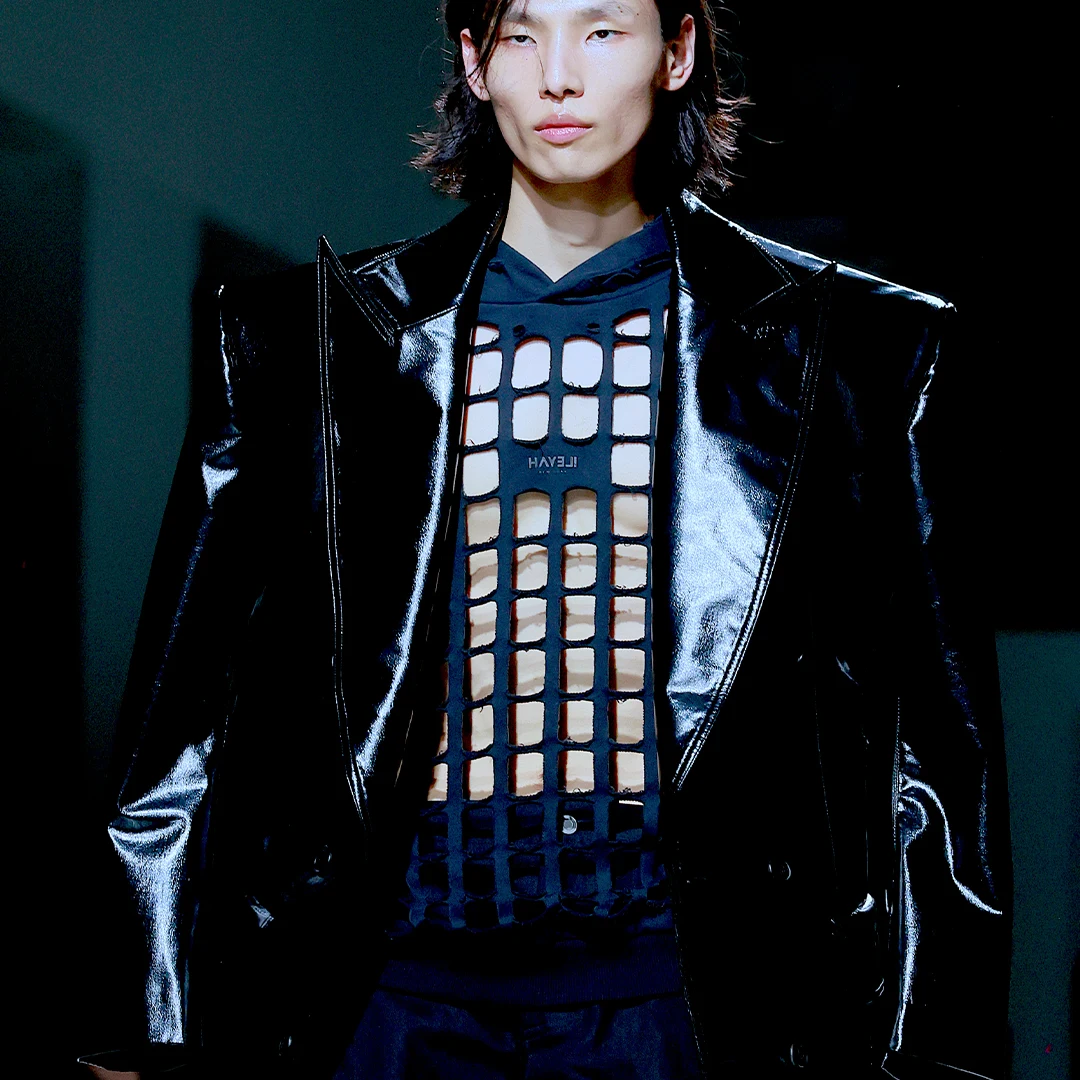
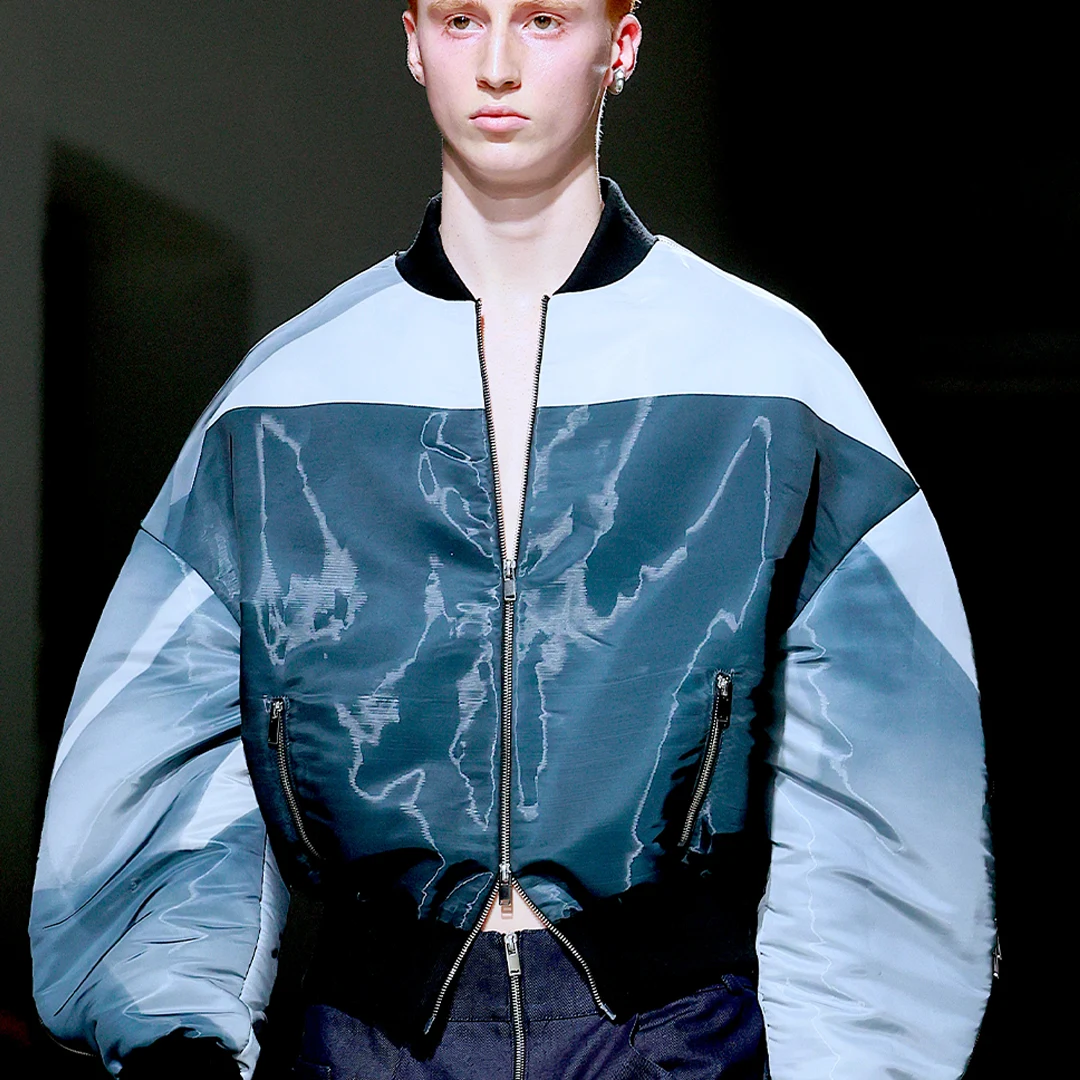
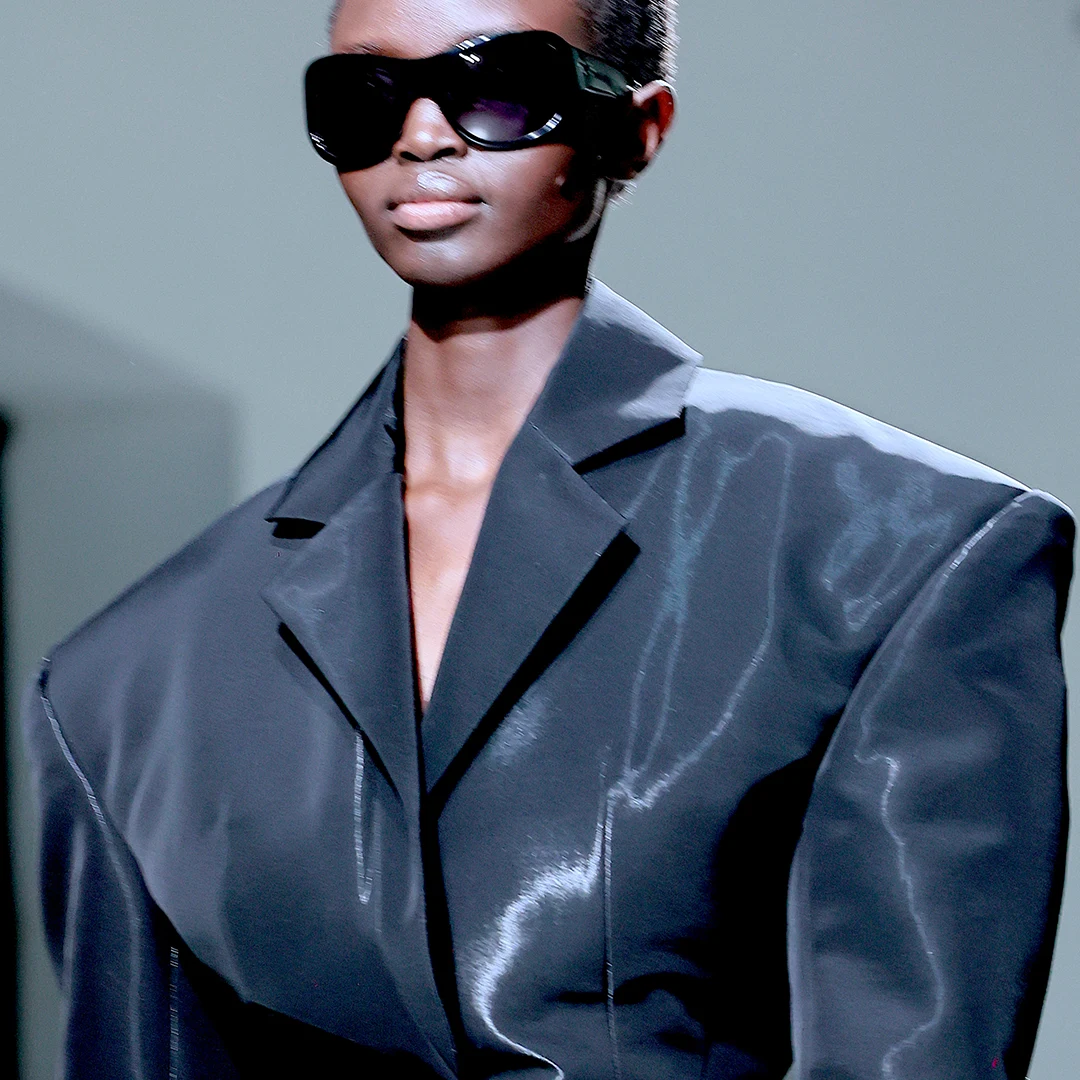
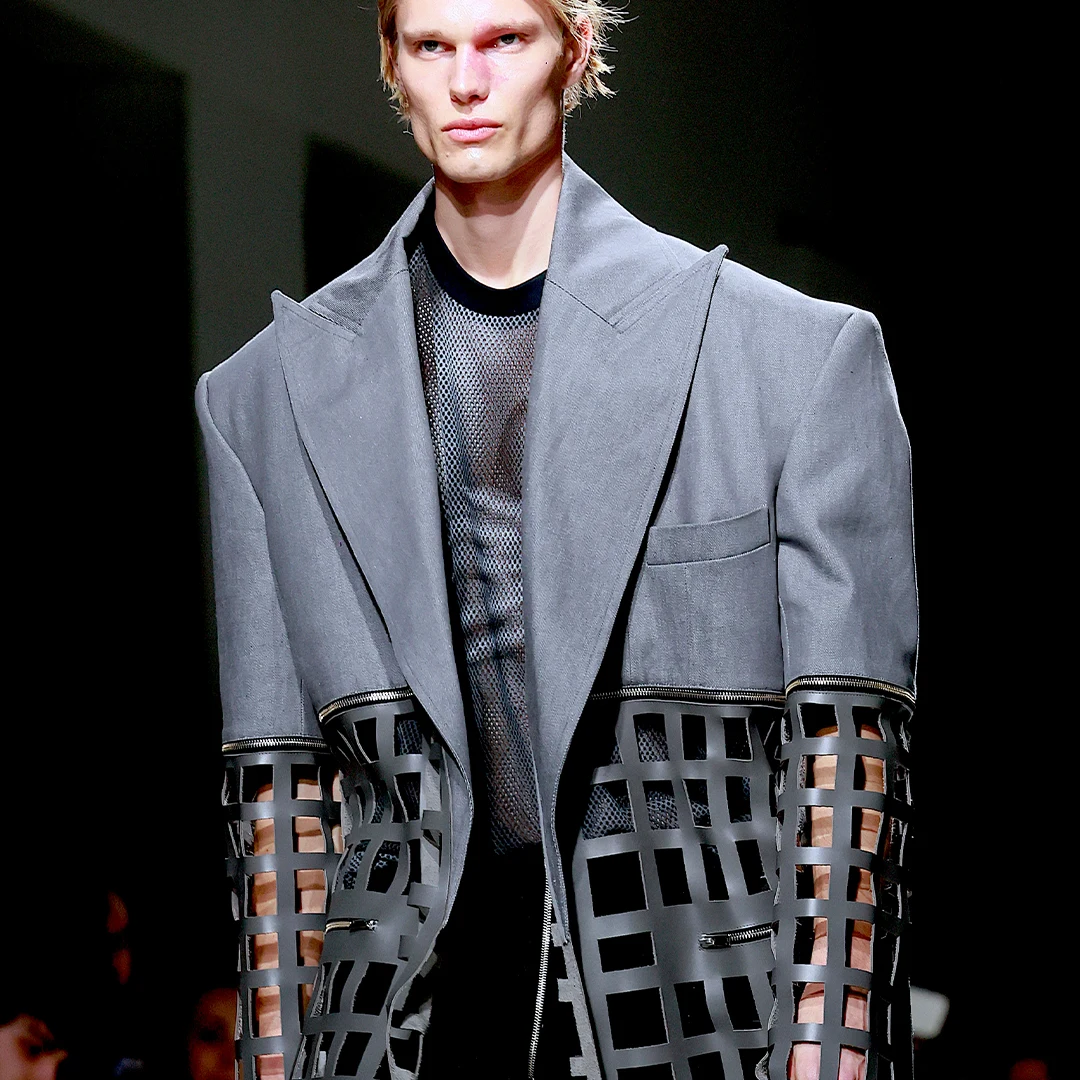
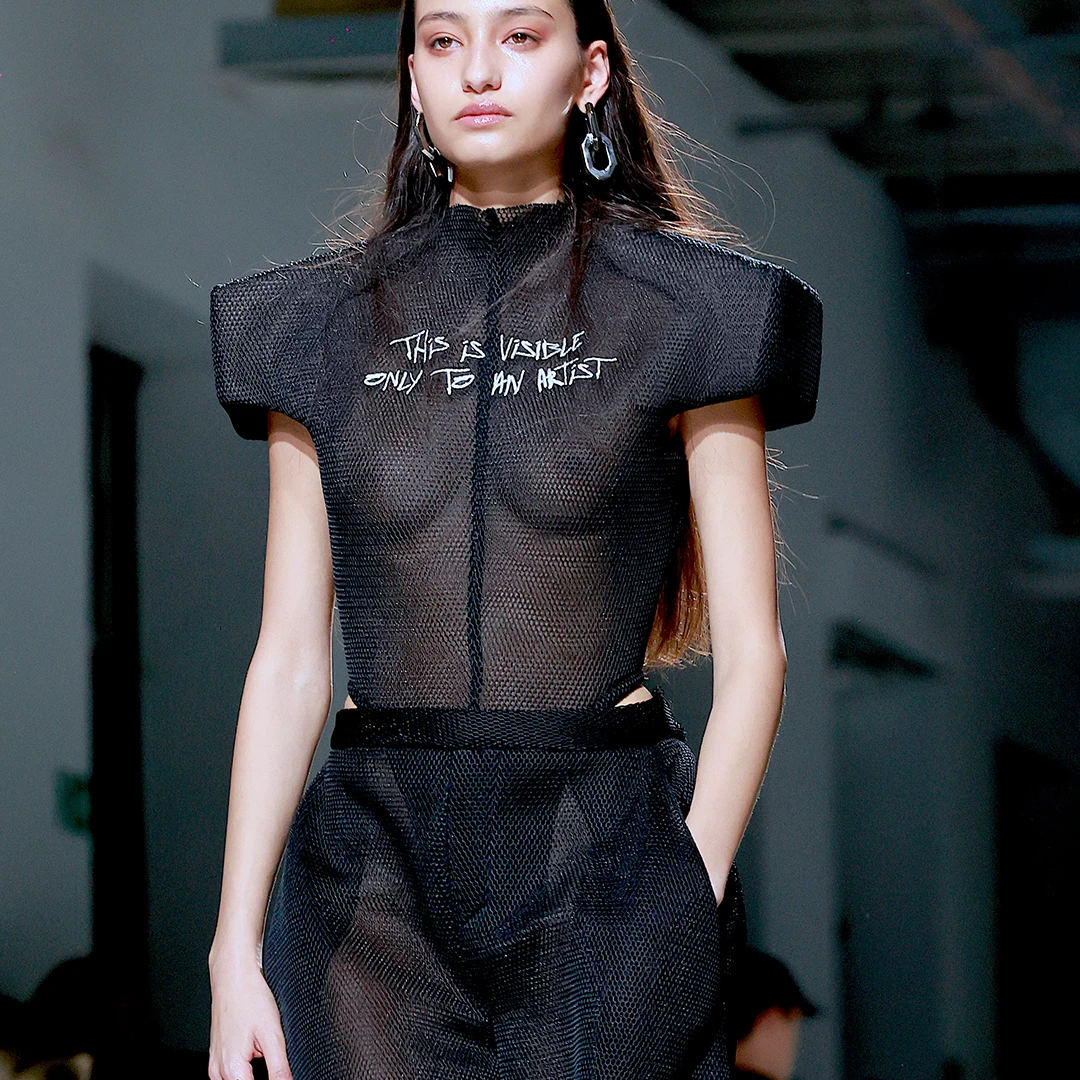
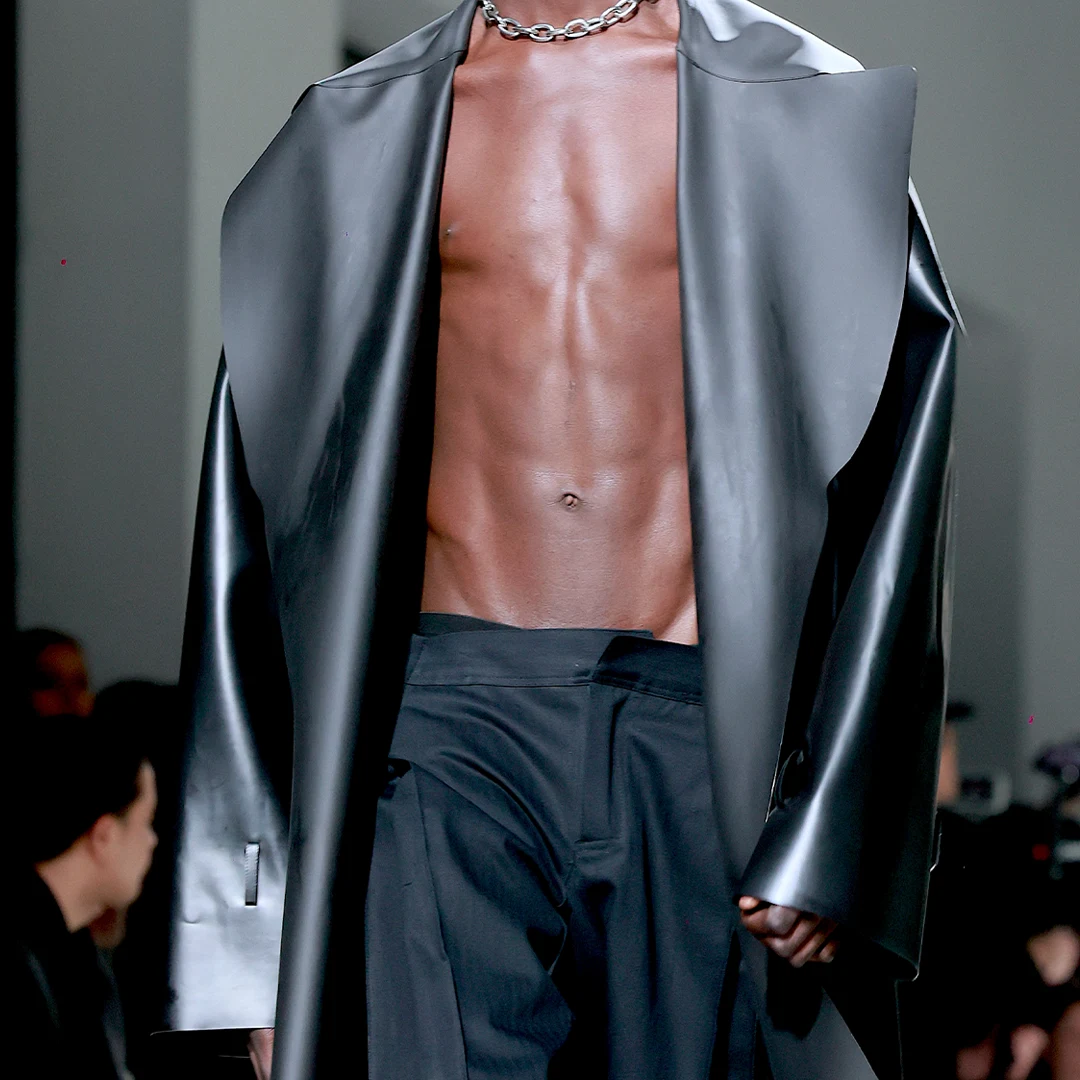
La palette chromatique demeurait volontairement épurée. Noir, blanc, anthracite et nuances minérales dominaient la collection, ponctués par touches de gris acier et d’argent patiné. Cette retenue colorielle renforçait la dimension architecturale des silhouettes, laissant la structure et la construction occuper le devant de la scène.
Au cœur du concept, « Multiple » explorait la nature stratifiée de l’identité dans la culture urbaine contemporaine. Les thèmes de la mémoire, de la migration et de l’histoire personnelle traversaient subtilement la collection, reflétant les transformations fluides de l’identité dans un monde globalisé.
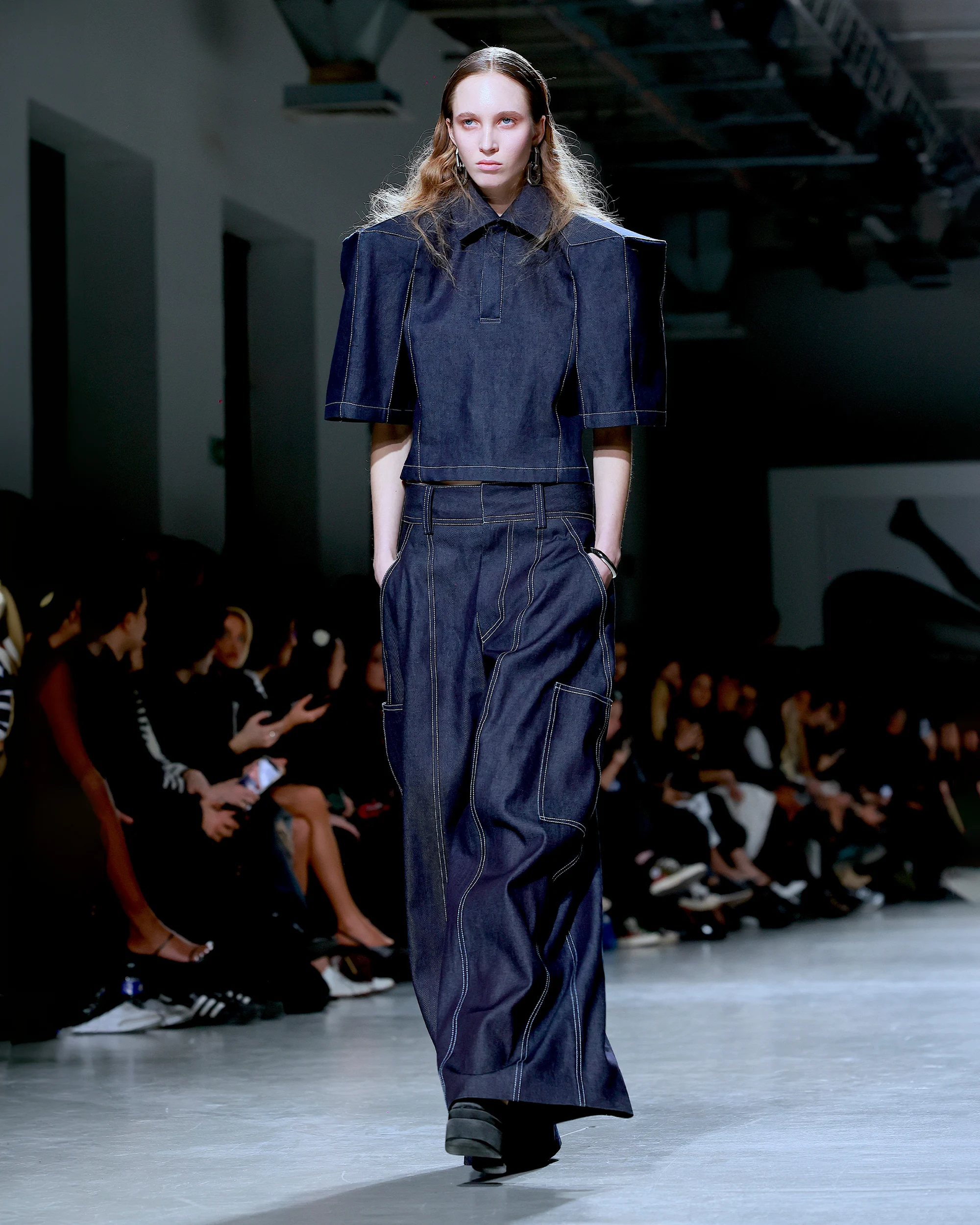
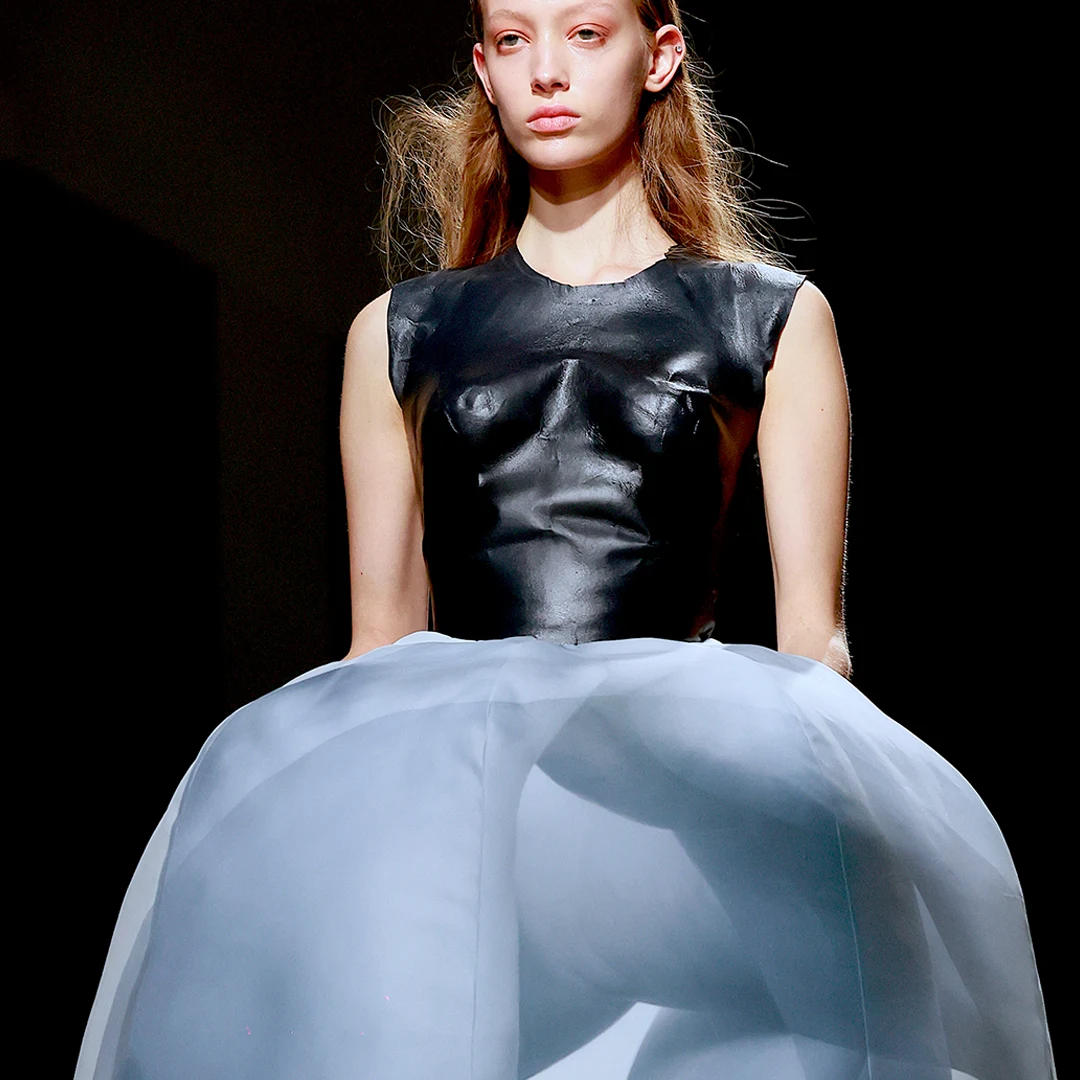
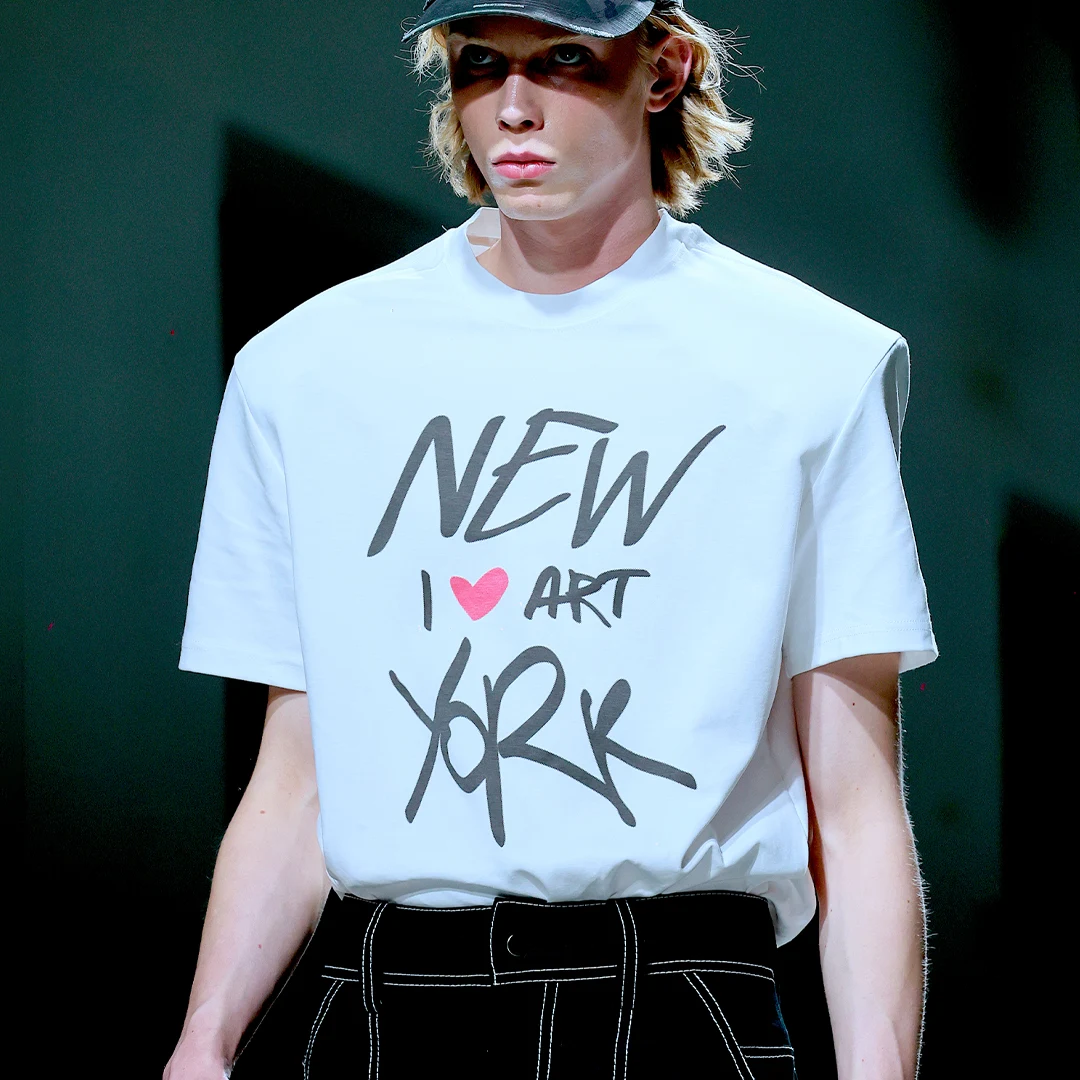
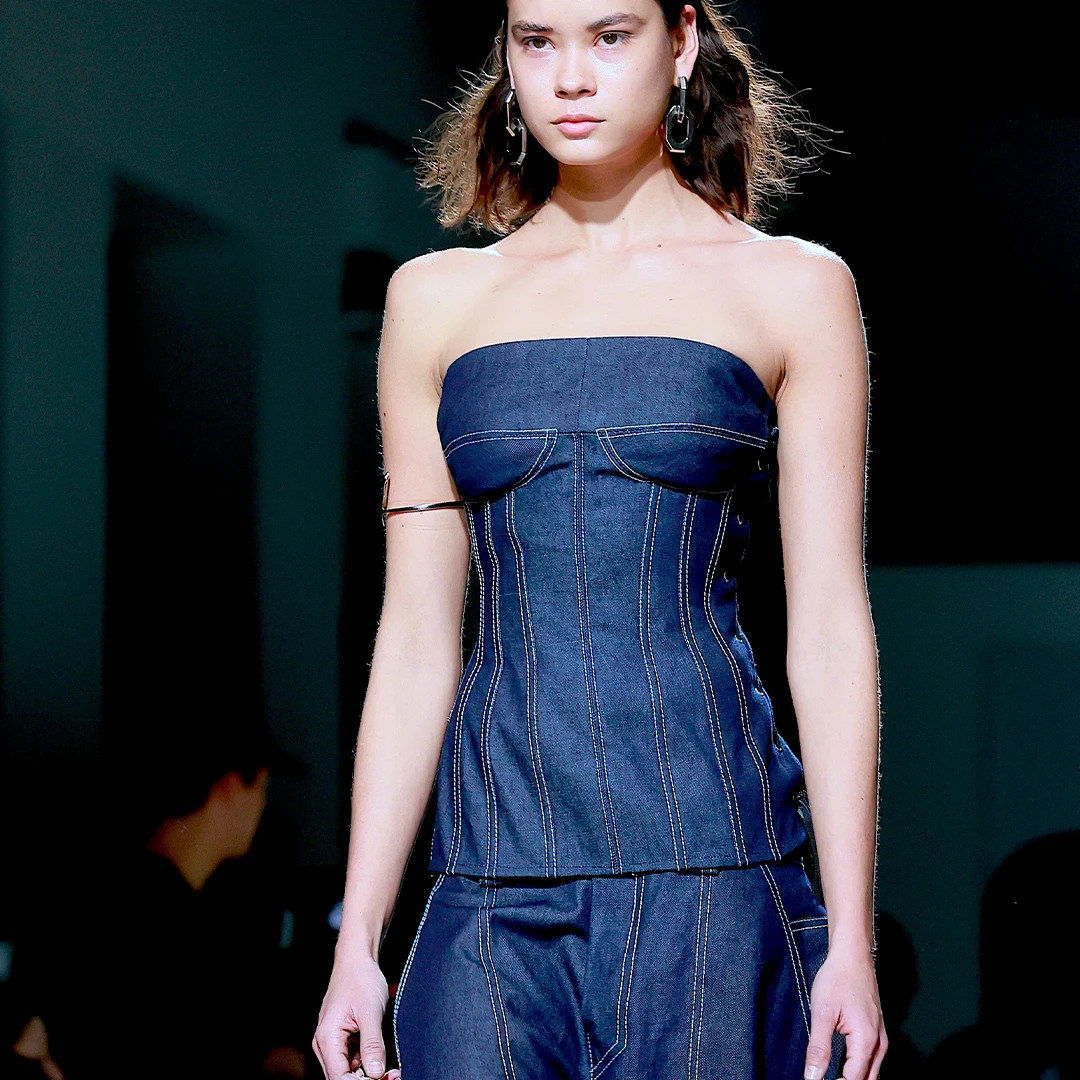
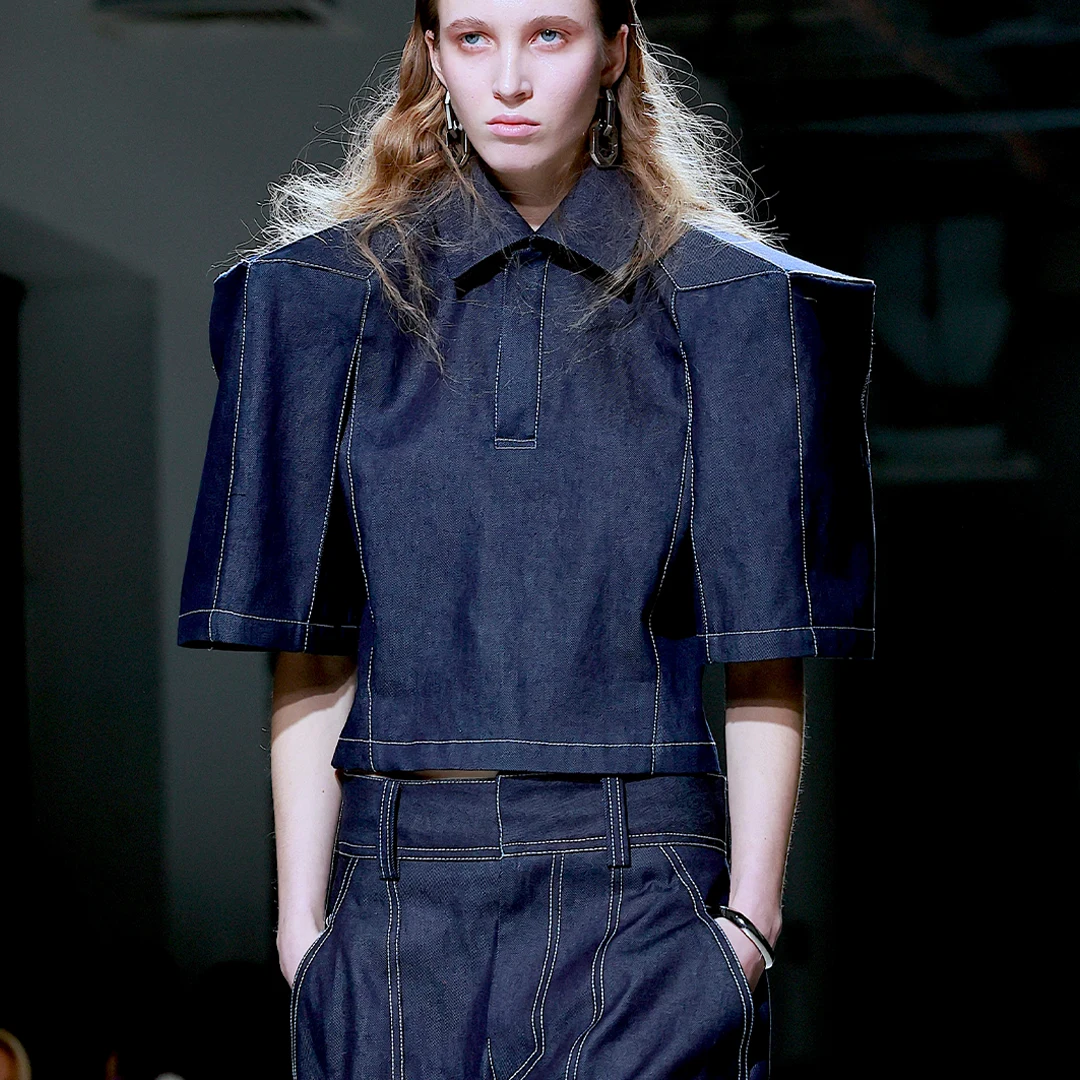
Les silhouettes sculpturales se dessinaient à travers des constructions géométriques et des volumes maîtrisés, donnant naissance à des pièces qui conciliaient puissance visuelle et portabilité. Parmi les créations les plus marquantes figurait un manteau portrait spectaculaire, traduisant l’hyperréalisme pictural en vêtement. Des robes géométriques aux lignes nettes évoquaient l’architecture moderne, tandis que des ensembles monochromes superposés proposaient une lecture sophistiquée du vestiaire conceptuel ancré dans le quotidien.
Au final, HAYELI AUTOMNE/HINTER 2026 s’exprimait dans le langage de la dualité. Art et mode, structure et mouvement, mémoire et identité contemporaine s’y rencontraient avec une précision silencieuse. Dans une saison souvent dominée par le spectaculaire, la vision d’Ohanyan révélait la force de la retenue — rappelant que les déclarations les plus puissantes en mode ne sont pas toujours les plus bruyantes, mais celles qui continuent de vivre et d’évoluer à travers le corps qui les porte.