


Editor-In-Chief
MeeKar Lim
International Fashion Editor
Suna Moya
Editor-At-Large
Zhang XiaoXiao

Please contact:
media-works@qcegmag.com
or
WeChat:QCEGMAG_Contact
QCEG MAG is a publication covering a selection of news in fashion, beauty, accessories, celebrities, livings arts, sports, travels and relating videos around the world. Our magazine is currently available in English, French, Italian (in development) and Chinese Languages for our international readers & viewers.




By Suna Moya — QCEG MAG FASHION DESK
Paris, January 2026
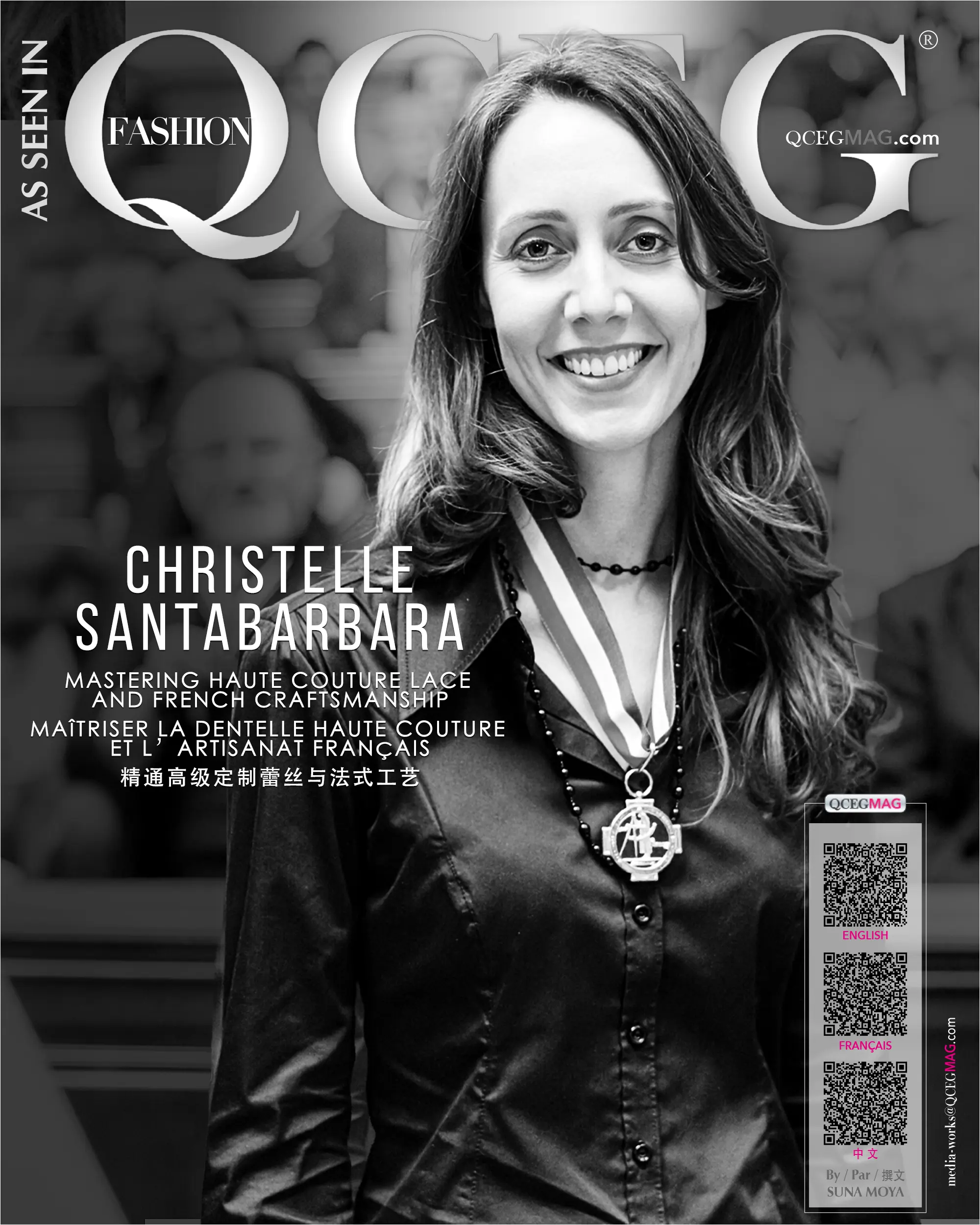

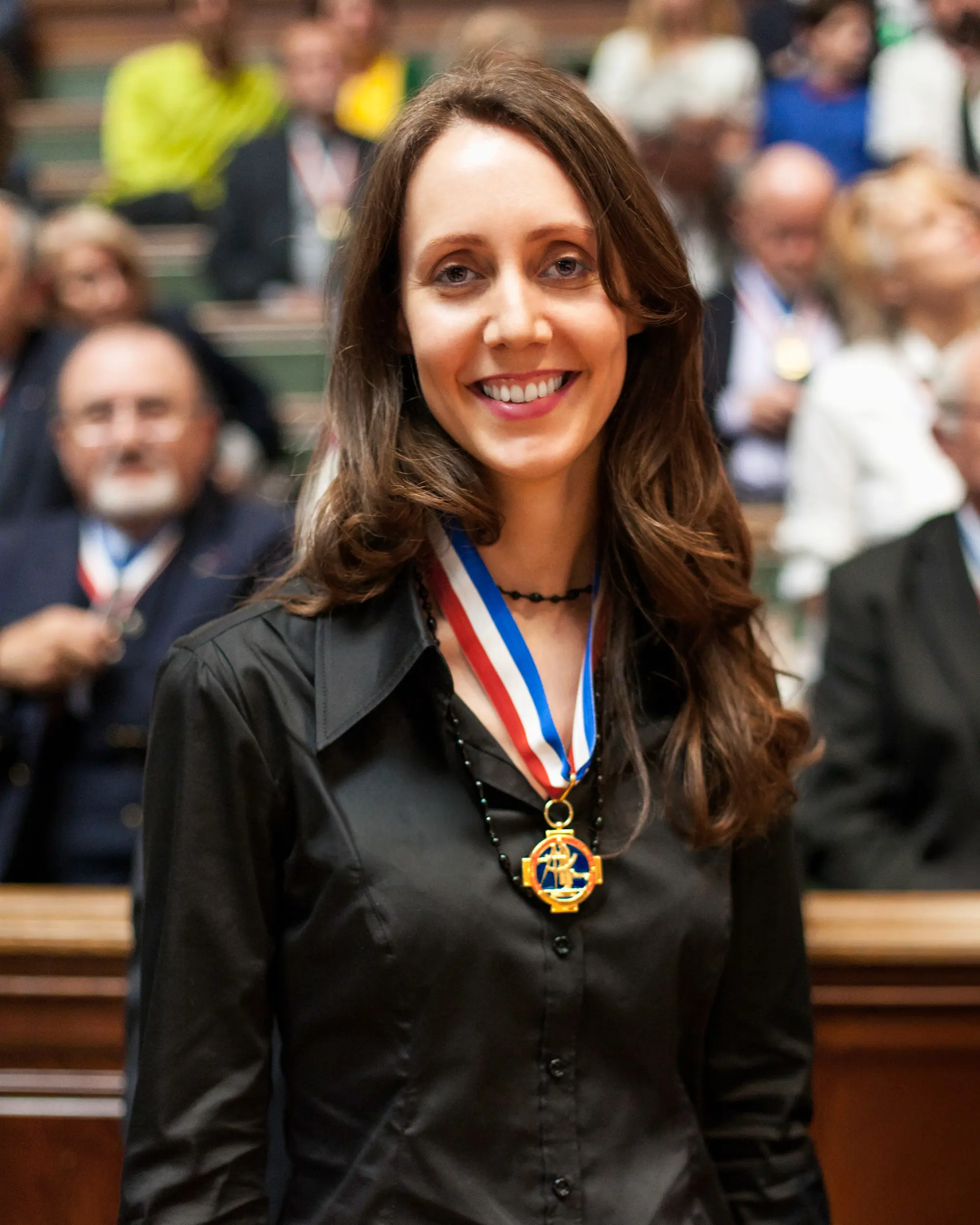
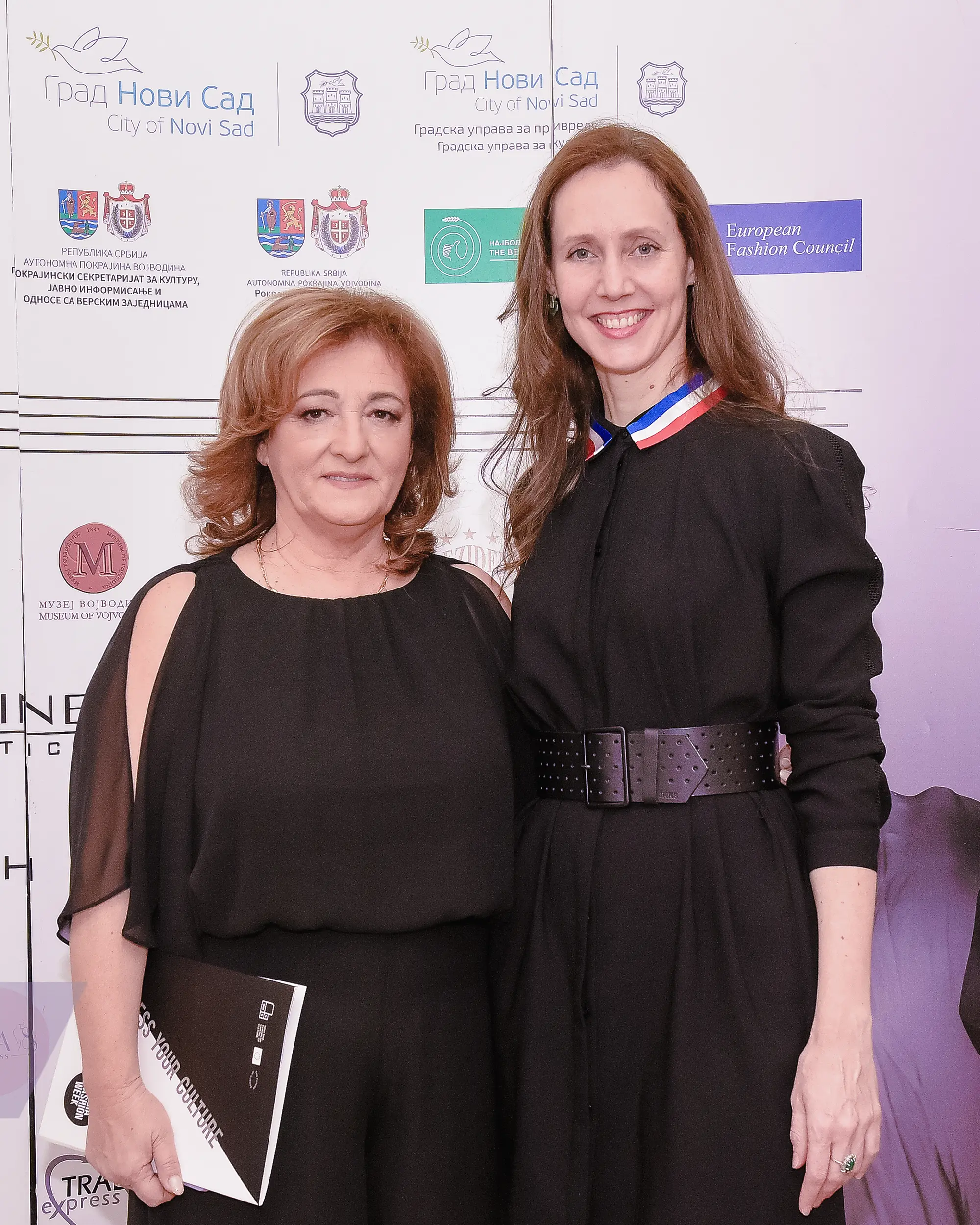
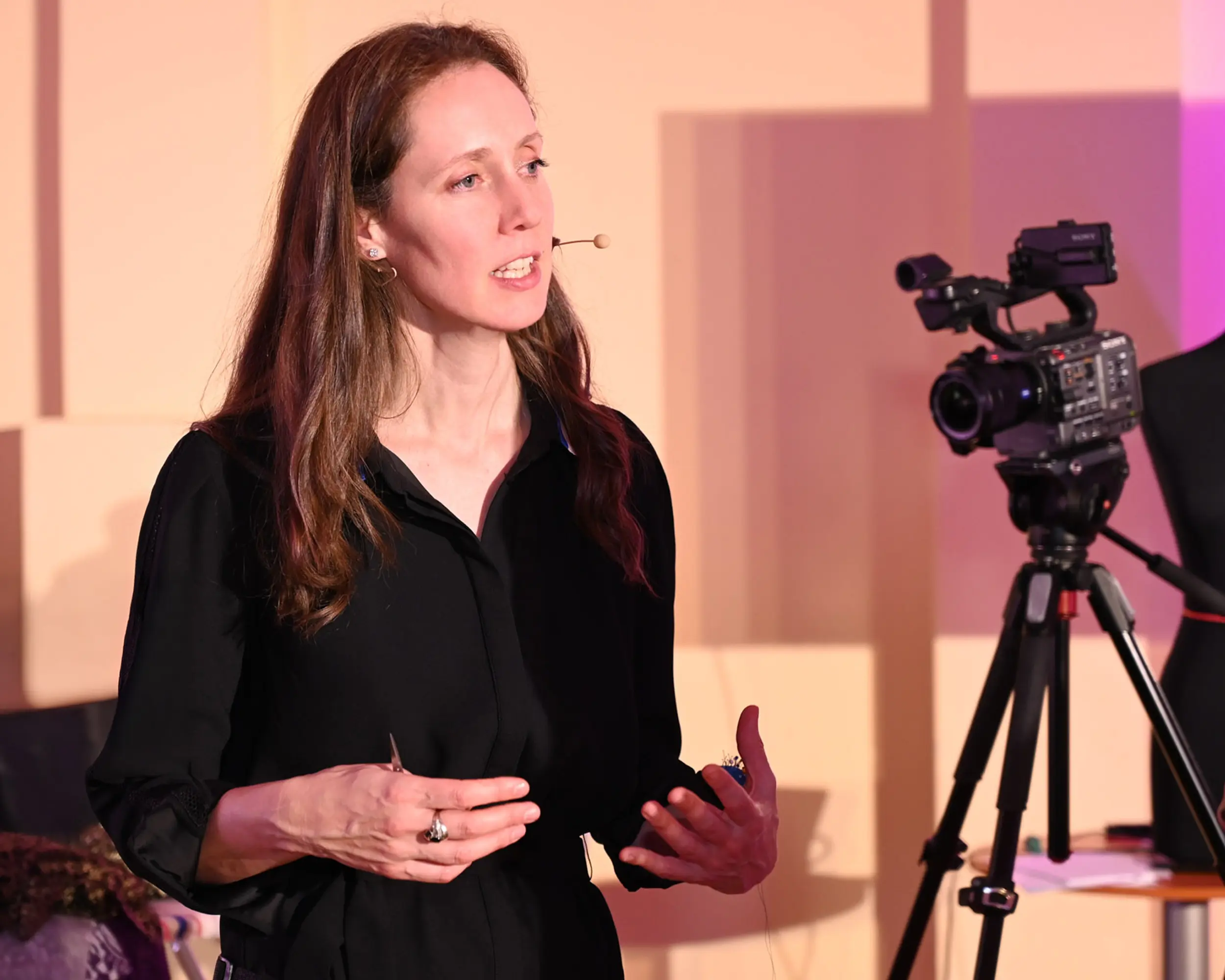
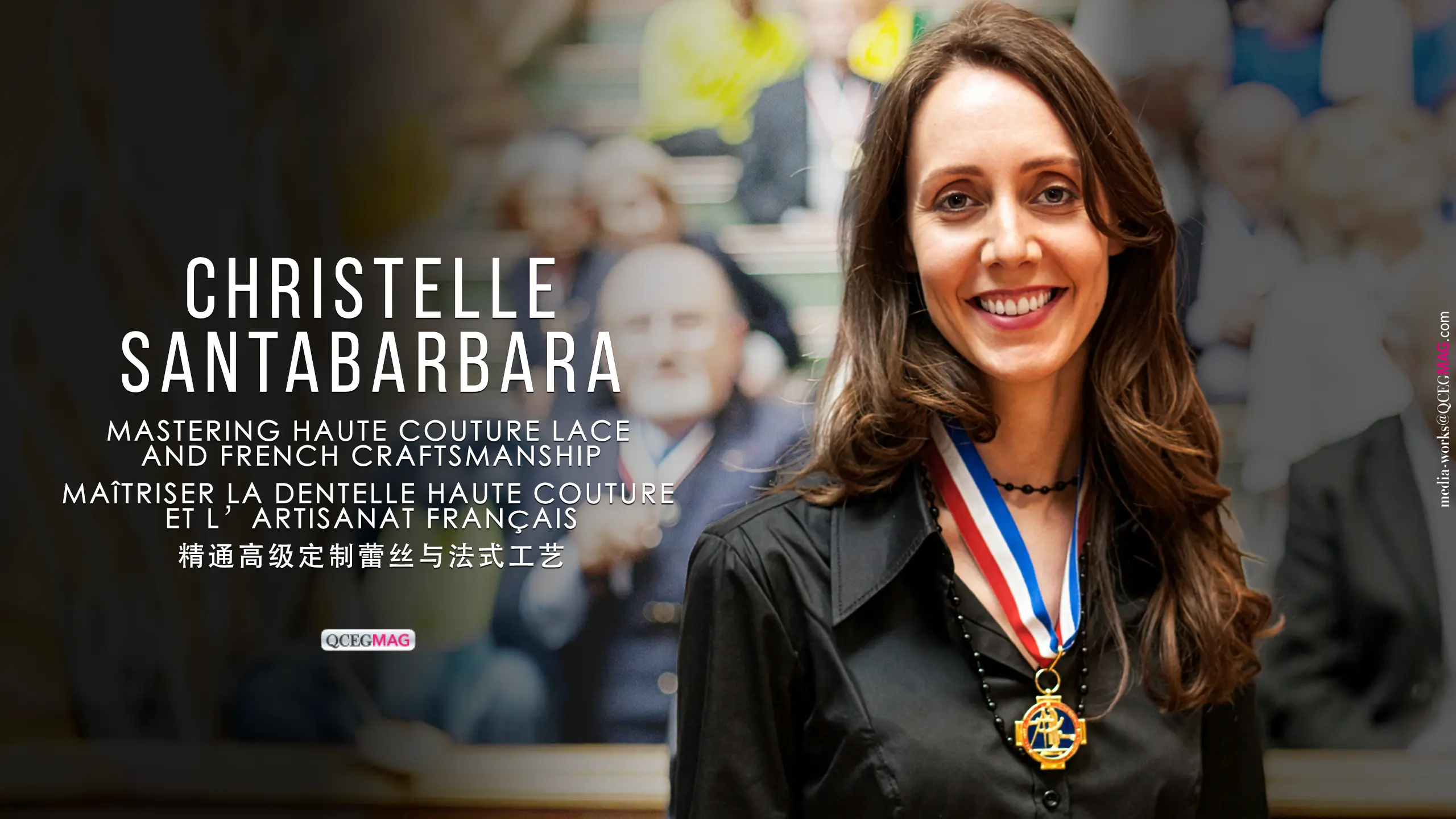
Elegant, kind, and quietly powerful, Christelle Santabarbara embodies a rare artistic force — one that speaks softly yet leaves an indelible mark. Beneath her gracious demeanour lies a sharp, inventive mind: a visionary devoted to the highest disciplines of Haute Couture. At the 25th Serbia Fashion Week, she captivated Novi Sad, demonstrating precisely why she stands apart. Christelle blends delicacy with daring, sensitivity with genius.
A graduate of the École des Beaux-Arts and the École de la Chambre Syndicale de la Couture Parisienne, she honed her craft within Paris’s most prestigious couture houses before founding the former Dupré Santabarbara. For a decade, her creations graced the official Paris Haute Couture calendar, celebrated for transforming unexpected materials into sculptural, fluid garments. This boundary-pushing vision earned her France’s highest accolades: the Prix de Maîtrise Technique, the Grand Prix de la Création de Mode de la Ville de Paris, and the distinguished title of Un des Meilleurs Ouvriers de France (MOF).
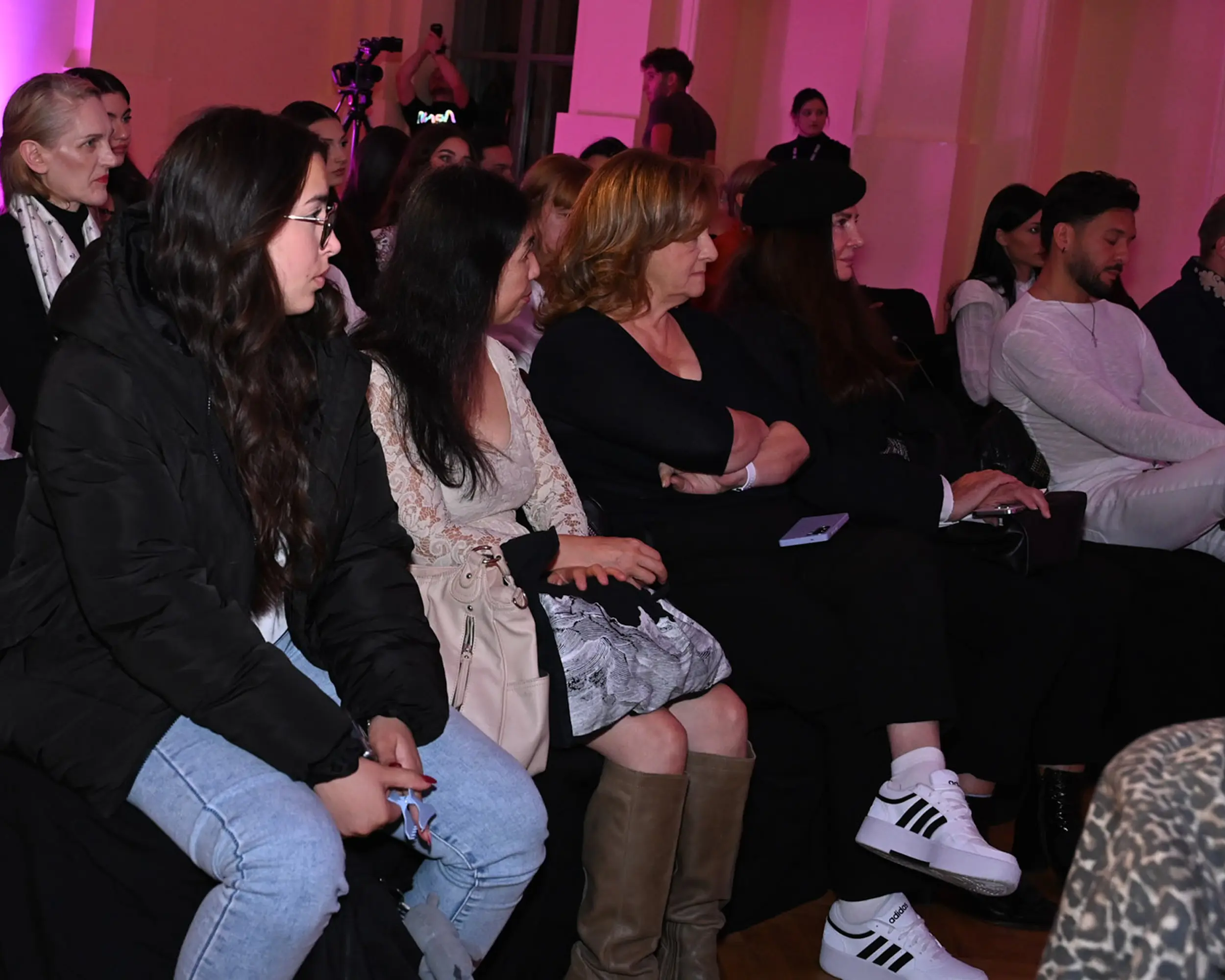
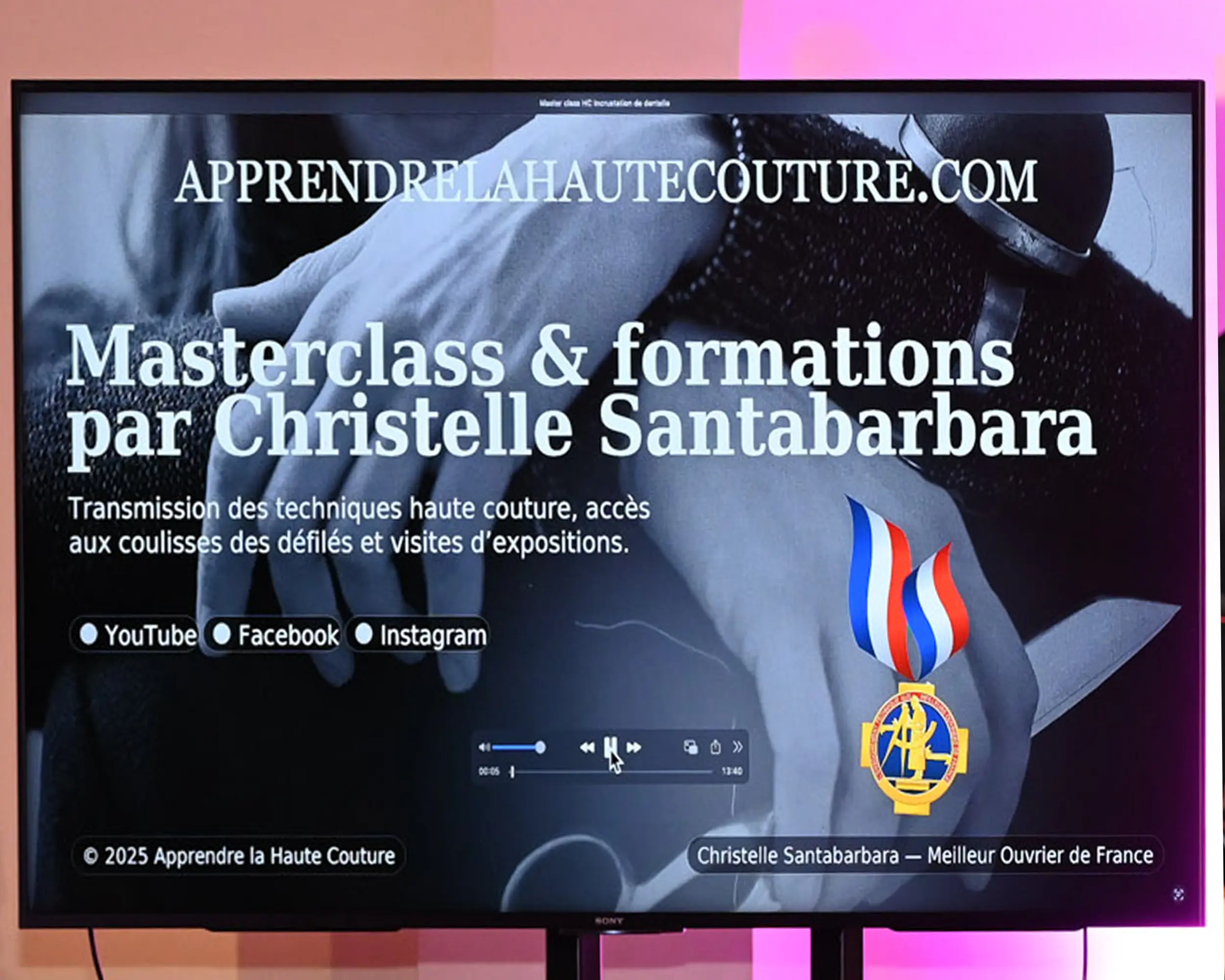
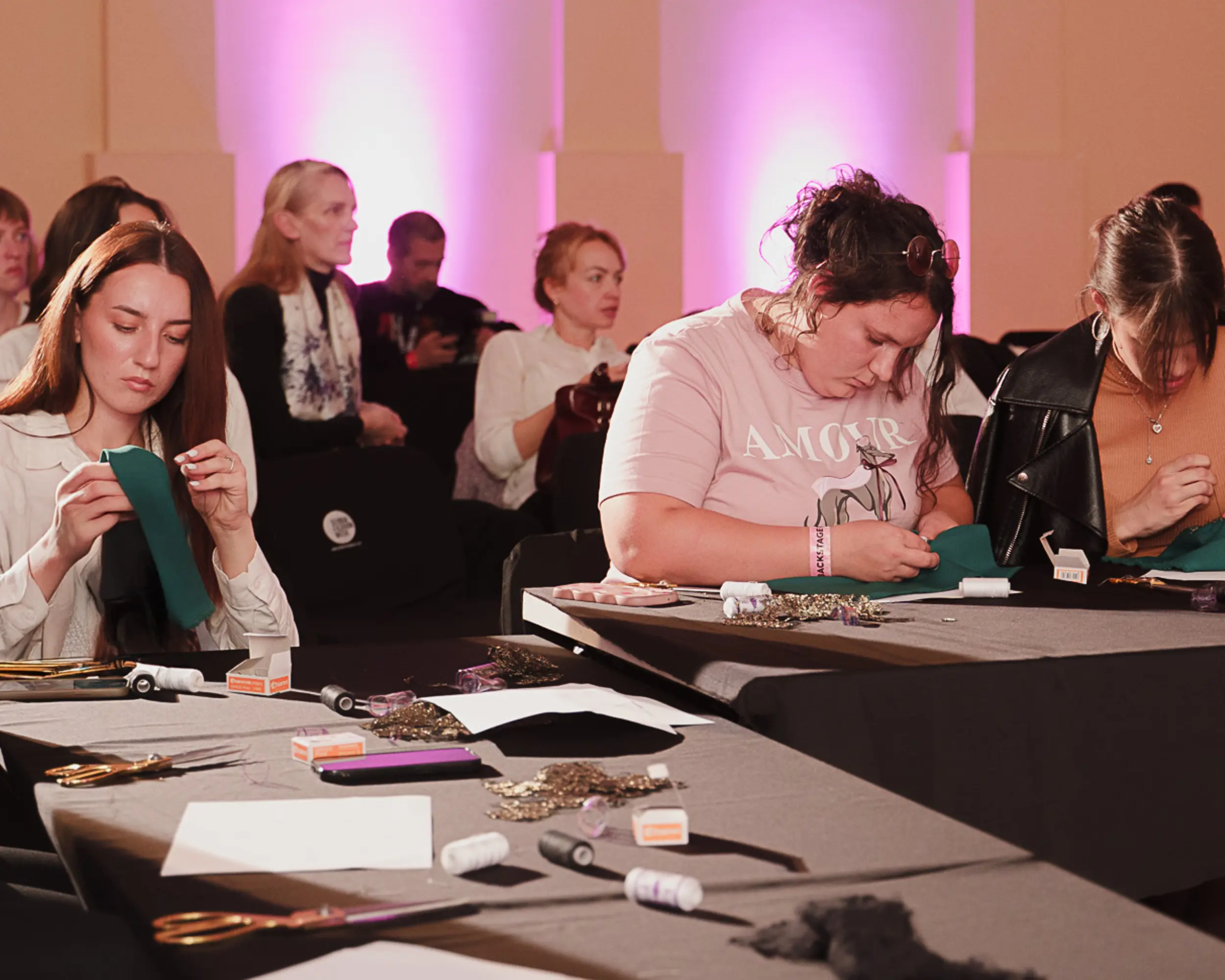
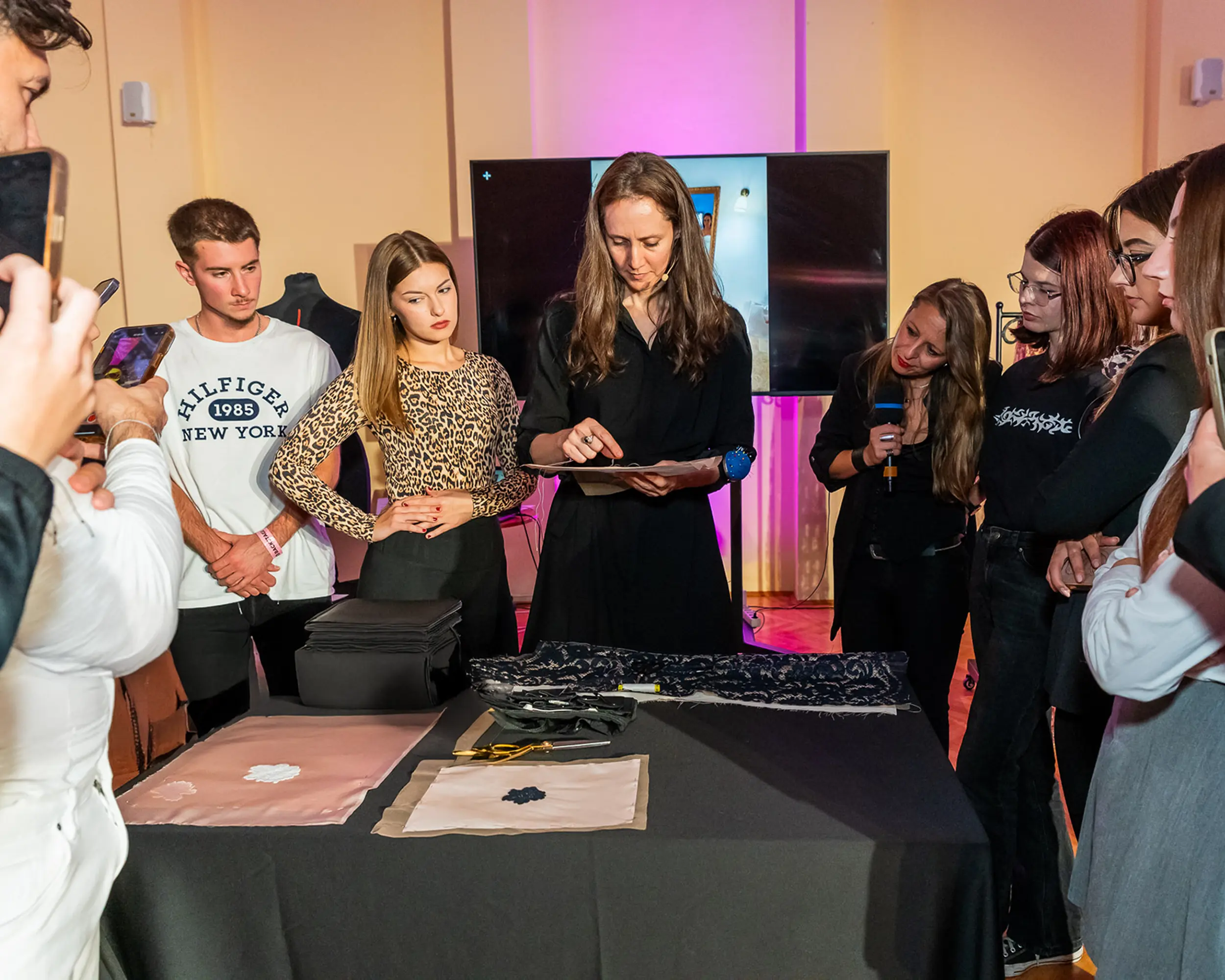
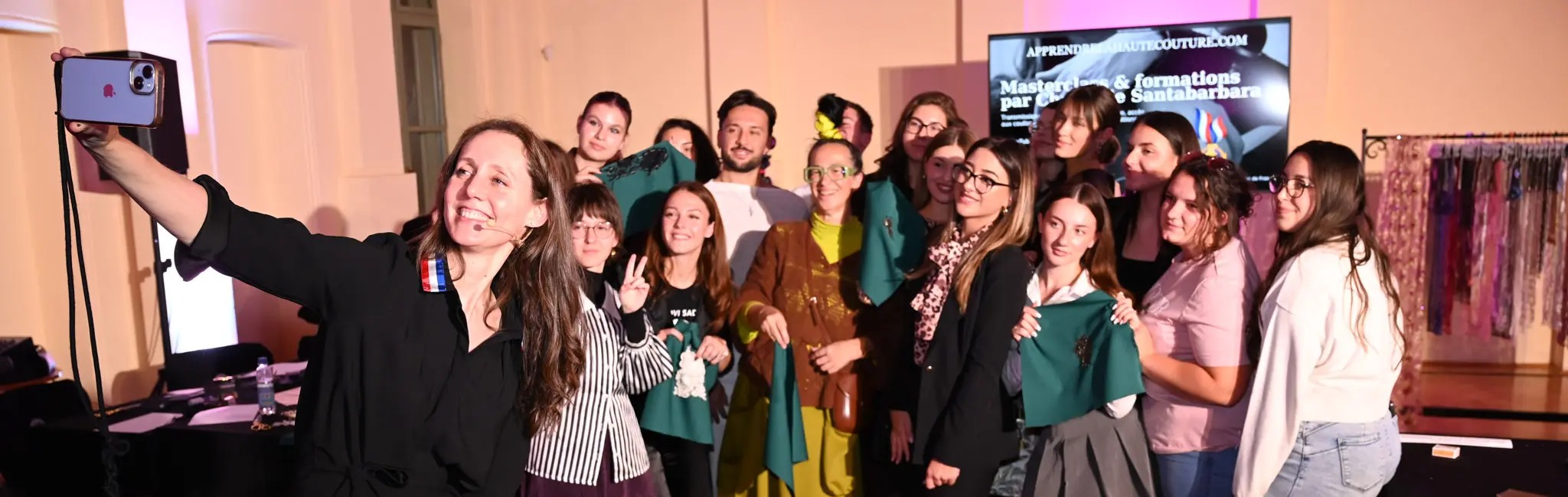
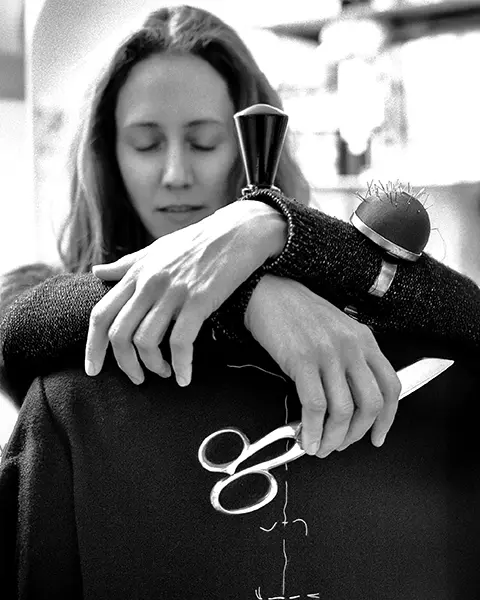
In Novi Sad, the Museum of Vojvodina became a theatre of savoir-faire. Before 150 attendees — including 20 participants stitching alongside her — Christelle led a masterclass in Haute Couture lace inlay, supported by Sophie Hallette and the French Institute of Serbia. A cinematic introduction traced her artistic journey and the legacy of lace, setting the stage for a demonstration that unfolded like choreography: motif reading, precise placement, stabilising basting, razor-sharp cuts, and invisible hand finishes — the fine line where craft becomes art. Each gesture spoke with purpose. Each pause carried weight.
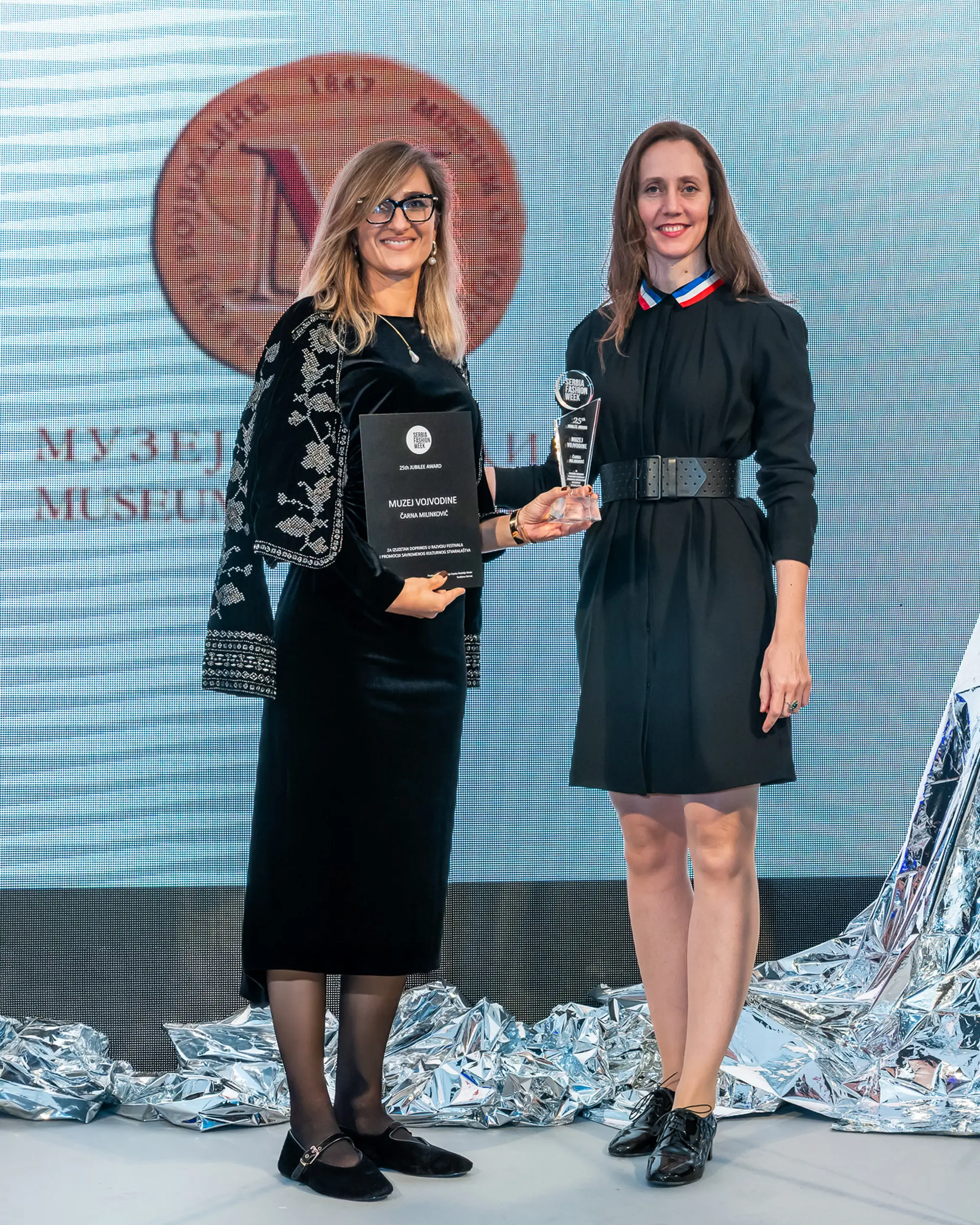
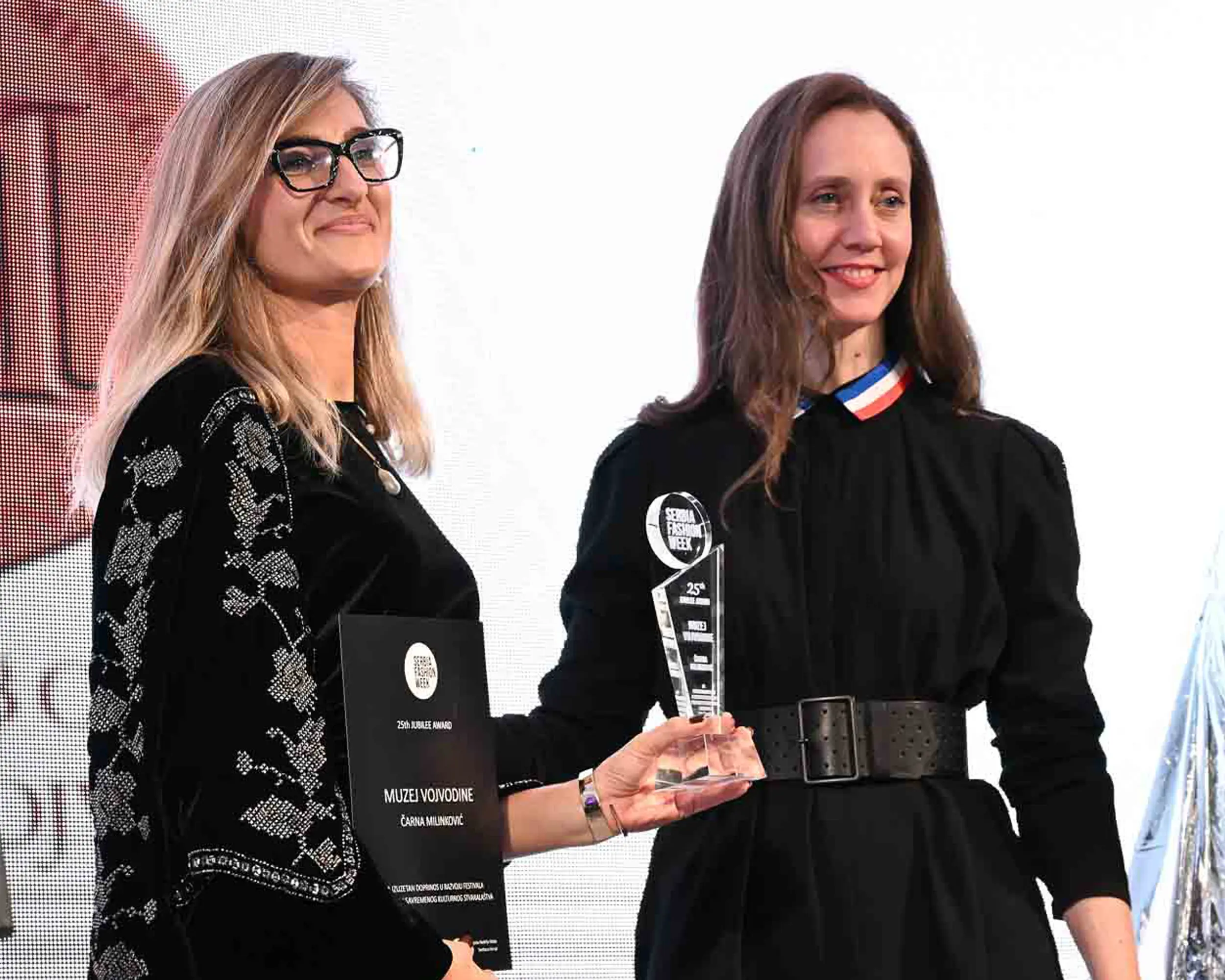
The evening concluded with a warm cocktail reception and an emotional ceremony, during which Christelle presented a prize to the Museum’s director — a symbolic exchange of craft, culture, and knowledge.
— SUNA MOYA
CHRISTELLE SANTABARBARA
“MASTERING HAUTE COUTURE LACE AND FRENCH CRAFTSMANSHIP”
QCEG MAG: During the practical session, you guided participants step by step. When did you feel that your techniques were fully understood and absorbed?
Christelle Santabarbara: I feel it when the atmosphere changes — when the room seems to breathe differently. Participants enter deep concentration, questions become rare, gestures gain confidence, and the stitches become even. But most importantly, I see joy emerge — the joy of creating. This joy only appears when the technique has truly been mastered, no matter how long it takes.
In those final hours, time seemed to stand still. We entered what I call the “flow” of Haute Couture — a moment when focus sharpens, silence settles, and the only thing that matters is creating something beautiful, personal, and made with love. Everyone left with their own piece of applied lace, shaped by their hands — a truly unique keepsake.
QCEG MAG: You often emphasise the importance of transmission. How do heritage and craftsmanship influence contemporary fashion?
Christelle Santabarbara: Heritage and craftsmanship are both the foundation and the inspiration. The deeper the mastery of rare, ancestral techniques, the more personal, unique, and contemporary the final creation becomes.
Craftsmanship is the grammar of a garment — without it, even the brightest vision remains superficial. It is like language: the richer the vocabulary, the deeper the story. Or like music: with three notes, expression is limited; with a full keyboard, the possibilities are endless. Applied lace is a perfect example — once mastered, creativity knows no bounds.
QCEG MAG: The MOF title is one of France’s highest distinctions. How does it influence the way you create, teach, and inspire?
Christelle Santabarbara: Being a Meilleur Ouvrier de France is not a trophy — it is a lifelong commitment. The tricolour collar reminds me every day of four pillars: excellence, rigour, transmission, and preservation.
It guides my teaching. I lay solid foundations — precise gestures, mastered cuts, refined finishes — then encourage, correct, and reassure until confidence blossoms and joy takes over.
Today, I preside over the Haute Couture Flou and Luxury Ready-to-Wear jury for the MOF exam, elected by representatives from Dior, Chanel, Yves Saint Laurent, and the Fédération de la Haute Couture et de la Mode. It is an honour, but above all, a responsibility: defending excellence, fairness, and tradition, in France and beyond.
QCEG MAG: Your masterclass balanced technical skill and artistic wonder. How do you combine precision and creativity?
Christelle Santabarbara: Precision is key. The more accurate the gesture, the more imagination opens up — and the fewer the limits.
QCEG MAG: Collaborations — such as with Sophie Hallette lace and the French Institute in Serbia — enrich the learning experience. How so?
Christelle Santabarbara: Absolutely. Sophie Hallette is a historic French lace house, and placing an exceptional material in a student’s hands changes everything — the quality is immediately felt. Their donation was an act of generosity and transmission: “Wherever you are, we bring you the best so you can progress.”
The French Institute in Serbia, particularly Ms Vanja Manić-Matić, played an equally essential role, translating in real time and connecting cultures. We were not there to teach from above, but to share. Each party contributed expertise, and together, we elevated one another.
Participants left not only with a piece of applied lace, but also with sharper eyes and steadier hands — the outcome I cherish most.
QCEG MAG: What will define the next generation of Haute Couture creators and artisans?
Christelle Santabarbara: The artisan remains the guardian of excellence — mastering the gesture, listening to the material, respecting time.
The designer must see the couture house as a research laboratory: bold, visionary, yet always rooted in technique. Freedom comes after mastery. Digital tools and new materials are not enemies of tradition — they are allies.
QCEG MAG: How will traditional craftsmanship evolve in the digital age?
Christelle Santabarbara: Luxury relies on centuries-old techniques that evolve through innovation, always in pursuit of excellence.
The digital world moves fast and favours the ephemeral — the opposite of craftsmanship. People will tire of the temporary. Handmade work will regain its value. The hours invested in a piece will become a guarantee of authenticity. The future is promising for those who remain true to their uniqueness.
QCEG MAG: Teaching abroad offers new perspectives. What have different cultures taught you about couture?
Christelle Santabarbara: Couture is universal — words become secondary; gesture and passion speak for themselves. Travelling allows me to discover ancestral techniques and connect cultures through craftsmanship.
Wherever I teach, the teacher–student relationship quickly transcends its usual bounds: we share, laugh, and grow together. I become a big sister in the atelier — reassuring, guiding, inspiring. This spark of awakening is my greatest reward.
To continue this mission, I created apprendrelahautecouture.com, a platform that extends Haute Couture beyond borders and schools.
QCEG MAG: France remains the heart of Haute Couture. What makes Parisian couture unique and timeless?
Christelle Santabarbara: Its magic lies in contrast: a rich heritage constantly reinvented through new, sometimes disruptive, ideas. To build the future, one must first know the past.
There is also a distinctly French spirit — rigorous, questioning, a little rebellious. Essential to excellence. Designers arriving in Paris absorb this energy quickly. They keep their own culture but inherit a French touch: discipline, clarity, freedom. I often joke: “You are already so French!” — and it is often true.
This alchemy makes Parisian couture timeless.
QCEG MAG: How do you envision the future of Parisian couture while maintaining its leadership?
Christelle Santabarbara: Many predicted the decline of Couture: too slow, too expensive. Yet every Fashion Week proves otherwise. Today, Couture is more desired than ever.
As the world automates, we long for the human touch — the cut that understands the body, the time of the hand. Couture will remain a leader as long as it preserves its essence: excellence, rarity, imagination. A drop of sweat on fabric will always be worth more than a drop of oil on a machine.
QCEG MAG: You are known for sculptural creations and unexpected materials. How do you combine heritage and innovation?
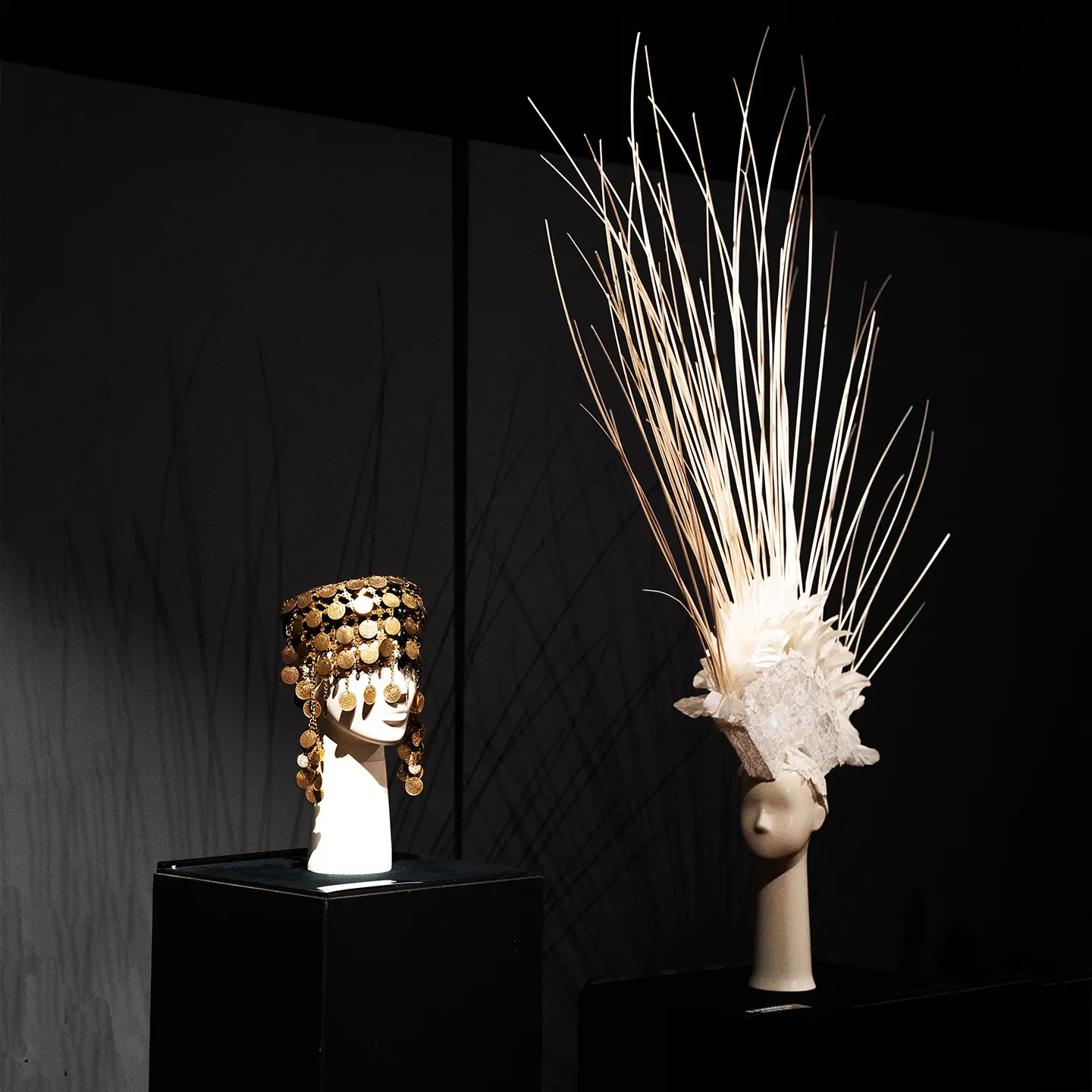
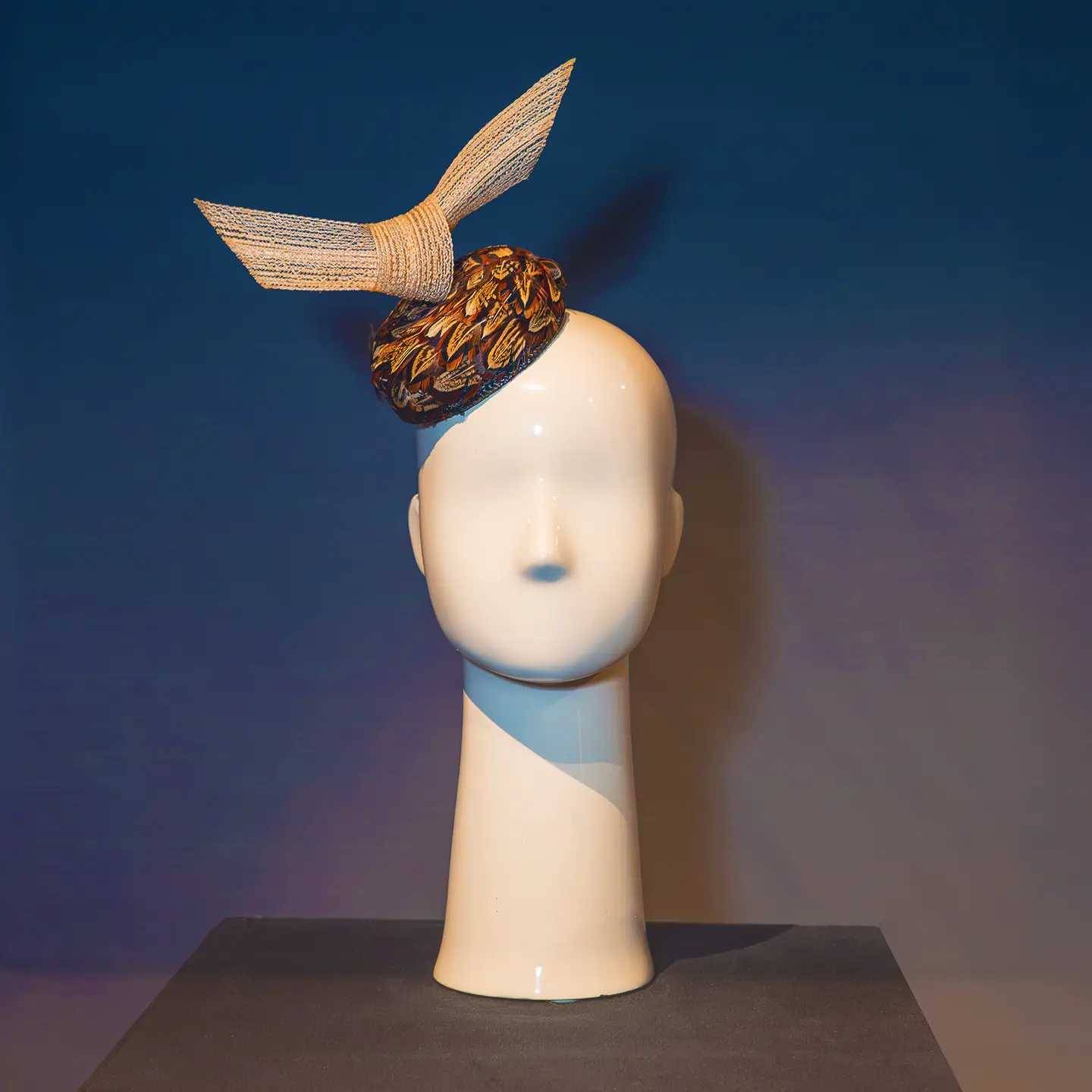
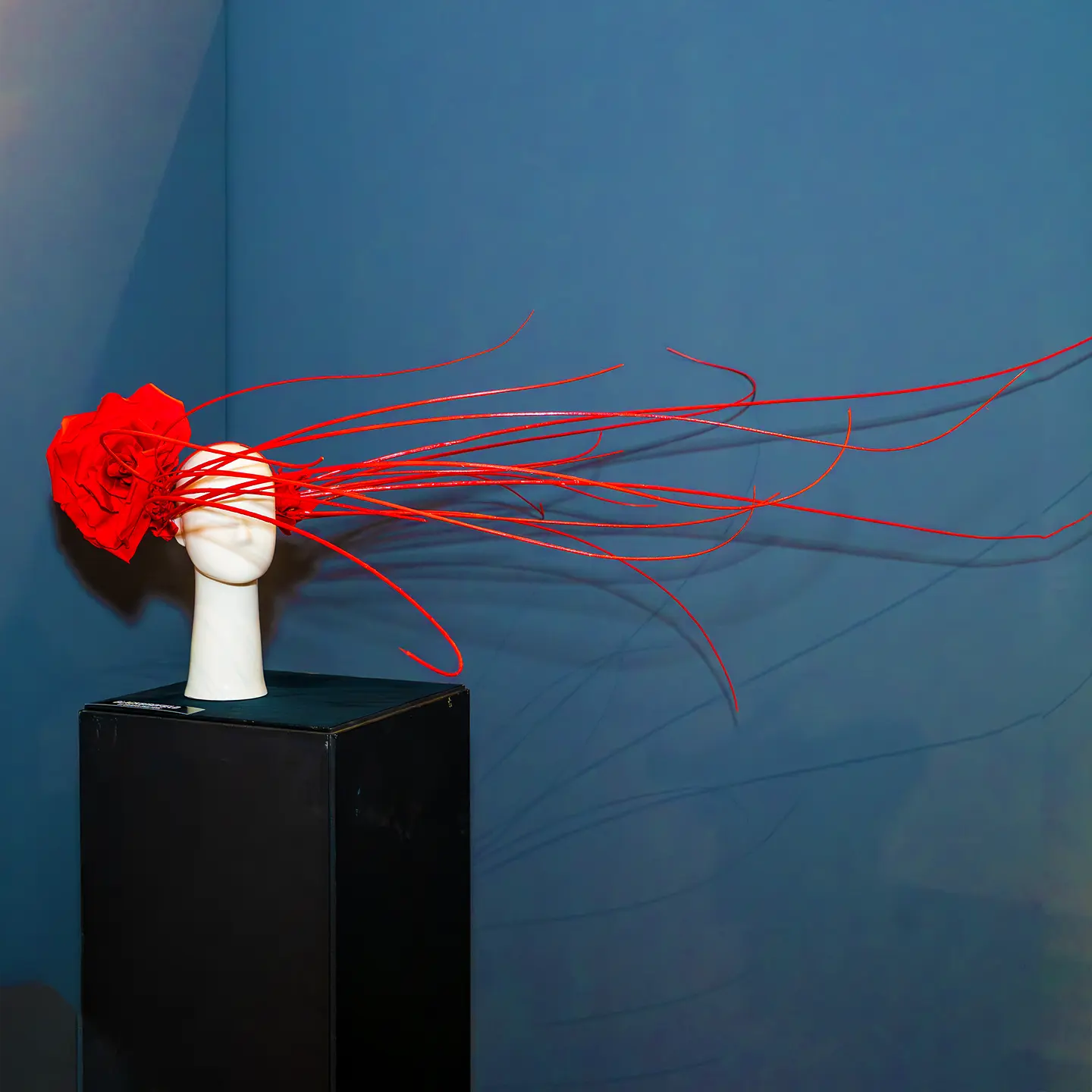
Christelle Santabarbara: During my years in Paris, my goal was clear: master technique to push silhouettes towards contemporary art. I loved combining organza, satin, and lace with unconventional materials — tights, leather, second-skin textiles — to explore movement, space, and identity.
Heritage and innovation feed one another. Today, I focus on artistic consulting, exceptional commissions, and transmission. I have aligned my work with my values: sharing, generosity, continuity. This led me to my masterclasses and apprendrelahautecouture.com, a way to share heritage globally.
QCEG MAG: What advice would you give young designers wishing to carry forward the spirit of Haute Couture?
Christelle Santabarbara: Haute Couture is like a three-star restaurant: it is not about nourishment, it is about the experience. A garment carries a universe. The wearer feels it, the observer feels it — sometimes it even changes a life.
My advice: master the fundamentals — cutting, draping, invisible finishes, precise construction. Without them, even the brightest idea is incomplete. Then tell your stories — avant-garde or classic — but always with sincerity and vision.
QCEG MAG: Finally, how do you imagine the next decade for fashion and craftsmanship, and what role will France play?
Christelle Santabarbara: Two paths are emerging:
• Fast fashion — faster, cheaper, disposable
• Responsible fashion — where time, hand, and technique regain their value
More than ever, people will seek meaning — durable pieces, pieces that tell a story.
France must remain the standard-bearer of exceptional craftsmanship. We hold two unmatched treasures:
• Meilleurs Ouvriers de France — mastery and excellence
• Compagnonnage — transmission through travel and mentorship
They preserve rigour across generations — ensuring a future where modernity evolves without losing the human touch. A future that values quality, patience, and humanity in work.
I believe in fashion that celebrates excellence, honours craftsmanship, and places humanity at the heart of the process.